

Laser Hair Removal PCOS: What to Expect

A chin hair that shows up on Tuesday and is back by Friday. A jawline you check in the car mirror. Tweezers in every bag, wax strips in the bathroom drawer, and a running mental count of how many days you have before the next appointment. If you have PCOS, that cycle isn't a discipline problem. It's androgens doing what androgens do, converting fine vellus hair into coarser terminal hair, and it happens to a great many people.
Laser hair removal with PCOS can reduce that hair. It usually takes longer than it does for someone without a hormonal driver, and it needs maintenance afterward. A realistic plan shows where laser stops and your doctor's care starts, and why more sessions aren't automatically better on a hormonally active face.
What to Expect From Laser With PCOS
In our London clinic, the conversation usually opens with an apology. Someone sits down and says sorry for the chin hair, sorry for not shaving, sorry for booking so late. There's nothing to apologise for. Coarse hair on the chin, jawline or neck in PCOS is hormone-sensitive hair doing what it's been told to do, and it's one of the most common reasons people walk through our door.
Laser hair removal with PCOS targets the pigment inside terminal hairs that are already growing. It doesn't treat PCOS, it doesn't reset your hormones, and it doesn't mean every hair is gone for good. What it does is reduce the density and coarseness of what you have, which makes daily management far easier.
A Canadian laser-treatment provider reported in 2026 that PCOS-related laser hair removal commonly requires 6 to 10 sessions plus touch-ups (Laser Body MD). Read that as a typical range, not a guaranteed count for you. Your areas, hair colour, skin tone and how your body responds all move the number.
The Canadian Dermatology Association's patient material on hirsutism notes that hirsutism affects about 5% of the female population and names PCOS as the most common underlying medical reason. That's exactly why the cosmetic plan sits beside medical care rather than replacing it. The hormonal background is covered in more detail in our guide to reasons for unwanted hair growth and hirsutism.
PCOS laser plan at a glance
Planning point | Typical picture | What it is not |
|---|---|---|
Course length | Often 6 to 10 sessions plus touch-ups | A guaranteed count for every person |
Existing dark terminal hair | Reduced over the active-growth cycles the laser can reach | Proof that PCOS is treated |
New hormone-driven growth | Possible after a good early response | A sign the laser failed |
Maintenance | Periodic visits, especially chin, jawline and neck | A one-time cure |
Hormonal care | Doctor or endocrinologist assesses androgens | Something the clinic diagnoses |
Treat that table as a consultation checklist, not a diagnosis.
Why PCOS Hair Returns and What Laser Can Reach
Androgens change the hair you grow
Follicles on the face, chest and abdomen respond to androgens. When those levels run higher, as they often do in PCOS, fine unpigmented vellus hairs turn into thicker, darker terminal hairs. A Canadian Medical Association Journal review puts PCOS at approximately 10% of females and describes hirsutism as a clinical sign of hyperandrogenism.
That review draws a line worth understanding. Medical treatment can reduce new hair growth, but it cannot reverse hair that has already become established. Established hair is the job of external methods, laser and light included. If you haven't been assessed and want to know how to spot early PCOS warning signs, that read is worth ten minutes before you book anything.
What a laser session can actually reach
Laser light is absorbed by melanin. Dark terminal hair holds plenty of it, so the energy heats that pigment and injures the follicle while it's in anagen, the active growth phase. Hairs sitting in the resting phase aren't affected that day, which is why appointments are spaced weeks apart and stacked into a course instead of booked back to back.
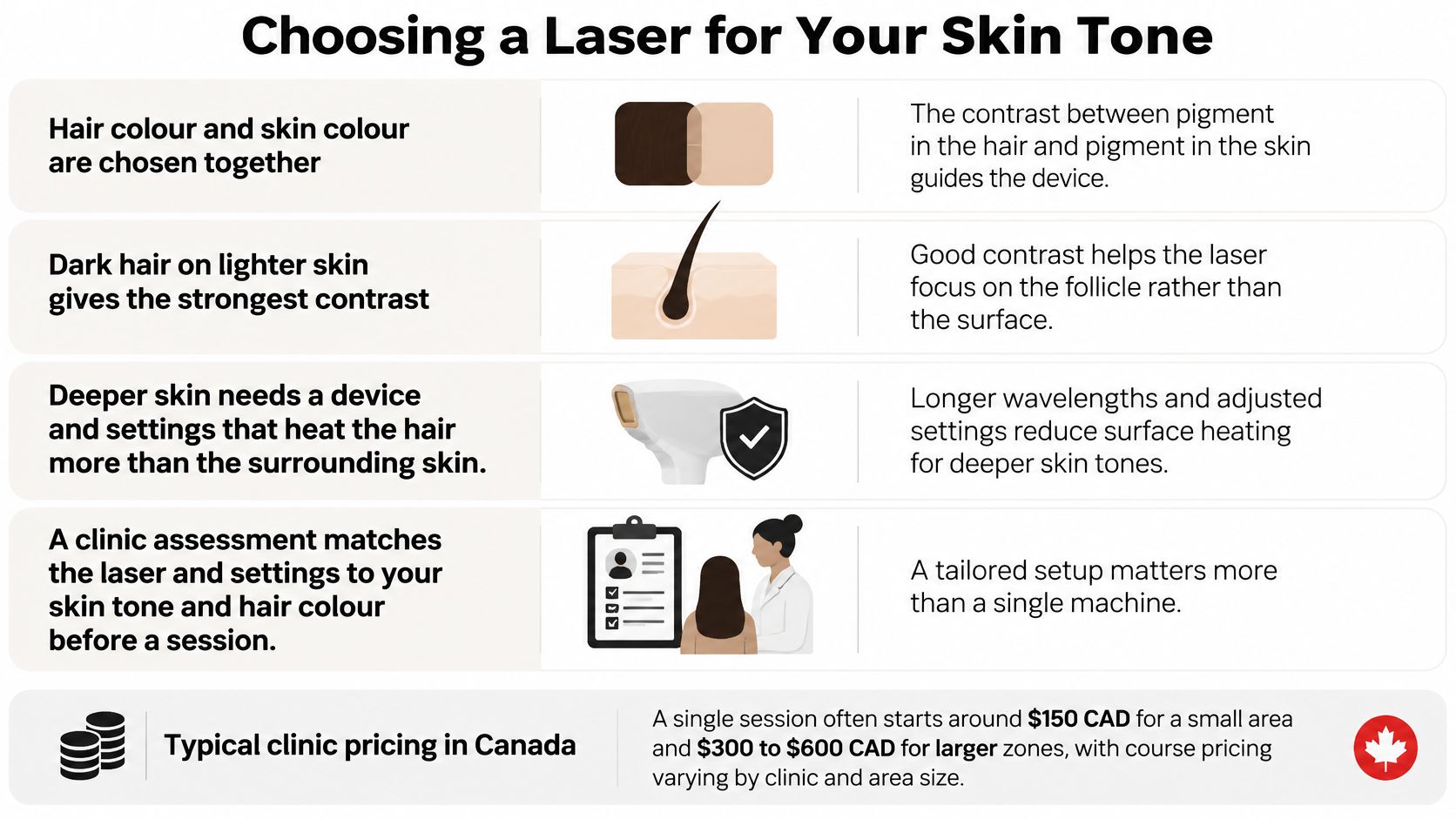
Contrast between hair and skin drives device choice, and it changes what a session can do for you.
Canadian clinical guidance from Alberta Health Services identifies laser or light-based removal as an appropriate component of hirsutism management alongside evaluation and treatment of androgen excess. In practice the work splits cleanly. Your doctor follows menstrual irregularity, acne and rapid change. We treat pigmented terminal hairs during the growth phase they're in.
What most people notice first isn't a bare patch. It's regrowth that comes in slower and finer, and shaving that stops being a daily chore.
Pale, grey, red or very fine hair carries too little pigment for either of our lasers to chase, and another method serves you better. New follicles can still appear over time because laser doesn't correct the hormonal condition. In our London clinic we frame the plan as reduction plus later observation, never as a cure. Sudden or rapidly worsening growth, or signs such as voice change, belong with a physician rather than a treatment room.
The wider causes of coarse facial hair sit in our guide to unwanted hair growth and hirsutism, and the treatment itself is outlined on our laser hair removal service page.
Choosing a Laser for Your Skin Tone
Hair colour and skin colour get chosen together, not separately. Dark hair on lighter skin gives the strongest contrast, which lets the device focus on the follicle instead of the surface. Deeper skin needs a device and settings that heat the hair more than the surrounding melanin.
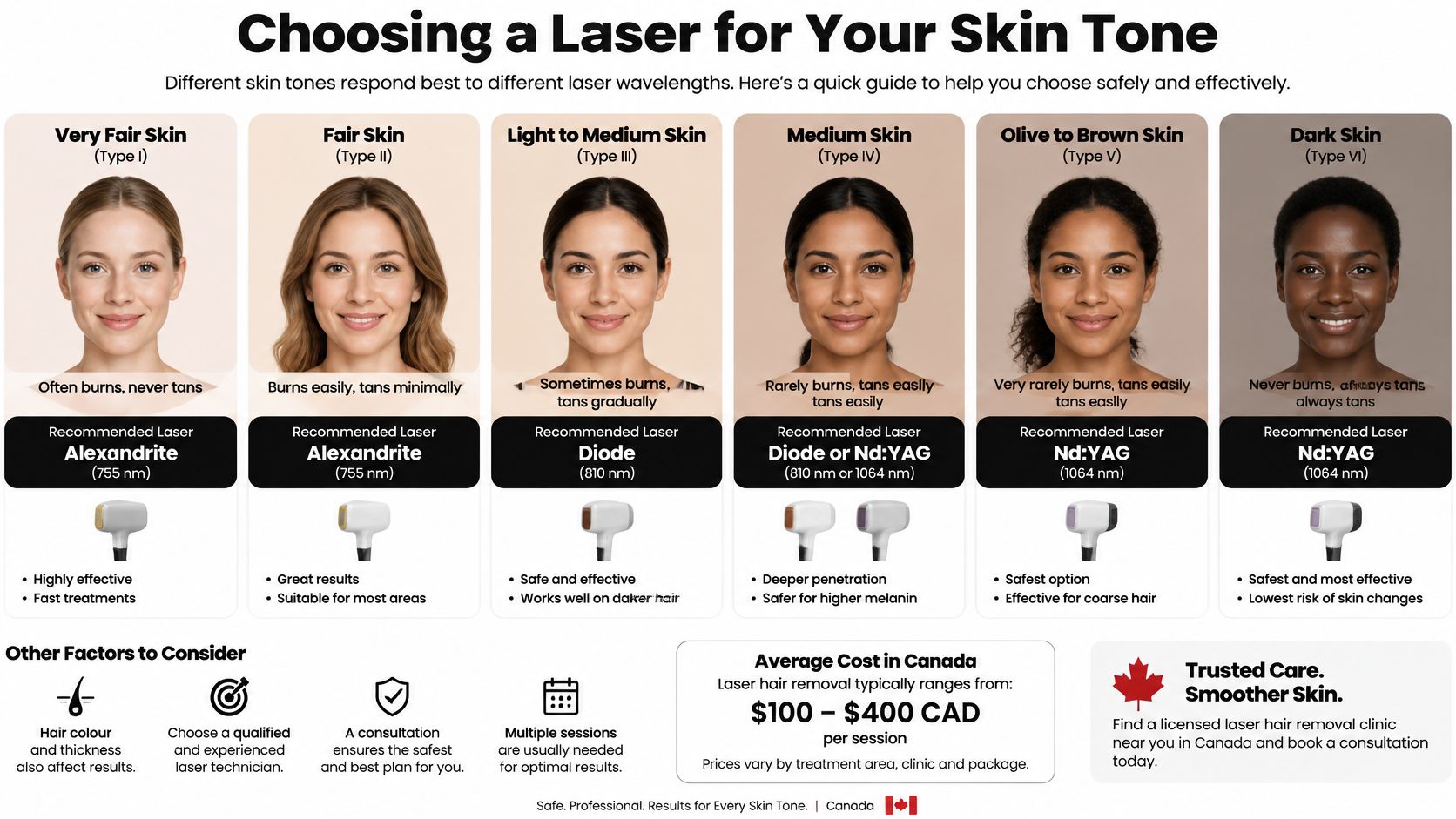
At Skinsation Aesthetics in London, Ontario, we match the device to your Fitzpatrick type and your hair after a look at both. The Lumenis LightSheer XC suits darker hair over larger areas. The Aerolase Neo Elite is an option we use across skin tones, including Fitzpatrick 4 to 6. Our packages page asks you to select your Fitzpatrick skin type so the appointment is set up for the right equipment from the start, rather than one setting being applied to everybody.
A test spot and a review of recent sun, self-tanner and photosensitising products come before a full area. If your skin is deeper, our guide to laser hair removal on dark skin in London, Ontario explains why settings shift, and there's a longer clinical walkthrough in is laser hair removal safe for dark skin.
Cost questions come up in every consultation, and it helps to see how device time and area size drive a quote; this breakdown of erbium laser cost per session shows the same mechanics at work elsewhere. The decision rule here stays simple: if the hair is too light for either laser, we say so at the consultation instead of selling a course.
Chin, Neck, Chest and Abdomen Timelines
Chin and jawline. This is the first request for most PCOS clients. It's a small area but a hormonally busy one, so the early course follows the growth cycle and then shifts into watch-and-maintain rather than endless back-to-back sessions.
Upper lip and neck. Often added once you know how your skin settles after a session. Neck hair can be finer and more diffuse than chin hair, which changes how much we treat on the day.
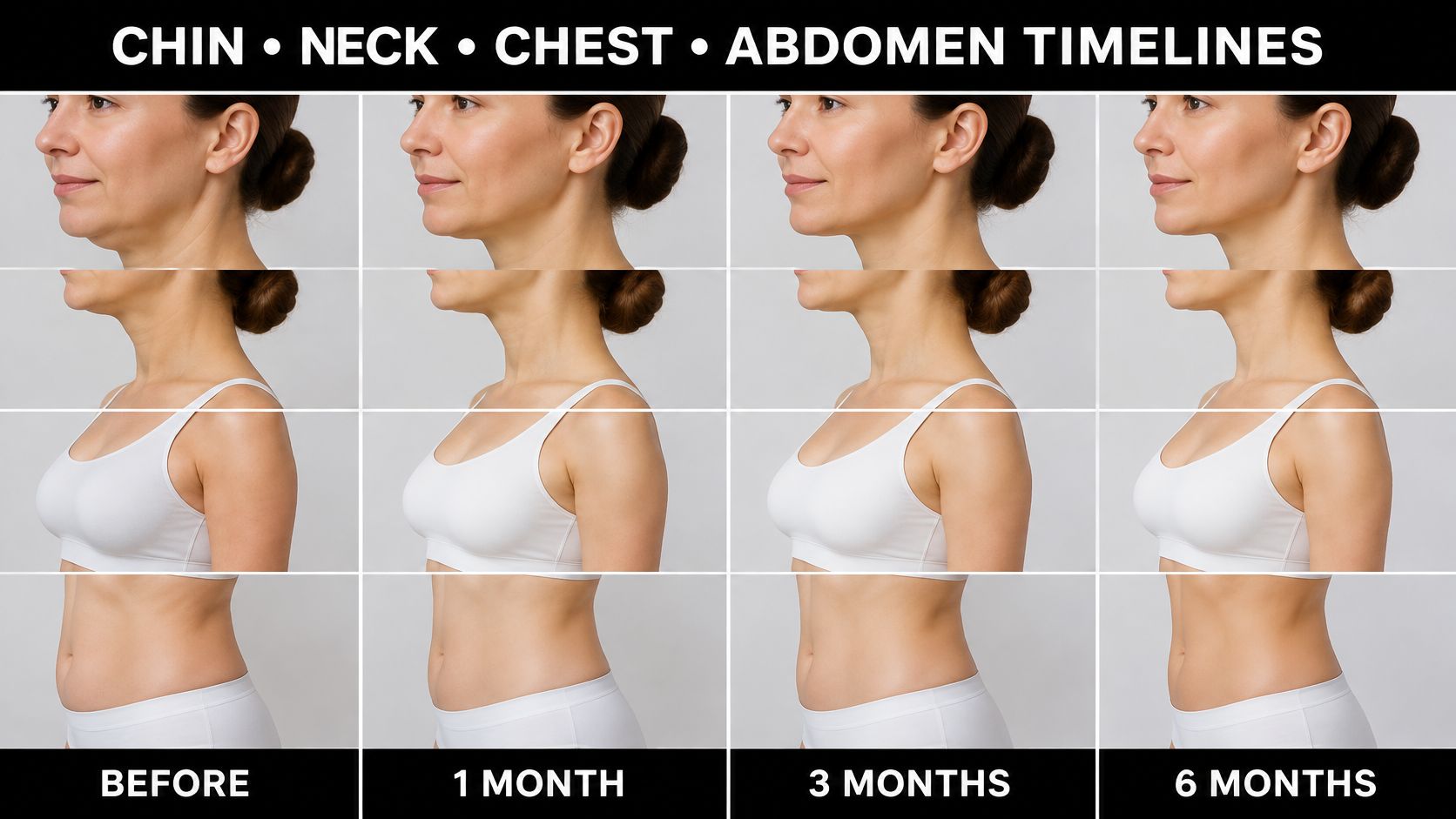
Chest or abdomen. Planned as a larger field, with the same rule applying: only active dark hairs respond that day.
Between visits, shaving is the usual bridge. Waxing, threading and plucking are paused on the treatment zone because they pull out the target the laser needs. After a session, cool the skin, skip heat and sun for a couple of days, and call if a reaction worries you. If you pause for pregnancy planning or a medication change, you restart with a fresh look at the hair rather than starting your whole story over.
Risks and When Another Method Fits Better
A 2025 prospective study in Lasers in Medical Science found paradoxical hypertrichosis, meaning new or increased hair growth, in 33.3% of participants with PCOS compared with 14.1% without it, and a higher rate among those who had 6 to 10 sessions than among those who had fewer (30.9% versus 6.8%) (Lasers in Medical Science).
That number should change how a hormonal face gets treated. More sessions are not automatically safer or better. Watch the border of a treated patch for new fine dark hairs, and pause to reassess instead of turning up the intensity.
Practical rule: if the centre of a patch is clearing while the border is thickening, we stop and review the plan before we add a single session.
Some days we don't treat at all: active infection in the area, a fresh tan, or a medication history the clinician needs, including isotretinoin timing and photosensitive drugs confirmed with the prescriber who ordered them. Skinsation offers laser and waxing. Electrolysis isn't a service we provide, so I'd point you to a dedicated electrologist rather than book you into something we can't do properly.
Laser electrolysis and waxing for PCOS hair
Method | Best fit | Limit with PCOS |
|---|---|---|
Laser | Dark terminal hair on face or body | New growth can return; more sessions raise paradoxical-hair risk |
Electrolysis | Pale, grey or single coarse hairs | Slow for large areas; not offered as a Skinsation service |
Waxing or threading | Short-term smoothing between decisions | Pulls the hair; paused on a zone in active laser treatment |
The full picture of what can happen to skin after a session is in our guide to laser hair removal side effects. If the hair is changing fast, the next step is a doctor's appointment, not a longer package.
Answers Before You Book in London
Does laser hair removal work with PCOS? It can significantly reduce existing dark terminal hair, and it usually needs maintenance afterward. Androgen care stays with your doctor. A 2024 systematic review covering 6 studies and 423 patients reported that laser and light-based treatment reduced hirsutism severity and improved quality of life (JAMA Dermatology).
How many sessions do PCOS clients need? More than a standard course, and your number gets set at the consultation rather than sold as a fixed package. The chin often needs more visits than a forearm does.
Will the hair come back? Treated follicles can stay quieter for a long time. Hormone-driven hairs can still appear later, including fine hairs at the edge of a treated patch. Maintenance keeps it manageable.
Is laser better than waxing for PCOS? For dark hair, laser is the longer-reduction option. Waxing and threading only clear surface hair for a few weeks, and they're paused on any zone you're lasering.
What the consultation covers
Areas of concern, and whether the pattern has changed recently
Hair colour and texture, plus your Fitzpatrick type
Past removal methods, including how your skin reacted
Recent sun, tanning beds or self-tanner
Medicines your prescriber should confirm before we treat
Fees depend on the area and the package and get quoted at that visit. As a reference point, six abdomen sessions with the Aerolase are $900, reduced from $1,080, which works out to $150 per session for a larger field. Laser is cosmetic hair reduction, not PCOS treatment, and nothing here replaces your doctor's advice on hormones.
At Skinsation Aesthetics Inc. we offer laser hair removal for the areas PCOS affects most, including the chin, jawline, upper lip, neck, chest and abdomen, with Aerolase treatments suited to all skin tones and a consultation that sets honest expectations before you commit to anything. If hormone-driven hair has you cycling through tweezers and wax, book a private consultation at our London clinic and we'll build a plan around your skin, your hair and the medical care you're already receiving. Visit Skinsation Aesthetics Inc. or call 519-933-8538 to book.
Comments