

Dark Circles Under Eyes Treatment: Which Type You Have

Sleep more and buy a brighter eye cream. That advice fails a lot of people because it treats every dark circle as the same problem. In our London, Ontario clinic, we name the type first. Pigment, blood vessels, shadowing, and lifestyle triggers need different answers. If you match a treatment to the wrong cause, you can spend money and see very little change.
Which Type of Dark Circle You Have
The short answer is simple. Dark circles under eyes treatment depends on the type, not on a trend.
Pigmented circles look brown or tan. Excess melanin is the cause, often with sun exposure or rubbing, and they're common in deeper skin tones. Vascular circles look blue, purple, or red. Thin skin lets vessels show through.
Structural circles are shadows from tear-trough hollows or puffy lids. They shift with light and head position. Lifestyle darkness worsens with poor sleep, allergies, dehydration, and rubbing, then eases on better days.
More than one type can sit together, which is why one product rarely fixes everything.
Health Canada's cosmetic laser guidance identifies cosmetic lasers as devices used for both pigmented blemishes and vascular lesions, separate targets that need separate assessment.
Dark circle types at a glance
Type | Colour and look | Typical trigger | Quick clue |
|---|---|---|---|
Pigmented | Brown or tan, sometimes patchy | Excess melanin, sun, rubbing | Colour stays when skin is stretched |
Vascular | Bluish, purple or reddish, thin looking | Visible vessels through thin skin | Blue or purple tone shows through |
Structural | Shadowed groove or puffy lid | Volume loss, puffiness | Shadow shifts with light and position |
Lifestyle | Darker when tired or congested | Poor sleep, allergies, dehydration | Worse on bad days, eases with control |
Use the table as a starting point, not a diagnosis.
How to Check Your Type at Home
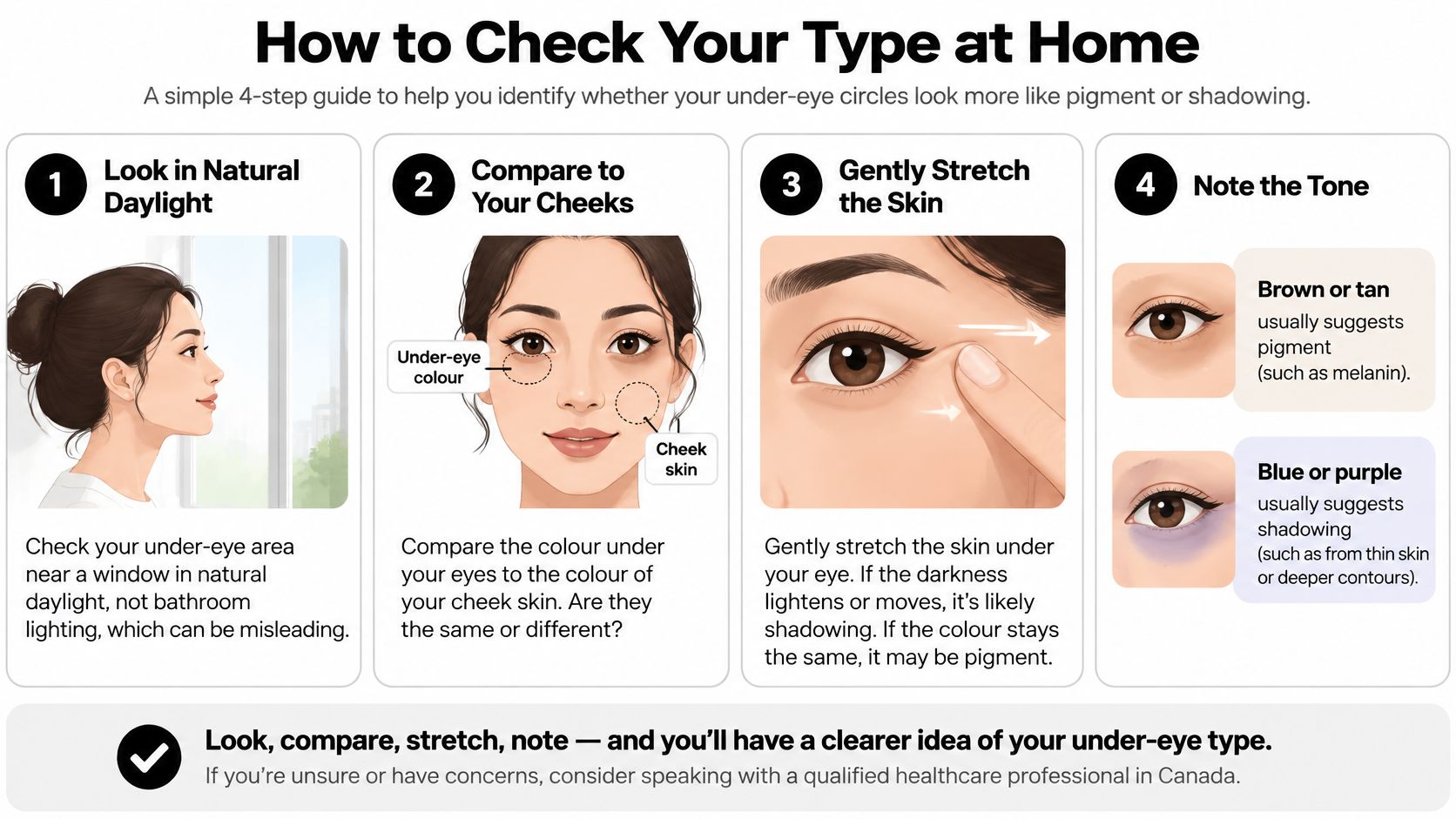
Look in natural daylight: Compare your under-eyes with your cheeks near a window. Brown or tan against normal cheek colour points to pigment. Blue or purple points to vessels or thin skin.
Gently stretch the skin: Pull outward with one fingertip, then release. Pigment keeps its colour. A shadow that softens or moves points to structure.
Compare good and bad days: Note how you look after solid sleep versus after rubbing, a poor night, or allergy symptoms. Big swings suggest lifestyle is driving much of it.
Check for triggers: Itchy or watery eyes, congestion, eczema, and rubbing all matter.
Canadian clinical guidance on allergic rhinitis estimates it affects roughly 20 to 25% of the population, with tree pollen from mid-March to mid-June, grasses from mid-May to late July, and ragweed from mid-August until the first frost in southwestern Ontario.
This check sorts likely causes. It doesn't replace an in-clinic assessment.
Treatments Compared by the Type They Target
Treatment options by the type they target
Treatment | Best suited to | Limit |
|---|---|---|
Brightening topicals, retinoids and hydroquinone | Mild pigment, early change | Slow. Irritation and post-inflammatory darkening possible |
Chemical peels | Surface pigment | Downtime varies. Pigment-change risk in deeper skin |
Q-switched laser, including Hollywood Spectra | Brown, pigmented circles | Doesn't correct hollows or blue vessels |
Microneedling with topical agents | Pigment and texture together | Protocols and evidence vary |
Dermal fillers | Hollows and tear-trough shadowing | Doesn't treat pigment. Medical injector assessment needed |
Allergy and sleep management | Congestion and puffiness | Doesn't reverse pigment already set |
No single option wins for everyone. A review of periorbital hyperpigmentation treatments found most modalities reduced pigmentation but did not consistently eradicate it, so realistic goals matter.
Topicals are slow and can irritate. Peels and lasers need conservative settings in deeper skin because inflammation can darken pigment. Fillers can soften a hollow, but they don't change brown colour.
Our guide to hyperpigmentation treatments in London, Ontario covers pigment options in more depth, as does our laser treatment for dark spots explainer.
Practical rule: Match the treatment to the type first, then judge standardized photos after a series, not after one visit.
Who Hollywood Spectra Suits and How the Visit Works
In London, Ontario, we consider Hollywood Spectra for brown-toned circles where excess pigment is the main problem. It isn't a fit for blue or purple circles, hollowness, or puffiness, and we'll say so at consultation.
Candidacy covers recent tanning, active irritation, rubbing, prior post-inflammatory darkening, medications, and previous reactions. Those details matter more in deeper skin tones.
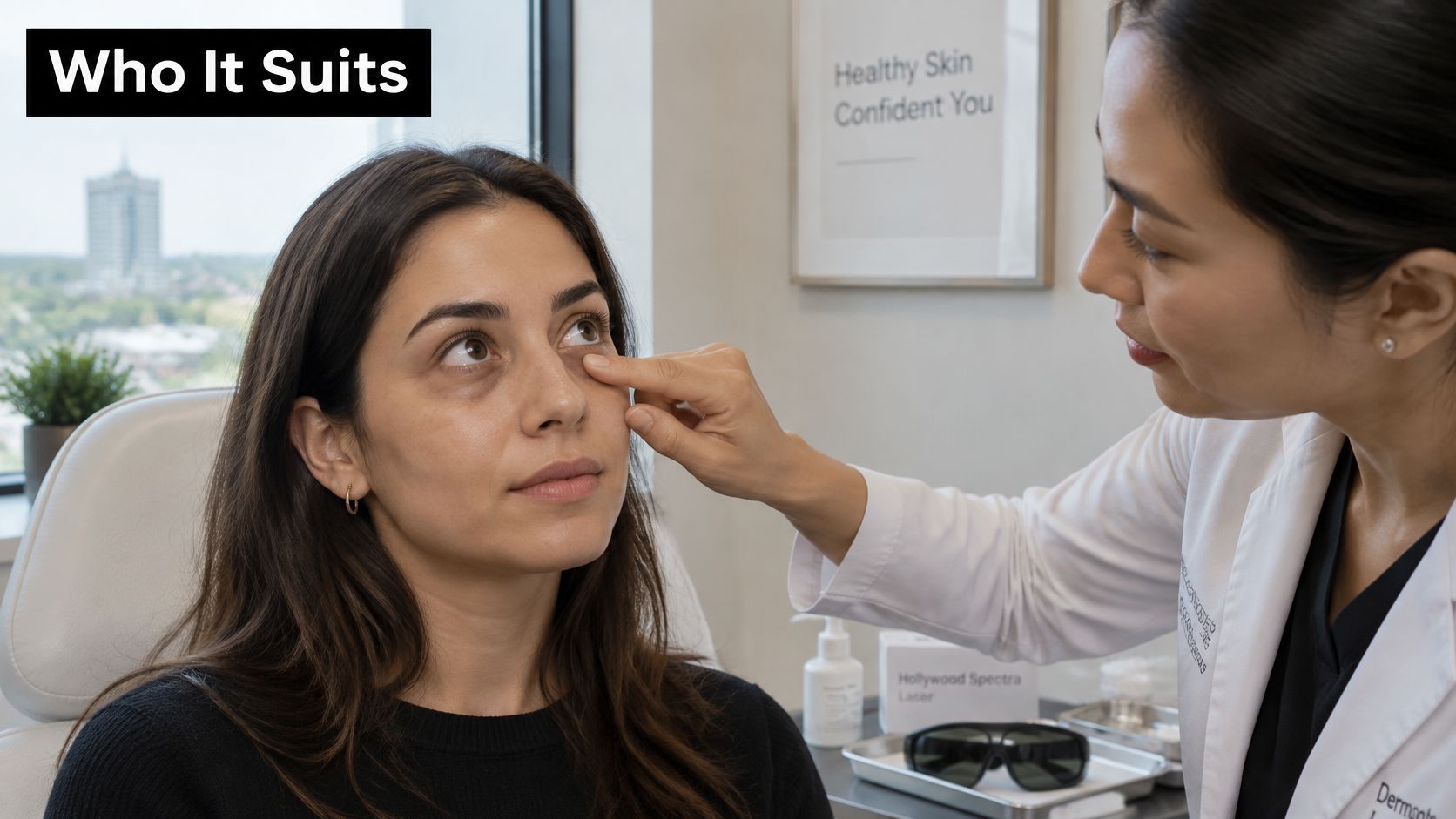
At a general level, the laser targets excess pigment while leaving most surrounding tissue largely alone. Results build gradually across a series. We set the number of sessions at consultation rather than promising it upfront.
How a Visit Runs
Consultation and photos: We assess colour, skin tone, triggers, and tear-trough shadowing, then take baseline photos.
Eye protection first: Protective eyewear goes on before any light is used, at every session.
The session: Comfort is discussed beforehand and checked during treatment.
Aftercare: Daily sun protection and no irritation. Downtime varies by person and is reviewed with you.
Reassessment: We compare photos before deciding on the next step.
Details are on our Hollywood Spectra service page and in our Hollywood Spectra explainer for London, Ontario. It's one option for pigmented circles, not a treatment for every dark circle.
What Hollywood Spectra Will Not Fix
Hollywood Spectra targets pigment. It won't fix shadows from hollowness.
Volume loss in the tear trough casts a shadow that no colour-based treatment can remove. That concern may need a referral to a medical injector who can assess filler or other options.
Puffiness tied to allergies or poor sleep is different again. Fluid and inflammation move with those triggers, so the trigger needs attention first. Blue or purple circles from visible vessels also need separate assessment. They aren't surface pigment.
Rubbing is another blocker. If you keep irritating the area, pigment progress can stall because you're renewing the trigger between visits.
Signs Your Problem Sits Beyond Pigment
A shadow that stays after restful sleep: Structure is likely involved.
A persistent bluish tone: Vessels or thin skin need assessment.
Morning puffiness: Fluid, sleep position, or allergies may drive it.
Seasonal flares: Congestion and rubbing often worsen colour.
If hollowness is your main issue, honest advice is to see an injector, not to buy more laser sessions.
Habits That Support Any Dark Circle Treatment
Habits don't erase set pigment, but they protect results and reduce recurrence, especially for pigmented and lifestyle types.
Apply SPF daily: Cover the under-eye area and face year-round because sun exposure feeds pigment.
Stop rubbing: Remove makeup with gentle hands and no tugging.
Keep sleep regular: A steady schedule helps puffiness, and readers looking to optimize daily habits for deeper rest can start with consistent wake times. Adjust sleep position if mornings look puffy.
Choose a gentle eye cream: Patch test first and treat it as support, not correction.
Our article on skincare mistakes that stop results lasting covers common slip-ups. Tonight, put sunscreen by the sink and slow down makeup removal.
Common Questions About Laser and Dark Circles
Can laser get rid of dark circles? It can improve brown, pigmented circles. Improvement is the practical goal because most treatments reduce pigment without fully clearing it.
Are dark circles genetic? They can run in families. Inherited skin thickness, pigment tendency, and eye structure all play a role, while sun, rubbing, and sleep add to it.
How many sessions will I need? That depends on type, skin tone, and response. We set the plan at consultation and review it with photos, rather than promising a number first.
Is laser safe near the eyes? Eye protection is used at every session and settings stay controlled. Health Canada's notice on thermal harm from therapeutic lasers identifies a maximum skin temperature above 45°C, without a sound scientific rationale, as unsafe for licensing purposes, and warns incorrect device selection can cause lightening, darkening, or permanent scarring. Device choice matters, which is why we also explain our reasoning in Aerolase versus traditional laser.
What Treatment Costs in London, Ontario
Cost depends on the type, area treated, number of sessions, and whether care involves a device or an injectable. Published Ontario filler figures give context only. They aren't Skinsation pricing.
Published Ontario filler prices for context
Treatment and area | Commonly quoted price | Source and year |
|---|---|---|
Under-eye filler, Brampton | CA$800 to CA$1,650 per syringe | The Clinic Compass, 2026 |
Under-eye filler, Mississauga | CA$800 to CA$1,650 per syringe | The Clinic Compass, 2026 |
Dermal filler, Toronto and Markham | CA$600 to CA$1,200 per syringe | ID Cosmetic Clinic, 2025 |
Hollywood Spectra, per session | Quoted at consultation | Quoted at consultation |
In Brampton, The Clinic Compass's under-eye filler guide reported CA$800 to CA$1,650 per syringe in 2026, and its Mississauga under-eye filler guide reported the same CA$800 to CA$1,650 per syringe range. In Toronto and Markham, ID Cosmetic Clinic's filler pricing article reported CA$600 to CA$1,200 per syringe in 2025.
Hollywood Spectra pricing isn't published here. We quote per session after assessing type and skin, and a series costs more than one visit. A filler referral is a separate cost with a separate injector. We talk through the total before anything is booked.
Book Your Type Assessment in London, Ontario
Paying for a laser before anyone names the type is how people treat hollowness or allergies as if they were pigment. Book a consultation with Skinsation Aesthetics Inc. in London, Ontario, and confirm the type before you commit.
Bring daylight photos, along with a short list of triggers covering allergies, rubbing, and sleep. Those details show whether the color comes and goes or stays put. Skinsation's certified skin care specialist suggests the ideal procedure for your skin requirements, and every treatment is fully customized to your goals.
If the darkness reads as brown pigment, ask about the Aerolase Dark Under Eyes treatment. It lasts 15 minutes and costs 120 Canadian dollars. I recommend that option only when the type matches. Ask that question at the consultation rather than booking the device first. A hollow groove or an allergy pattern calls for a different plan, and a short laser visit will not correct either one.
Confirm your type. Then choose the treatment.
Comments