

Back Facial in London, Ontario: Clear Your Back Skin

A back facial is a professional facial-style treatment for the back that cleanses, exfoliates, extracts and masks, aimed at back acne (bacne), clogged pores, rough texture and dull skin. But if the bumps aren't acne, is a deeper clean the right first step?
Before holiday events or winter getaways, it's tempting to scrub harder and hope for quick clearance. A better approach starts with identifying the skin concern, choosing tolerable treatment and knowing when cosmetic care isn't enough.
What a Back Facial Is and Who It Helps
Say your shoulders break out after training, while the skin along your spine feels rough. Those concerns may benefit from different parts of a back facial. Extractions address suitable clogged pores; gentle exfoliation targets surface buildup. Neither should automatically be applied everywhere.
In our London, Ontario clinic, assessment separates upper-back breakouts, sweat-related congestion and bumpy texture before treatment selection. A back facial reaches awkward areas, but it remains a cosmetic service, not medical acne treatment.
The Canadian Acne Epidemiological Survey found back acne in 61% of a dermatologist-assessed referral cohort of 965 patients, compared with 45% on the chest. That supports checking the overall trunk pattern rather than concentrating on a single visible spot.
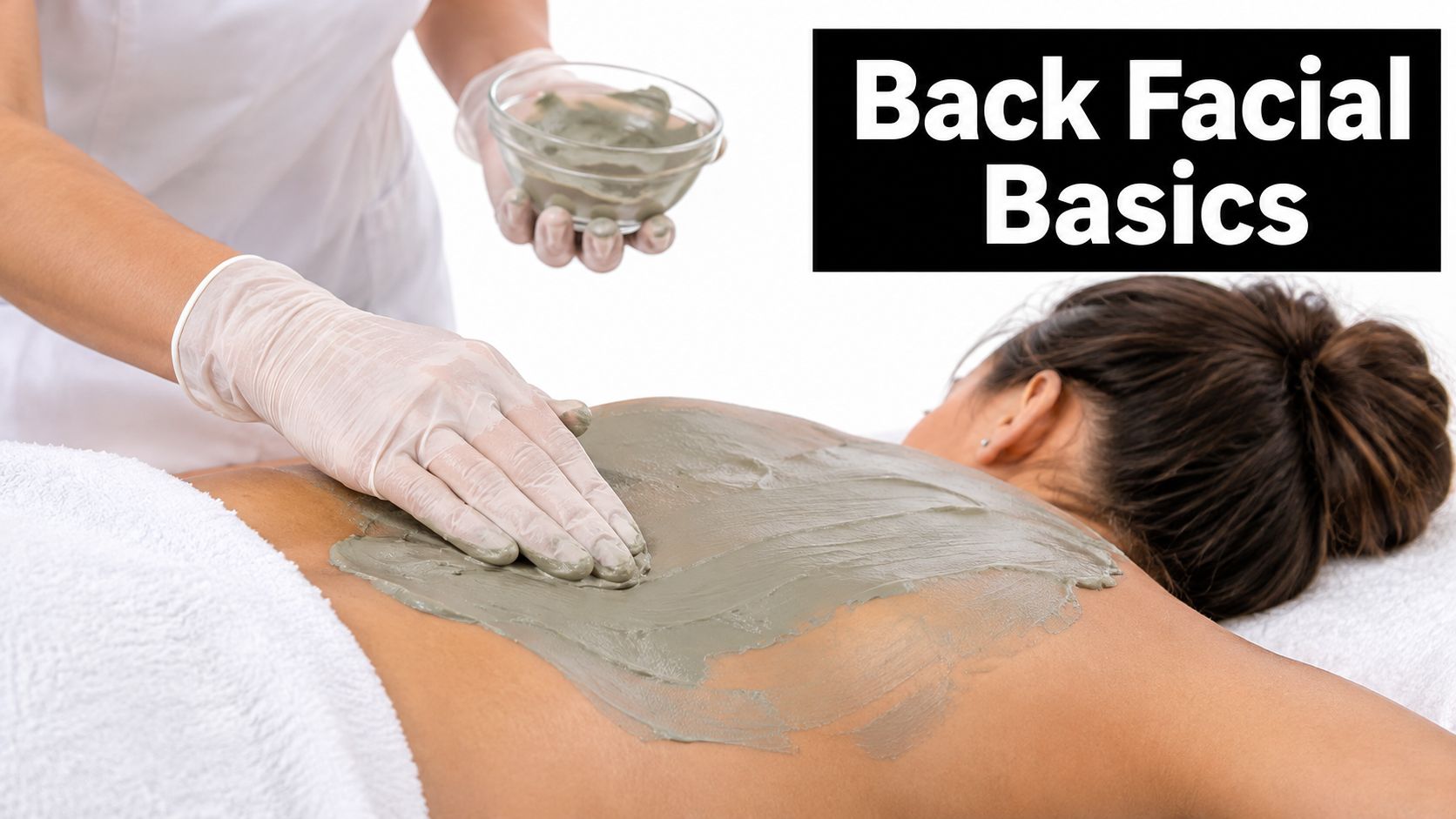
People with congestion, roughness or mild blemishes may benefit, including those who exercise frequently or wear backpacks and sports padding. Which concern fits you best: inflamed breakouts, blocked pores or rough texture? That distinction determines which treatment steps deserve attention.
Why Your Back Breaks Out
Bacne isn't proof of poor hygiene. Canadian government clinical guidance identifies the face, chest and back as common acne sites and describes androgen stimulation of follicles during puberty.
Everyday exposures can add to the problem:
Sweat and heat: Staying in a damp cycling jersey keeps moisture, oil and clothing against the skin.
Friction: Backpack straps, tight tops and sports padding repeatedly rub the same areas, sometimes contributing to acne mechanica.
Product residue: Conditioner, styling products and heavy body lotion can leave an occlusive film.
Hormones: Oil-gland activity can help explain persistent breakouts despite careful washing.
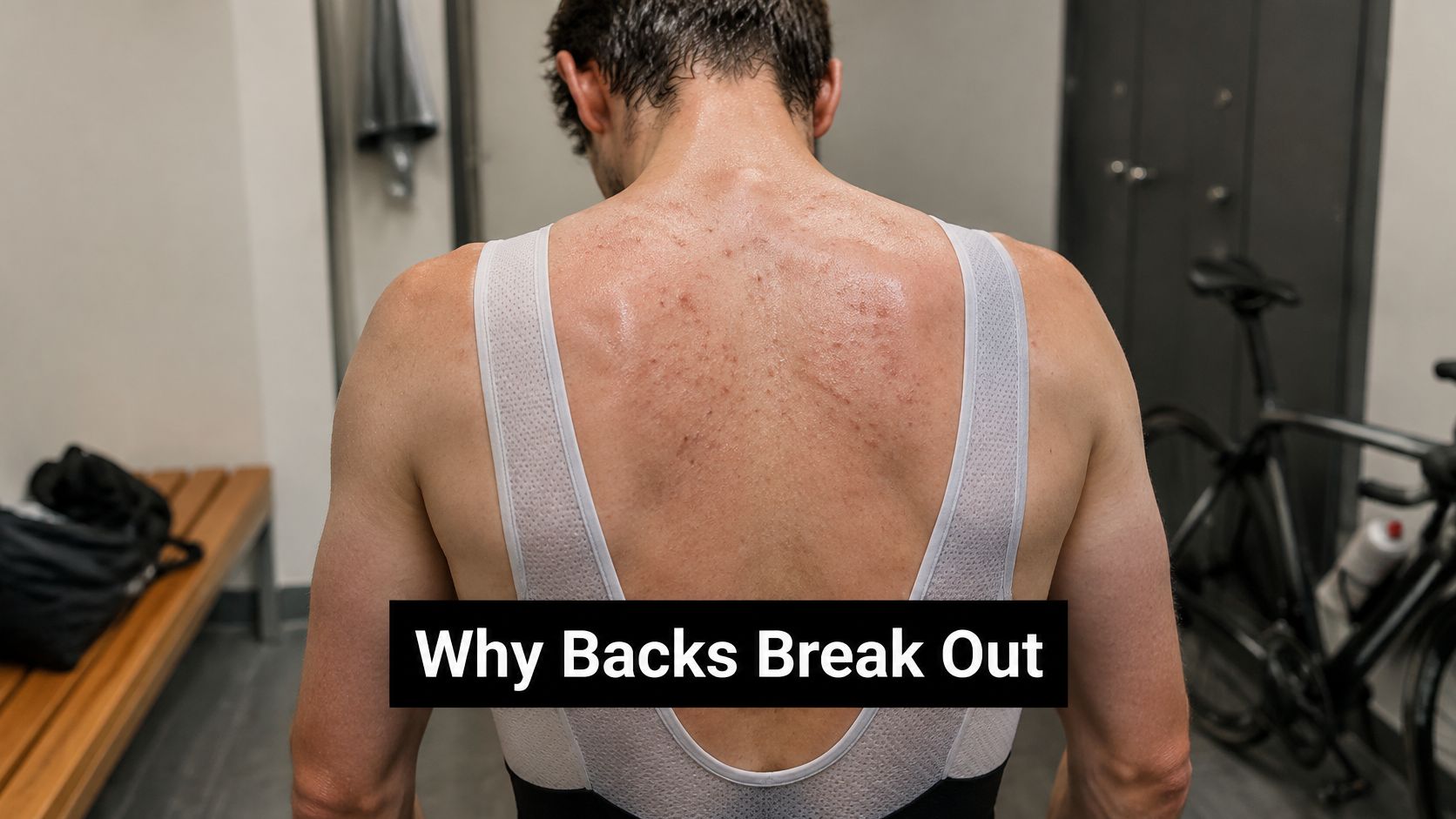
Look-alikes matter. Itchy, follicle-centred pustules may suggest folliculitis; rough, non-inflamed bumps may be keratosis pilaris. Irritation can follow a strap or product-contact pattern, while acne commonly includes blackheads, whiteheads and inflamed bumps.
For practical routine changes, Neutralyze's clear skin habits for bacne offers a useful starting checklist. Persistent or uncertain patterns need assessment rather than trial-and-error exfoliation.
Who Should Skip a Back Facial or See a Doctor First
More peeling isn't a better result. Wait if your back has active eczema, dermatitis, open wounds or sunburn. Disclose recent tanning, peels, new retinoids or exfoliating acids, and any history of keloid scarring before proceeding.
Health Canada's acne-treatment guidance notes that common acne ingredients can cause dryness, redness, burning, peeling and swelling. For darker skin tones or skin prone to post-inflammatory marks, conservative exfoliation, sensitivity testing and barrier support deserve priority.
Doctor first: Deep painful cysts, nodules, scarring or spreading inflammatory acne need medical assessment, not a more intensive extraction session.
Adults with intact skin and mild congestion are more suitable candidates. At consultation in London, Ontario, bring prescription details and settle whether acids, shaving or fragranced products should be paused. Don't stop prescribed treatment without the prescriber's advice.
Agree on measurable goals, such as fewer lesions, less itching or smoother texture. Severe itching, hives, facial swelling, throat tightness or breathing difficulty require urgent medical attention, as described in Health Canada's acne-product allergy warning.
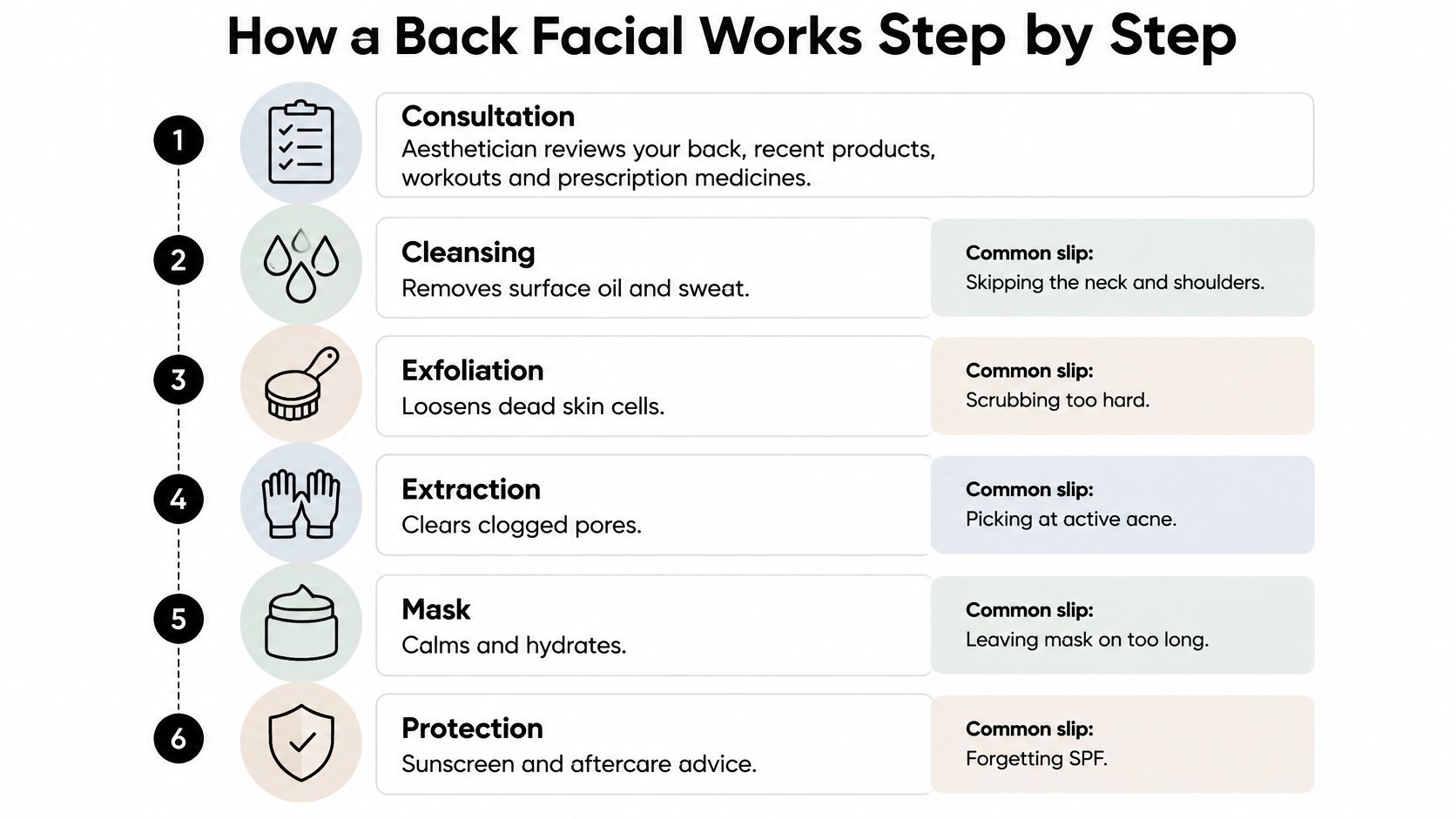
How a Back Facial Works Step by Step
Treatment should follow the skin assessment, not a requirement to use every technique.
Consultation. The aesthetician examines the back and asks about workouts, recent products, prescription medicines and previous reactions. Skipping this review risks treating irritated skin as ordinary congestion.
Cleansing. A gentle cleanser removes surface sweat, oil and product residue from the treatment area. The shoulders and hairline deserve attention too, without harsh rubbing.
Exfoliation. A suitable mild exfoliant loosens surface dead skin. Excess pressure or layering acids over an already irritating routine can leave the back sore rather than smoother.
Extractions. Appropriate congested pores may be cleared using controlled technique. Inflamed or cystic lesions are left alone, and stubborn plugs shouldn't be forced.
Mask. A calming, hydrating or purifying mask is selected for the skin's condition. Leaving it on longer than intended doesn't make it more effective.
Hydration and protection. A light moisturiser supports the skin barrier, followed by appropriate sun-protection advice. Skipping moisturiser because the back is oily can leave treated skin uncomfortable.
The next day, assess comfort before appearance. Smoother-feeling skin is possible, but fewer new blemishes should be judged over time, not promised overnight. Increasing pain, swelling or persistent burning isn't a desirable treatment response.
Our guide to facials with extractions explains pore-clearing techniques in more detail.
How a Back Facial Compares With Other Back Treatments
Choose the treatment for the problem, not the strongest-sounding name. A scrub, peel and acne prescription aren't interchangeable.
Back facial compared with other back treatments
Treatment | What it involves | Best for | Limit |
|---|---|---|---|
Back facial | Cleansing, exfoliation, extractions and a mask | Congestion, rough texture and dull skin | Doesn't treat deep cysts or scarring |
Body scrub | Back and body exfoliation without extractions or a mask | Dry, bumpy skin over a wide area | Does little for clogged follicles |
Chemical back peel | Acid exfoliation that may be more intensive | Uneven texture when a provider judges it suitable | Greater irritation and pigment concerns with aggressive treatment |
Prescription topicals | Prescribed retinoids, combination acne medicines or topical antibiotics; benzoyl peroxide may also be used | Localized mild to moderate acne | Requires consistent use and appropriate medical oversight |
Physician assessment | Medical examination, treatment selection and referral | Cysts, scarring or spreading acne | Not a cosmetic service |
A stronger peel isn't automatically the next step after a facial. Canadian acne guidelines highlight limited evidence specific to truncal acne, so facial-acne results shouldn't become guaranteed back-treatment claims.
For help understanding cosmetic support, our acne treatment facial guide explains how assessment informs treatment selection.
How Often to Book for Breakouts and Maintenance
Book around skin recovery and a clear goal, rather than committing to a fixed package before assessment. Active congestion, maintenance and event preparation need different decisions.
Typical back facial booking intervals
Goal | Typical interval | Typical sessions | Check-in point |
|---|---|---|---|
Active breakouts or congestion | Closer follow-up only once skin has recovered | A short course, continued only if helpful | Compare congestion and irritation before rebooking |
Maintenance after skin clears | More widely spaced or as needed | Occasional maintenance | Reassess at each visit |
Before an event or winter getaway | Start well ahead, not immediately before departure | Initial assessment, then follow-up if suitable | Leave recovery time before the event |
These are planning principles, not a validated medical dosing schedule. Sensitive skin or a new prescription may require longer spacing, while worsening inflammatory acne calls for medical review rather than more appointments.
A useful schedule produces better-tolerated skin, not progressively stronger exfoliation.
Track fewer new bumps, reduced congestion and smoother texture under similar lighting. If the skin becomes increasingly tender or flaky, reassess the routine before continuing.
Our guide to facial frequency offers broader advice on balancing corrective care and maintenance.
Home Care Between Visits That Keeps Results
What you do between visits decides whether congestion stays down. Home care should clear residue and calm irritation, without adding a second aggressive treatment.
Shower in lukewarm water after exercise and change wet gym clothes promptly. Damp straps against the shoulders and mid-back keep truncal congestion going. Prefer breathable cotton or moisture-wicking fabric that does not rub tightly.
Rinse conditioner off before you cleanse the back, so runoff does not stay in pores. Use a gentle, non-comedogenic wash and a light moisturiser, and skip abrasive brushes on active blemishes. Protect treated skin from the sun, avoid tanning beds, and leave self-tanner off the back before the next assessment.
For new benzoyl peroxide, follow the product label. Patch-test a small area and start with once-daily use. Reduce the frequency if dryness or peeling develops. I recommend medical advice if there is no improvement after several weeks, or if a severe reaction occurs. Widespread inflammatory back acne needs a doctor before another facial.
Benzoyl peroxide can bleach fabric, so use white towels and let it dry before dressing. Simplify the products you use and bring a list of current medicines. Our guide to care after a facial explains how to look after the skin once you leave.
Common Questions About Back Facials
What is a back facial?
Cosmetic facial-style care adapted to the back. Steps are selected for your skin after assessment, not performed automatically.
Does a back facial help back acne?
A back facial may help congestion on the trunk. Inflammatory back acne still needs medical treatment. Canadian clinical guidance identifies the back as difficult to treat with topicals alone and strongly recommends benzoyl peroxide for localized mild-to-moderate papulopustular acne.
How long does a back facial take?
At Skinsation Aesthetics, a Back Facial takes 45 minutes, and the appointment begins with the skin assessment described above. If work timing matters, confirm the full appointment when you book.
Is it good for men?
Yes. Skin condition matters more than gender. Sports equipment, back shaving, and friction should inform the treatment plan.
Book Your Back Facial in London, Ontario
Booking only makes sense after the back has been assessed as truncal acne that cosmetic care can touch.
At Skinsation Aesthetics, the plan is built from skin history, recent products and any acne treatment already in use. The Back Facial treats shoulder to waist, takes 45 minutes and costs CAD $149. Check the back facial booking page for current availability.
Browse facial services or the adult acne treatments overview if you are still comparing options. For clinic operators organising consultation details and appointment reminders, Heyline's spa booking software setup checklist is a separate operational resource, not skincare advice.
A matched plan beats an aggressive session booked only to look clearer before a holiday. Cysts, scarring and spreading inflammation need a doctor first. A back facial is the wrong opening step for those signs.
Skinsation Aesthetics Inc. offers personalised aesthetic care in London, Ontario, including back facials for surface congestion and texture concerns. Book a back facial at Skinsation Aesthetics or call 519-933-8538, and bring your current skincare and prescription list so the visit stays within what the skin can tolerate.
Comments