

Laser Hair Removal Side Effects: A Complete Canadian Safety Guide

Thinking about silky-smooth skin but worried about potential laser hair removal side effects? I get it. The good news is that for most people, the reactions are minor, temporary, and actually a sign that the treatment is doing its job targeting those hair follicles.
Frankly, a little bit of temporary redness is a small price to pay compared to the endless cycle of razor burn, bumps, and waxing irritation.
What to Really Expect After Your Laser Session
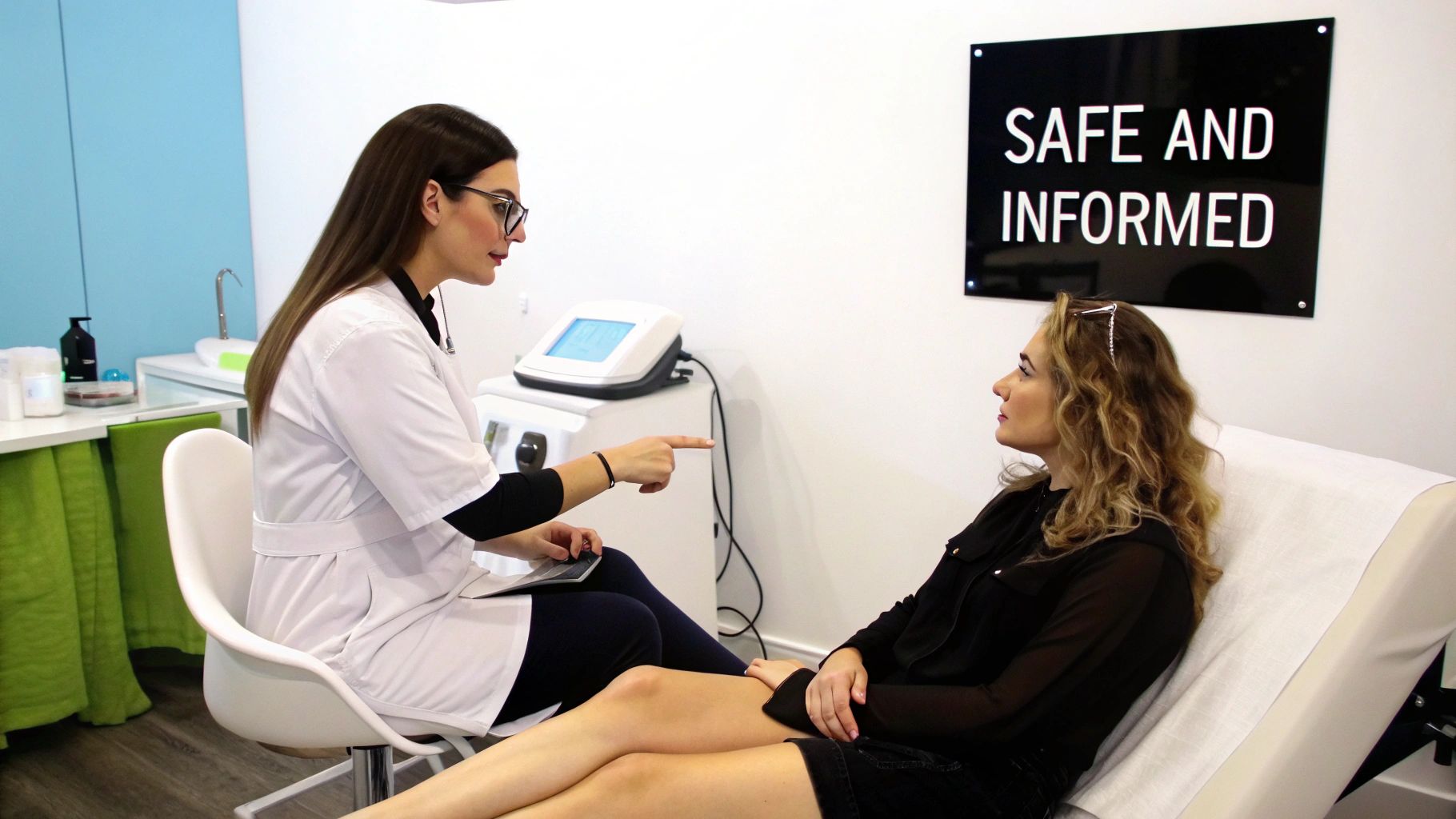
Starting your journey to permanently smooth skin is exciting, but it’s completely normal to have questions about what happens after you leave the clinic. Understanding the potential side effects is the best way to feel confident and prepared.
Think of it like the mild soreness you feel after a great workout—it’s just a temporary sign that you’ve made a positive change.
Here at Skinsation Aesthetics in London, Ontario, our number one priority is making sure your path to hair-free skin is not just successful, but also incredibly safe and comfortable. We do this by combining top-tier technology with a personal touch, making sure you feel at ease from your very first consultation. This guide is all about giving you clear, straightforward info to separate the common, totally normal reactions from the much rarer complications.
Setting Realistic Expectations
Before we get into the details, let's frame the experience correctly. The laser uses a concentrated beam of light that targets the pigment (melanin) in your hair follicles. If you want a deep dive into the science, you might like our guide on how laser hair removal works. It’s this targeted energy that causes the mild, temporary reactions.
Most of our clients across Canada experience some of the following, which usually fade within a few hours to a couple of days:
Mild Redness: This is the most common reaction, looking a bit like a slight sunburn. It’s simply the skin’s response to the laser’s energy.
Slight Swelling: You might notice a little puffiness right around the hair follicles. We actually love to see this—it’s a clear sign of a successful treatment!
A Feeling of Warmth: The treated area may feel warm to the touch for a little while after your session.
When you understand that these minor responses are a completely normal part of the process, you can relax, knowing your body is reacting just as it should to get you those lasting results. Our team right here in London is ready to guide you every step of the way.
Understanding Common and Temporary Reactions
After a laser hair removal session, it's completely normal to keep a close eye on how your skin is looking and feeling. The good news? The most common reactions are not only mild and short-lived, but they’re actually a great sign that the treatment is working exactly as it should be.
Here's a simple way to think about it: the laser sends a focused burst of energy right into the pigment of the hair follicle. That energy converts to heat, which is what stops the follicle from growing new hair. Your skin’s reaction to this controlled heat is what causes the temporary side effects you might notice.
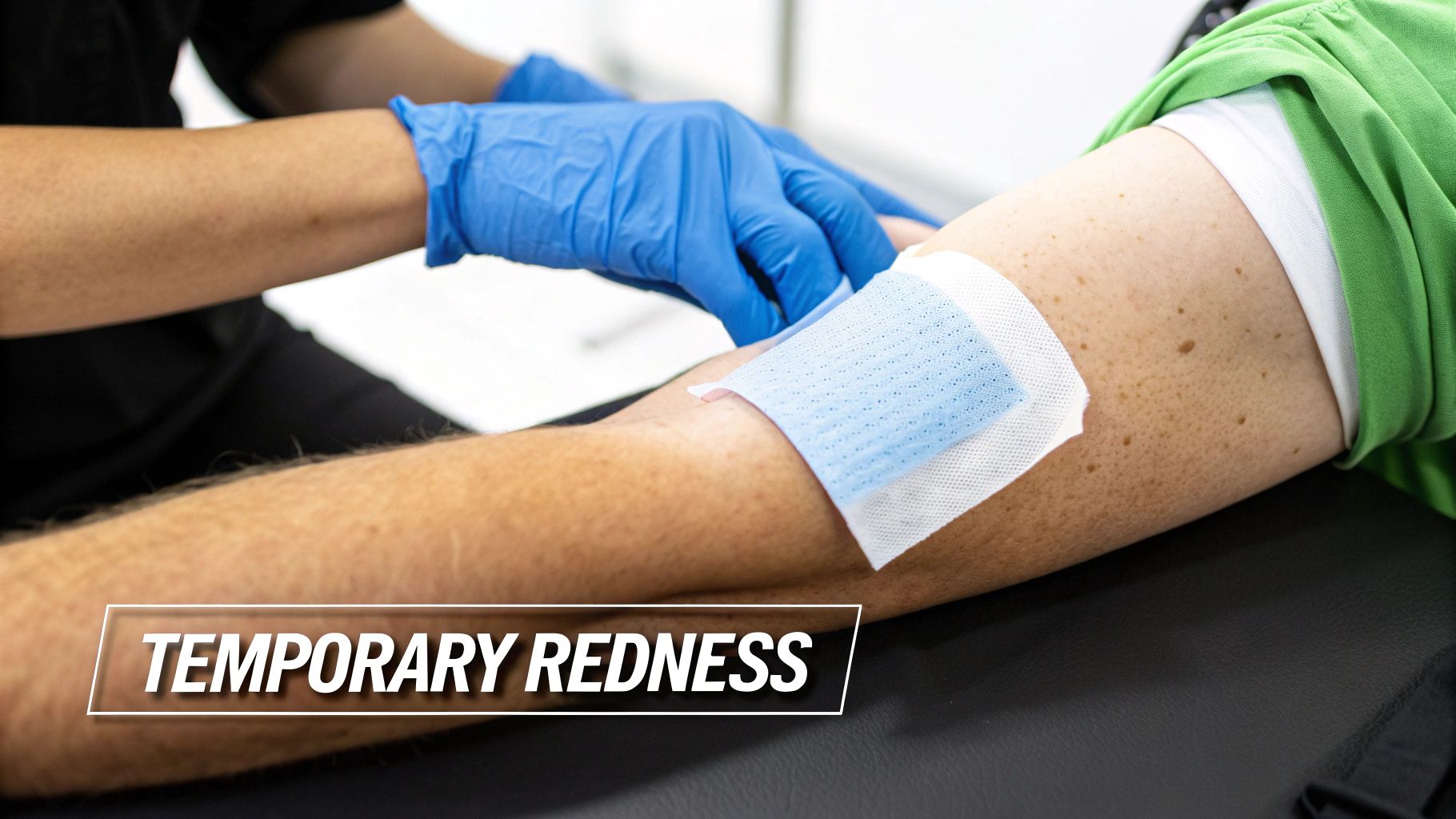
What to Realistically Expect Post-Treatment
The most common things you'll see after laser hair removal are simply your body's natural healing response kicking in. These reactions are totally normal and usually disappear within a few hours to a couple of days.
Mild Redness (Erythema): The treated area might look a bit pink, almost like a very light sunburn. This is the most frequent reaction and it just shows the skin has responded to the laser’s energy.
Slight Swelling (Perifollicular Edema): You might see tiny, raised bumps around each hair follicle. This is a fantastic sign that the laser hit its target perfectly, causing a little inflammation right where we want it.
A Sensation of Warmth or Minor Discomfort: The skin can feel warm to the touch or a little tender, much like it would after spending some time in the sun.
These responses are just a standard part of the process. They're the first visible proof that the foundation for smooth, hair-free skin is being laid.
Why These Reactions Are Actually a Good Sign
It might sound odd, but seeing a bit of redness and swelling is actually really reassuring for us as technicians. These temporary effects confirm that the laser energy was absorbed properly by the hair follicles.
That mild inflammation is the evidence we look for to know a follicle was successfully treated. This is exactly the process needed to get you that long-term hair reduction. Without this minor response, it’s hard to be certain the treatment was effective on a microscopic level.
At Skinsation Aesthetics, we see these minor, temporary reactions as confirmation of a job well done. It's the first step in your journey toward the smooth, lasting results you’re looking for.
Thankfully, the safety of this procedure is exceptionally strong. A massive survey looking at 300,000 medical laser hair removal sessions found that serious side effects were incredibly rare. The study showed that common reactions like redness and swelling were almost always mild, short-lived, and resolved without any issues. For our clients here in London and southwestern Ontario, with all our beautiful and diverse skin tones, these findings are especially comforting. They highlight why laser hair removal is such a safe and effective choice when done right. You can dive into the full study on laser treatment safety if you'd like to learn more.
Soothing Your Skin After Treatment
While these common side effects don't last long, a few simple steps can help your skin recover even faster and keep you comfortable. These aftercare tips are easy to follow and really do make a difference.
Our London, Ontario clients find these steps work wonders for a quick and easy recovery:
Apply Cool Compresses: Gently place a cool, clean cloth or a gel pack wrapped in a towel on the area for a few minutes. This is a great way to reduce any warmth, redness, or swelling.
Use Soothing Gels: A pure aloe vera gel can work wonders to calm the skin and give immediate relief from any minor irritation.
Avoid Heat: For the first 24-48 hours, it’s best to skip hot showers, saunas, steam rooms, and intense workouts. Anything that makes you sweat can irritate the sensitive skin.
Wear Loose-Fitting Clothing: Opt for soft, breathable fabrics like cotton over the treated area. This prevents rubbing and lets your skin breathe and heal without any extra fuss.
By following these simple guidelines, you’re helping your skin recover beautifully and setting yourself up for the best possible results from your treatment.
Recognizing Rare But More Serious Side Effects
While temporary redness and a bit of swelling are pretty standard after a session, it's smart to know about the less common, more significant side effects of laser hair removal. These are rare, especially when you're in the hands of a skilled professional using up-to-date technology. Understanding what they are and why they happen is the best way to appreciate why choosing the right clinic is the most important part of your journey.
The most talked-about of these rarer effects involve changes to your skin’s pigment. These can show up in two opposite ways, but both trace back to how the laser interacts with melanin—the very thing that gives your hair and skin their colour.
Understanding Pigmentary Changes
Pigmentary changes, known as dyschromia, can happen when the laser’s energy accidentally affects the pigment-producing cells (melanocytes) in your skin instead of just the hair follicle. This is most likely to happen if the laser settings aren't perfectly dialed in for your unique skin tone or if you’ve had recent sun exposure.
There are two main types you might see:
Hyperpigmentation: This is a darkening of the skin in the treated spot. It happens when the laser energy over-stimulates the melanocytes, causing them to produce too much melanin.
Hypopigmentation: This is a lightening of the skin. It happens when the laser energy damages those same melanocytes, reducing their ability to make melanin.
It's really important to know that these changes are almost always temporary. They typically fade over several months as your skin goes through its natural renewal cycles.
At Skinsation Aesthetics here in London, Ontario, we get ahead of these risks by using advanced lasers that are safe for all skin tones. Our detailed consultations and mandatory patch tests let us pinpoint the exact settings needed to target your hair—not your skin—protecting the beautiful and diverse complexions we see in our southwestern Ontario community.
To give you a clear picture of what to expect, we've organized the potential side effects into a simple table. This helps you see how common (or uncommon) each one is and what we do to keep you safe.
Risk Profile of Laser Hair Removal Side Effects
This table categorizes potential side effects by their frequency and severity, helping readers in London, Ontario understand the realistic risk levels associated with laser hair removal at a professional clinic.
Side Effect Type | Frequency | Typical Duration | Key Prevention Tip |
|---|---|---|---|
Redness & Swelling | Very Common | 1-48 hours | Apply a cold compress and use soothing aloe vera gel. |
Hyperpigmentation | Uncommon | 3-6 months | Strict sun avoidance and consistent use of broad-spectrum SPF 30+. |
Hypopigmentation | Rare | 6-12 months | A thorough consultation and patch test to ensure correct laser settings for your skin tone. |
Blistering/Burns | Extremely Rare | 1-2 weeks | Only trust certified technicians using modern, medical-grade lasers with cooling technology. |
Scarring | Extremely Rare | Potentially permanent | Never pick at blisters or scabs; ensure the technician is experienced and the clinic is reputable. |
As you can see, the most common effects are mild and short-lived, while the more serious ones are extremely rare when proper protocols are followed. Your safety is always our top priority.
Research shows that pigmentary changes are one of the more noticeable, yet still temporary, laser hair removal side effects. Some Canadian dermatology sources note that pigmentary changes can occur, especially for those with darker skin tones—a common and beautiful feature in a diverse city like London. While older lasers posed a much higher risk, modern systems with built-in cooling, like the ones we use at Skinsation Aesthetics, dramatically reduce this possibility. For more technical details, you can read up on the research into pigmentation and laser hair removal safety.
The Link Between Inexperience and Serious Side Effects
Beyond pigment changes, even rarer issues like blistering, burns, or scarring can occur. But it's crucial to understand the context here. These severe outcomes are almost always tied to three completely preventable factors:
Outdated Technology: Old lasers just don't have the sophisticated cooling and precise energy control of today's devices.
Improper Laser Settings: A technician who isn't properly trained might use settings that are too aggressive for your skin type, causing a thermal injury.
Lack of Professional Oversight: Any clinic that skips a patch test or doesn't do a thorough skin assessment is putting clients at risk. Plain and simple.
Think of it this way: a sharp chef's knife is an incredible tool in the hands of a trained chef, but it can be dangerous if used incorrectly. A medical-grade laser is no different. The technology itself is safe; the risk comes from the person operating it.
Choosing a clinic like Skinsation Aesthetics, where certified technicians perform every single treatment under strict safety rules, is your best defence. Our commitment is to give you a safe, comfortable, and effective experience, making sure that risks like burns or scars stay exactly where they belong: in the "exceptionally rare" category.
Key Factors That Influence Treatment Risks
Ever wonder why one friend gets a bit of redness after a laser session, while another walks out without a single mark? It’s because the potential for laser hair removal side effects isn't a one-size-fits-all deal. Your personal risk profile is a unique mix of your biology and lifestyle, and it's a skilled technician's job to read it perfectly.
Getting a handle on these factors clears up the mystery and shows why a cookie-cutter approach to laser is never a good idea. It all boils down to the simple science of how the laser interacts with your specific skin and hair.
The Science of Melanin Contrast
The basic idea behind laser hair removal is beautifully simple. The laser sends out a beam of light that is specifically drawn to melanin—the pigment that gives your hair its colour. This light converts to heat, zaps the follicle, and stops it from growing new hair.
For this to work flawlessly, the laser needs a very clear target. The best-case scenario is dark hair against light skin. Think of it like trying to spot a black cat in a snowstorm—it’s impossible to miss. The laser can lock onto the dark, melanin-packed hair without getting confused by the lighter skin around it.
This relationship between your skin tone and hair colour is the single most important factor for both the safety and success of your treatment.
When there's a big difference between skin and hair pigment, the laser's energy goes exactly where it needs to: the hair follicle. This dramatically lowers the risk of that energy hitting the surrounding skin and causing unwanted side effects.
Sun Exposure: The Biggest Risk Factor
A recent tan is the number one enemy of a safe laser treatment. When you've been in the sun, the melanin in your skin increases, which throws a major wrench in the works. Suddenly, the laser can’t easily tell the difference between the pigment in your hair and the pigment in your skin.
The laser’s clear target is gone. Instead of a black cat in a snowstorm, it’s now trying to find a dark grey cat in a field of grey rocks. This massively increases the risk of the laser's energy being absorbed by your skin, which can lead to hyperpigmentation, hypopigmentation, or even burns.
This is why we're so strict about our no-sun-exposure rule at Skinsation Aesthetics. Keeping your skin out of the sun for a few weeks before and after your appointment isn't just a suggestion—it's absolutely critical for your safety and for getting those perfect results.
How Medications and Health Play a Role
What you put in your body can also change the game. Certain medications, known as photosensitizers, make your skin much more sensitive to light—and that includes the light from a laser.
This list includes some common medications you might not even think about:
Certain Antibiotics: Drugs in the tetracycline family are well-known for this.
Acne Medications: Oral isotretinoin (what used to be Accutane) and even some topical retinoids can heighten sensitivity.
Some Antidepressants: A number of common antidepressants can make skin more reactive.
Herbal Supplements: St. John's Wort is a popular supplement that can cause photosensitivity.
This is exactly why having an honest, thorough chat about your medical history during your consultation is so important. It's not just a formality; it's a vital safety check to protect your skin.
Here at Skinsation Aesthetics in London, Ontario, we always start with a detailed consultation and a mandatory patch test. This lets us see exactly how your skin is going to react and helps us tailor the laser settings just for you. While our advanced lasers are built to safely treat the wide range of beautiful skin tones we see in our community, this personalized check ensures we minimize risks and deliver the flawless, smooth skin you're looking for.
How We Prioritize Your Safety At Skinsation Aesthetics
When it comes to laser hair removal, picking the right clinic is the single most important decision you can make to avoid unwanted side effects. Here at Skinsation Aesthetics in London, Ontario, your safety isn't just a checklist item; it's the entire foundation of what we do. We've built our reputation on creating a secure, comfortable, and effective environment from the moment you step through our doors.
Our commitment to your well-being starts with a detailed, one-on-one consultation before any treatment begins. This is our chance to get to know you, your skin, and what you’re hoping to achieve. We conduct a thorough assessment of your skin and hair type to make sure laser hair removal is a great fit for you, allowing us to build a personalized treatment plan designed for maximum safety and incredible results.
Our Rigorous Safety Protocols
We stick to a strict set of protocols to minimize every possible risk and deliver the outstanding outcomes our clients expect. It's a multi-step approach that leaves nothing to chance, ensuring every single session is as safe as the one before it.
Mandatory Patch Testing: Before your first full session, we always perform a patch test on a small, discreet area of your skin. This is non-negotiable. It allows us to see exactly how your skin will react and helps us calibrate the laser settings perfectly just for you.
Highly Trained Technicians: Your treatment will always be performed by a certified and experienced technician. Our team's deep understanding of laser physics and skin anatomy is your best guarantee of a safe and successful outcome.
Medical History Review: We carefully go over your medical history and any medications you’re currently taking. This is crucial for flagging any contraindications, like photosensitizing drugs, that could increase your risk of side effects.
This map breaks down the key risk factors we look at during every consultation.
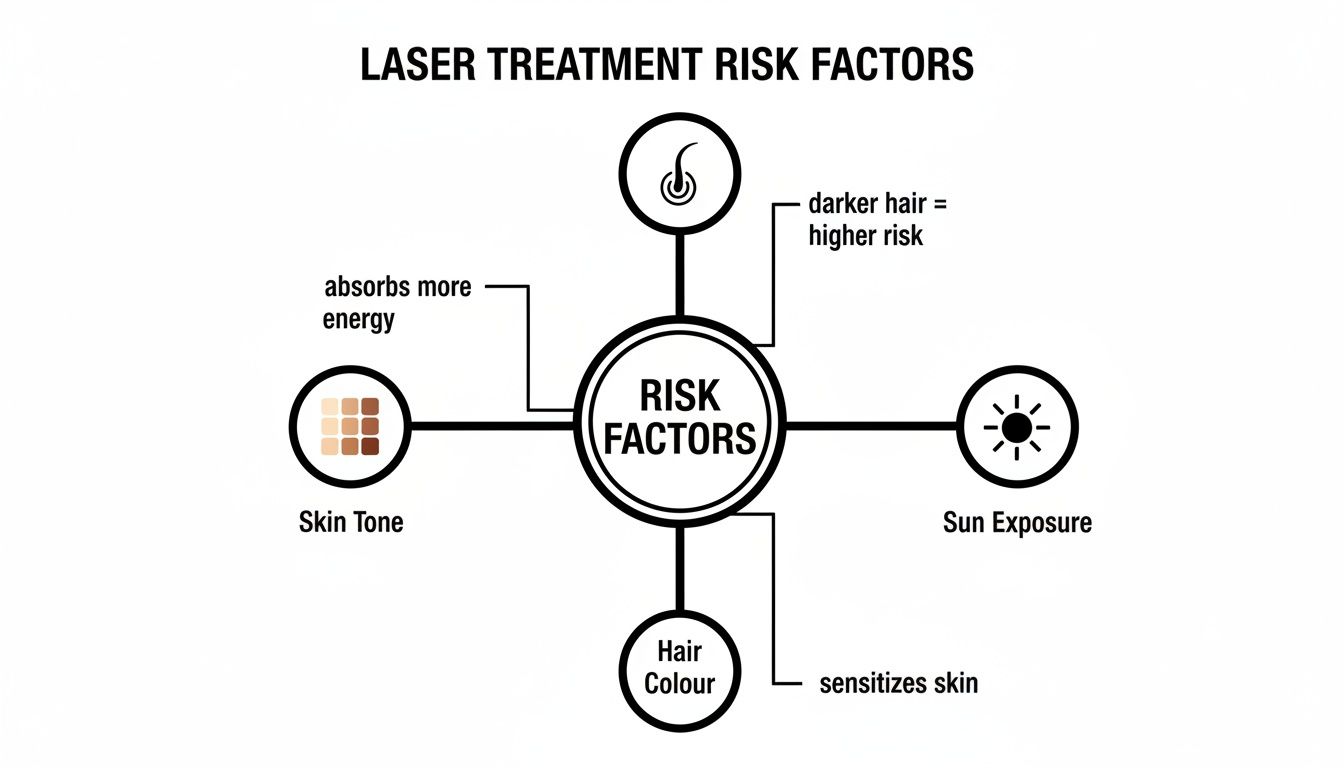
As you can see, skin tone, hair colour, and sun exposure are all connected, which is exactly why a personalized approach is the only safe way to perform laser treatments.
Advanced Technology for Superior Safety
Technology plays a huge role in keeping you safe. At Skinsation Aesthetics, we invest in state-of-the-art laser systems engineered with client safety as the top priority. Our devices aren't just powerful; they're incredibly precise.
Our Promise: We are dedicated to delivering premium, results-driven care where your safety is always paramount. This commitment is reflected in our technology, our training, and the personalized attention you receive at every visit.
For example, our lasers have integrated skin cooling systems built right in. These devices deliver a continuous blast of cold air to the skin's surface just milliseconds before the laser pulse. This not only keeps you comfortable but, more importantly, it protects the top layer of your skin from heat, dramatically reducing the risk of burns or pigmentation changes. If you'd like to see how our specific technology works, you can learn more about our advanced Aerolase laser and its unique safety features.
It's this combination—expert technicians, strict protocols, and leading technology—that creates a controlled environment where the risk of serious side effects is brought as close to zero as possible. We are proud to offer London residents a premium experience that puts their health first and delivers the beautiful, smooth skin they want, with complete peace of mind.
Your Pre-Care and Aftercare Plan for Flawless Results
What you do before and after your laser appointment is every bit as important as the treatment itself. A solid pre-care and aftercare plan is your secret weapon to minimize potential laser hair removal side effects and lock in those beautiful, smooth results you're after.
Think of it as a partnership—we handle the expert treatment with our advanced lasers, and you prepare the perfect canvas by following these simple, crucial steps. By being an active partner in your skincare journey, you help us deliver the safest and most effective results possible.
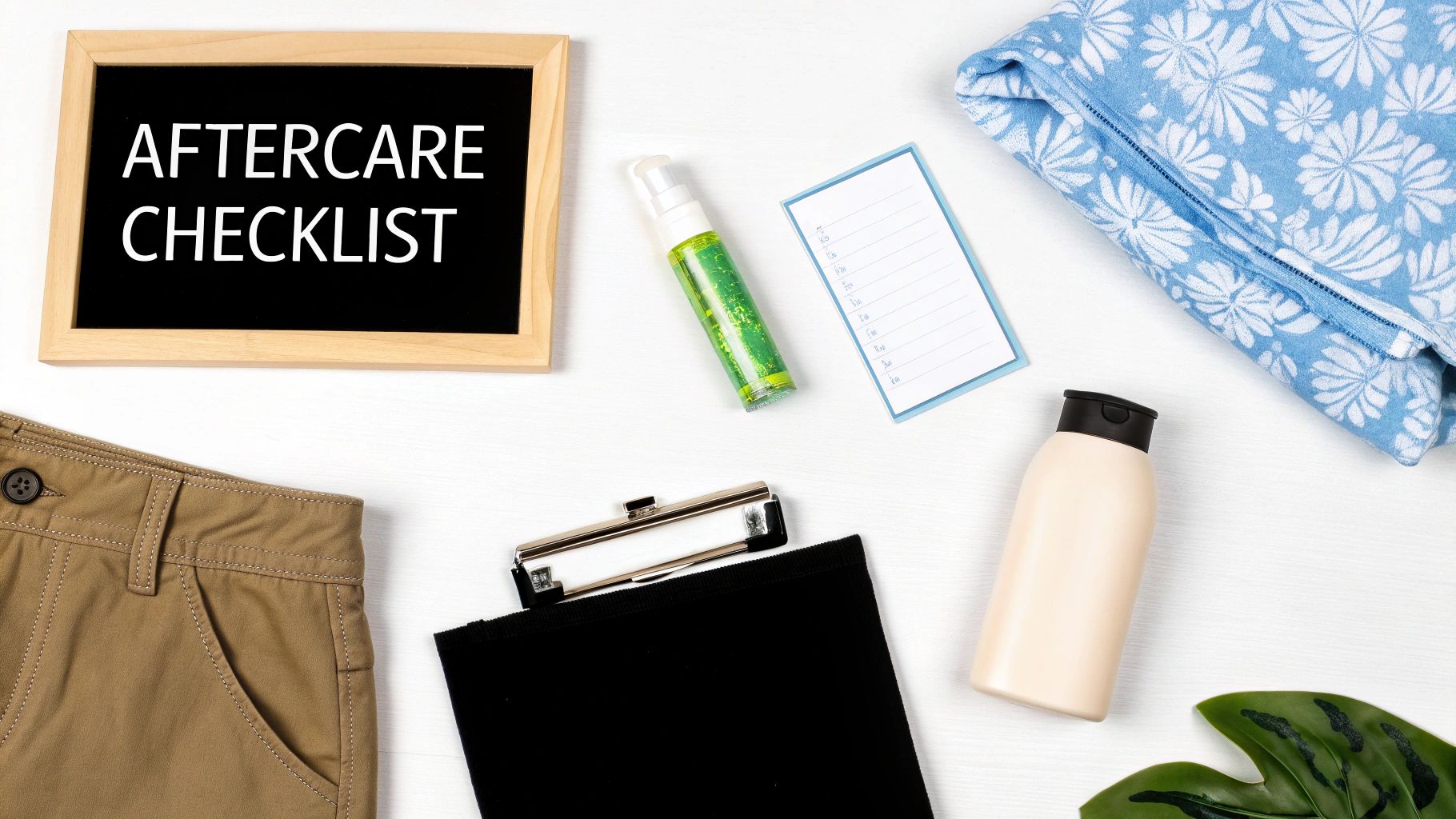
To make it even easier, we've broken down the essential do's and don'ts into a simple checklist. This table lays out exactly what you need to do before you walk into our clinic and what your priorities are after you leave.
Essential Pre-Care vs. Aftercare Checklist
Checklist Item | Pre-Treatment (Before Your Session) | Post-Treatment (After Your Session) |
|---|---|---|
Sun Exposure | Avoid sun/tanning beds for 4 weeks. Tanned skin is a major risk factor. | Protect with SPF 30+ daily. Your skin is extra sensitive to UV rays. |
Skin Products | Stop retinoids & acids 1 week prior. This prevents excess sensitivity. | Use gentle, soothing products. Aloe vera gel is perfect for calming skin. |
Hair Removal | Shave the area 24 hours before. No waxing, plucking, or tweezing. | Let hair shed naturally. Do not wax or pluck between your sessions. |
Skin Prep | Arrive with clean, product-free skin. No lotions, makeup, or deodorant. | Keep the area cool and dry. Use cool compresses if needed. |
Activities | Prepare for a relaxing session! | Avoid heat & sweat for 48 hours. No hot showers, saunas, or intense workouts. |
Clothing | Wear something comfortable to your appointment. | Wear loose, breathable clothing. Avoid friction on the treated skin. |
Following this checklist is the best way to ensure your skin is perfectly prepped for treatment and heals beautifully afterwards. Let's break down the key points.
Before Your Session: Your Pre-Care Checklist
Getting your skin ready is the key to a successful, comfortable session. Your main goal here is to make sure your skin is calm, healthy, and ready for the laser.
Avoid All Sun Exposure: This is the absolute golden rule. You must stay away from tanning beds and direct sun on the treatment area for at least four weeks before your appointment. Why? Tanned skin has more pigment, which can confuse the laser and lead to side effects like burns or discolouration.
Pause Certain Skincare Products: For about a week before your session, hit pause on any skincare products with active ingredients like retinoids (Retin-A), salicylic acid, or glycolic acid on the area we'll be treating. These ingredients are fantastic, but they make your skin more sensitive to light.
Shave the Area: Shave the treatment zone 24 hours before you come in. This lets the laser focus its energy directly on the hair follicle under the skin, instead of singing the hair on the surface, which is ineffective and can cause a burn.
Arrive with Clean Skin: On the day of your appointment, please make sure the area is completely clean. That means no lotions, deodorants, oils, or makeup.
After Your Session: Your Aftercare Checklist
Once your session is done, your skin will be a little sensitive, much like a mild sunburn. Your job now is to soothe, protect, and let it heal perfectly.
Cool It Down: If you feel any warmth or see a bit of redness (which is totally normal!), apply a cool compress or some pure aloe vera gel. It provides instant relief and helps calm any inflammation right down.
Keep It Gentle: For the first 48 hours, avoid anything that will create more heat or friction. That means no hot showers, saunas, steam rooms, or intense workouts that make you sweat. This gives the treated follicles time to settle without irritation.
Wear Loose Clothing: Opt for soft, loose-fitting clothes. Breathable fabrics like cotton are your best friend. This prevents any rubbing or friction on your skin, allowing it to breathe and recover comfortably.
Protect Your Skin from the Sun: This is non-negotiable. You must apply a broad-spectrum sunscreen with at least SPF 30 to the area every single day, rain or shine. Post-laser skin is highly susceptible to sun damage, and this is the #1 way to prevent hyperpigmentation.
Sticking to this plan is how you set yourself up for success. At Skinsation Aesthetics here in London, Ontario, we walk all our clients through these steps to ensure every experience is comfortable and the results are flawless. For an even more detailed breakdown, check out our complete Canadian guide to after-laser hair removal care.
We Answer Your Top Questions About Laser Hair Removal
To wrap things up, let's go over some of the most common questions our clients here in London, Ontario, have about the safety and process of laser hair removal. We want to give you quick, clear answers so you can feel completely confident about starting your journey to smoother skin.
Will Laser Hair Removal Hurt?
Everyone’s pain tolerance is a little different, but most people say the sensation feels like a tiny snap from a rubber band against the skin. It’s a feeling that’s over in a millisecond with each pulse of the laser.
Here at Skinsation Aesthetics, our advanced laser system has a built-in cooling feature. This directs a constant stream of cold air right where we're treating, which makes a huge difference in comfort and helps protect the surface of your skin.
How Many Sessions Will I Need to See Results?
The exact number of sessions really depends on the area we're treating, your hair type, and your hair's unique growth cycle. On average, most of our Canadian clients need about 6 to 8 sessions, spaced four to six weeks apart, to see a major reduction in hair.
Why the wait between sessions? It's because the laser works best when the hair follicles are in their active growth phase. Spacing out the treatments lets us catch new hairs as they enter that perfect stage.
Is Laser Hair Removal Permanent?
Think of it as long-term hair reduction, not permanent removal. After you finish your initial set of treatments, you can expect a huge drop in hair growth.
Most people see a 70% to 90% reduction in hair. If any hair does grow back, it's usually much finer, lighter, and way less noticeable. To keep things looking flawless, you might want a quick touch-up session once or twice a year.
Can Laser Hair Removal Cause Cancer?
This is a concern we hear often, and we're happy to say the answer is a firm no. Over 25 years of scientific research have found zero evidence connecting laser hair removal with an increased risk of cancer.
The type of light used in our treatments is non-ionizing, meaning it doesn't carry enough energy to damage your cells' DNA. This extensive body of research offers real peace of mind for our safety-conscious clients across southwestern Ontario. If you'd like to dive deeper, you can explore the research on laser safety and long-term health for yourself.
At Skinsation Aesthetics, we pair this proven, safe technology with our expert-led protocols, making sure every treatment is as effective as it is secure.
At Skinsation Aesthetics Inc., your safety and satisfaction are everything to us. If you have more questions or you're ready to start your journey to beautifully smooth skin, we invite you to book a personalized consultation with our experts in London, Ontario. Discover the confidence that comes with professional care and results that last. https://www.skinsation.me
Comments