

Laser Hair Removal Ingrown Hairs

You shave in the morning, and by the next day there's another bump in the same spot. You wax to avoid the stubble, then the skin stays irritated, and the cycle starts again. In our London clinic, that pattern is one of the clearest signs that the problem is not the bump alone, it's the hair growth pattern underneath it. Laser hair removal for ingrown hairs works because it changes that pattern at the follicle, so the same hair has less chance to curl back into the skin.
Why Ingrown Hairs Keep Coming Back
Ingrown hairs are frustrating because they rarely happen once and disappear. For many people, especially those with curly, coarse, or tightly textured hair, the hair naturally bends as it grows and can re-enter the skin instead of exiting cleanly. Shaving makes that more likely because it leaves a sharp edge. Waxing can also set the stage for the next bump when regrowth is forced to fight its way through irritated skin.
The usual cycle in the clinic
I see the same story often. A client clears the area, the skin looks smooth for a short time, then the bumps return around the bikini line, underarms, legs, beard line, or neck. Friction from clothing or repeated shaving usually makes it worse, especially in areas that already get rubbed or sweat more.
Practical rule: if the same area keeps getting inflamed after every removal method, the method is probably part of the problem.
That's why short-term fixes only go so far. Exfoliating, soothing, and waiting for the bump to settle can help the surface look calmer, but they don't stop the next hair from growing back and trapping itself again. If the trigger keeps coming back, the bumps will too. For clients comparing methods, our guide to razor bumps and our Canadian guide to preventing ingrown hairs after waxing are useful companions to this discussion.
How Laser Hair Removal Targets the Follicle
Laser hair removal works at the source. Ontario public-health guidance explains that laser energy targets melanin in the hair shaft, and that the energy is turned into heat in the follicle. That thermal injury damages the growth-producing parts of the follicle, so the hair grows back more slowly, more sparsely, or not as strongly over time. The Canadian Dermatology Association describes this as permanent reduction, not guaranteed complete removal, and notes that a typical course involves six to eight treatments spaced eight to twelve weeks apart. How laser hair removal works for Canadians
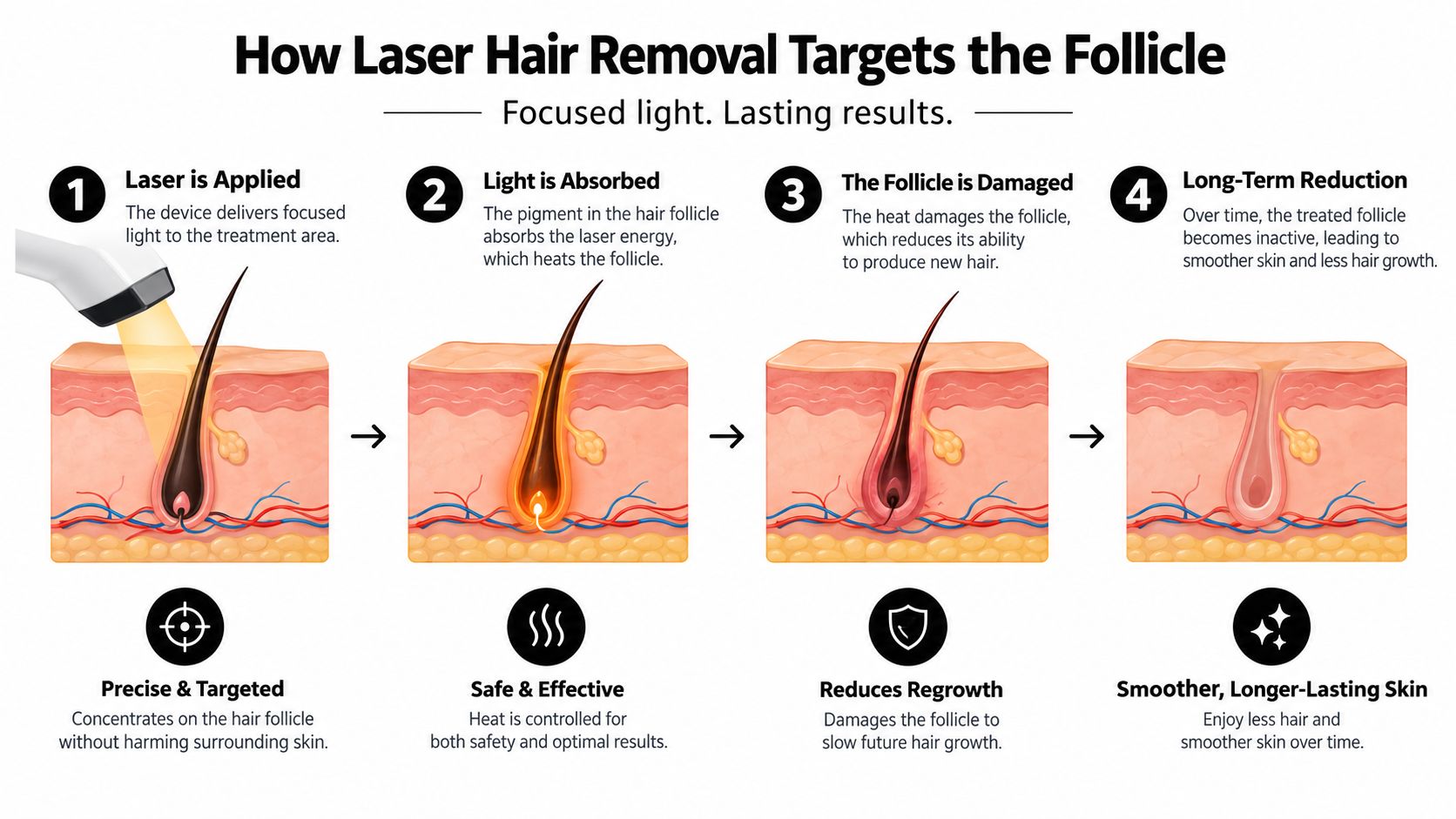
Why less hair means fewer ingrowns
The logic is simple. If a follicle produces less hair, there's less coarse material available to curl back under the skin after shaving or friction. Health Canada also notes that results vary by body area, operator, laser system, hair colour, and skin type, so the exact response is always individual rather than universal. That's why a proper plan starts with hair thickness, colour, and the area being treated, not with a promise that every bump will vanish after one session.
For someone dealing with recurring bumps, this is the long-term part of the solution. Laser doesn't pull out a trapped hair in the moment. It makes future ingrowns less likely by changing the hair itself.
Active Ingrowns Versus Long-Term Prevention
An active, painful bump needs a different response from a prevention plan. Laser hair removal is useful when the goal is to reduce future ingrowns, but it's not a tool for forcing open an inflamed lesion or draining an abscess. If the area is hot, very tender, infected, or open, that needs assessment first. In London, Ontario, I'd rather see a client pause and book a consult than treat over skin that's already compromised.
Three stages I use in practice
First comes the active lesion. That may need calming care, and sometimes the pattern points to something beyond a simple ingrown hair. Second comes prevention, which is where laser earns its place by reducing the regrowth that keeps getting trapped. Third comes the aftermath, meaning the dark marks or scarring that can stay behind after repeated inflammation.
If a bump keeps returning in the same patch, don't assume it's “just an ingrown.” Persistent lesions can overlap with folliculitis, acne keloidalis, or another condition that deserves a closer look.
Before a session, don't pick at the bump. Don't try to force the hair out. And if you want a general skin-care reference while the area settles, the Neutralyze guide to clearer skin is a practical resource for understanding how active blemishes are typically managed in a broader skin-care context. For hair-related bumps, the decision about laser belongs after the skin is assessed, not before.
Safety Across All Skin Tones

A good consultation starts with the person in front of me, not with a one-size-fits-all setting. Health Canada says laser hair reduction works best with light skin and dark hair, and is less effective on blond, red, grey, or white hair and on darker skin. The Canadian Dermatology Association also notes that pigment changes and white spots can happen, especially with tanned or darker skin, so careful supervision matters. In London, Ontario, I want the consultation to answer two questions clearly, is this hair a good laser target, and is this skin tone a safe match for the device?
Why device choice matters
At Skinsation, one option we use is Aerolase, which is often chosen when skin tone calls for a more conservative approach. On lighter skin with dark hair, another laser platform may work more efficiently. The point is simple, skin type and device need to match. If they do not, the risk goes up.
Very light hair can also limit what laser can do, because there is not enough pigment for the beam to target well. In that case, electrolysis may be the more suitable path. The Canadian Dermatology Association lists electrolysis alongside laser as an option for hair reduction. For a more detailed look at darker skin care, our laser hair removal for black skin guide covers the safety discussion in more detail.
Preparing for Your Sessions
Preparation affects whether the follicle is still there for the laser to find. Waxing, plucking, and electrolysis remove the target, so they should be avoided before treatment. Shaving is different. It leaves the follicle intact while removing the visible hair above the skin, which is why it fits laser treatment so well. Health Canada also warns that outcomes vary by operator and system, so a careful prep routine helps the device work under better conditions.
What I tell clients before they book
Avoid tanning and sun exposure before treatment, and don't come in with self-tanner still on the skin. Recent tanning increases the risk of pigment-related problems because the skin has more melanin competing for the laser energy. In practical terms, that means we want the skin calm, clean, and at its natural tone before we start.
Best result, less guessing: show up shaved, not waxed, and tell us about recent sun exposure honestly.
A typical series is still important even when the first visit goes well. The Canadian Dermatology Association notes that laser hair reduction usually takes six to eight sessions spaced eight to twelve weeks apart. That spacing matters because hair grows in cycles, and the laser only affects hairs in the active growth phase. If you're comparing treatment areas, our main laser hair removal service page explains the service in the context of broader skin concerns, not just ingrowns.
What To Expect at Skinsation Aesthetics
In our London clinic, we look at the whole pattern, not just one bump. I want to know where the ingrowns are showing up, how often the area is shaved or waxed, and whether the hair is coarse enough to make laser worthwhile. That conversation usually tells us a lot before any treatment begins.
The consultation matters more than the gadget
Skinsation Aesthetics Inc. offers laser hair removal as part of a skin-focused service menu in London, Ontario, and the right plan depends on hair colour, skin tone, and the area being treated. A device that works well on coarse dark hair may not be the right fit for lighter hair or a more pigment-sensitive area. That's why we keep the discussion specific instead of generic.
Clients often ask about comfort and downtime. Treatment is usually tolerated well, and the skin can look a little pink or feel warm afterwards, which is normal for many laser sessions. If you're the kind of person who likes to choose a clinic based on practical feedback, Bragly's guide to review requests is a useful reminder of the questions worth asking when you compare providers.
Frequently Asked Questions
Can laser hair removal cause ingrown hairs? It usually reduces them, because it reduces the hair that gets trapped. Early in a series, shed hairs can sometimes look bumpy as they work their way out, but that isn't the same as a new ingrown cycle.
How many sessions until ingrowns stop? Most clients notice a meaningful change gradually, not after one visit. The Canadian Dermatology Association notes six to eight treatments are typical, and that improvement should be judged over the series, not one appointment.
Is laser hair removal safe on the bikini line? Yes, the bikini line is one of the most common areas for treatment because it's so prone to razor bumps and ingrowns. The key is proper assessment, especially if the skin is tanned or sensitive.
What if my hair is very light or grey? Laser may not be the right tool, because there isn't enough pigment for effective targeting. In those cases, electrolysis is often the better alternative.
If ingrown hairs keep coming back in the same places, Skinsation Aesthetics Inc. can assess whether laser is the right long-term answer for your skin and hair type. Call 519-933-8538 or visit Skinsation Aesthetics Inc. to book a consultation in London, Ontario and get a plan built around the root cause, not just the bump.
Comments