

Laser Hair Removal for Black Skin: Safe & Effective Guide

You've probably heard two conflicting answers about laser hair removal for Black skin. One person says it's unsafe, another recommends any laser available, and you're left wondering whether a smooth result is worth the risk of burns, dark marks, or light spots. That hesitation is understandable, especially if shaving or waxing has already caused irritation and pigmentation concerns.
The answer depends on more than the treatment name. Wavelength, pulse duration, cooling, skin preparation, practitioner experience, and conservative settings all influence safety. For clients in London, Ontario, modern 1064 nm Nd:YAG technology, including the Aerolase platform, offers a more considered approach for melanin-rich skin than older systems designed primarily around lighter complexions.
Is Laser Hair Removal Safe for Black Skin
A client with deep skin may arrive for a consultation carrying a very specific fear. Perhaps a friend experienced a burn after an unsuitable treatment. Perhaps an online search produced photographs of post-inflammatory hyperpigmentation. Or perhaps a previous clinic stated, “We don't treat your skin tone.” That client may want a solution for facial hair, underarm growth, or shaving bumps, but understandably hesitates before booking.
That concern has a historical basis. Health Canada's guidance on cosmetic laser treatments explains that laser hair reduction works best for light skin and dark hair, while darker skin absorbs more of the laser's energy through melanin. This makes treatment more technically demanding because the practitioner must heat the follicle without overheating the surrounding epidermis.
Why the old warnings still matter
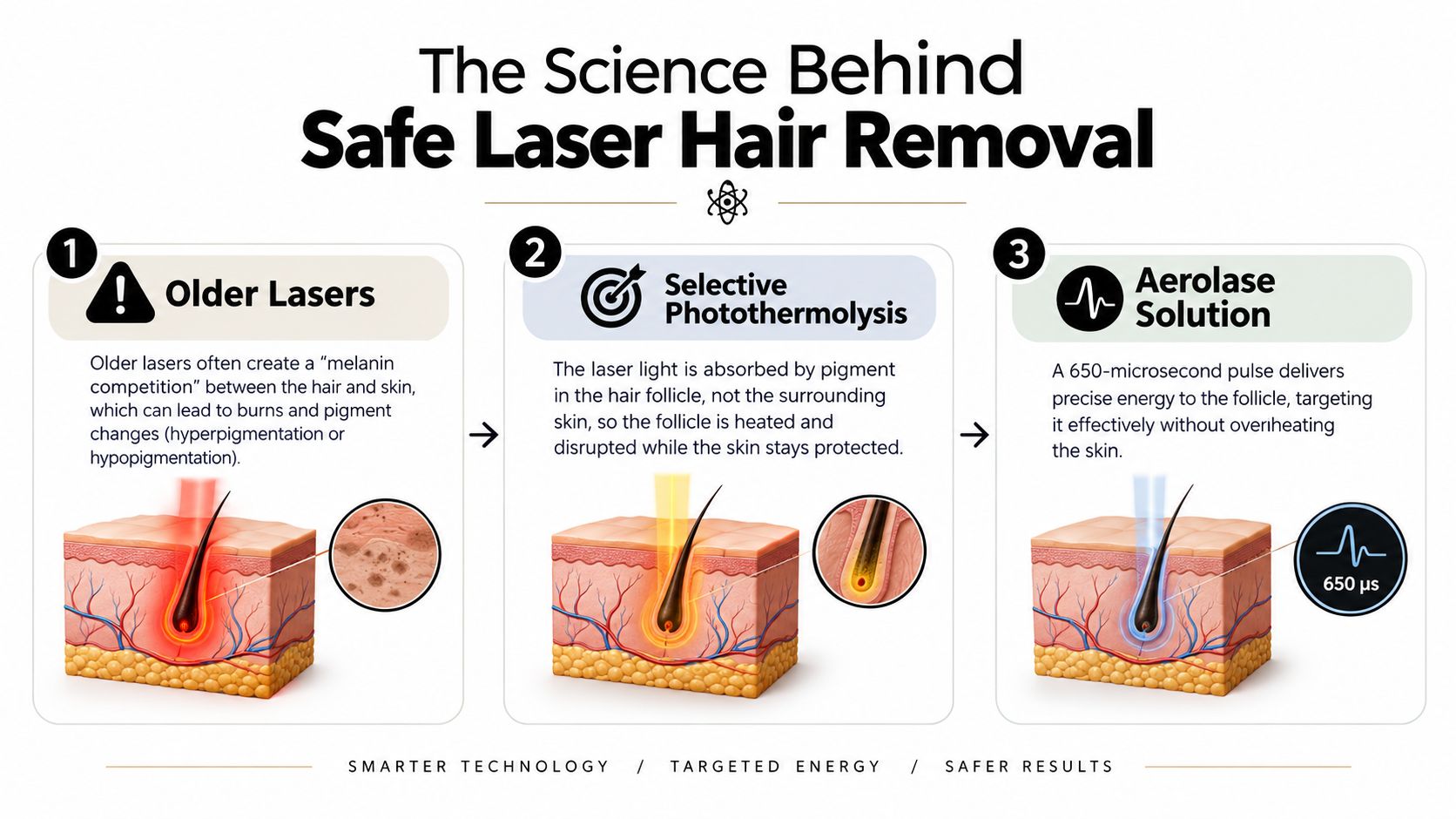
The earlier generation of mainstream laser protocols often relied on a strong contrast between light skin and dark hair. When the device couldn't distinguish sufficiently between hair pigment and epidermal pigment, energy could be absorbed by the skin. The possible consequences included burns, unwanted darkening, or loss of pigment.
The Canadian Dermatology Association's hair-removal guidance specifically warns that pigmentation problems, including white spots where lasering occurred, present a greater risk with tanned or darker skin. It also notes that darker-skinned patients with black hair require a different type of laser. That doesn't mean Black skin can't be treated. It means the device and protocol must match the person in front of the practitioner.
The reassuring distinction: laser hair removal can be appropriate for Black skin, but “safe for dark skin” never means “safe with every device.”
A consultation should therefore feel more detailed than a quick booking. The practitioner should discuss your skin tone, tanning history, hair characteristics, previous reactions, and the exact wavelength being considered. A small test area can also help assess how your skin responds before treating a larger zone.
For more background on choosing a provider for darker skin, look for a clinic that can explain its technology and show genuine familiarity with melanin-rich skin. You can also review this Canadian laser hair-removal safety guide before your appointment.
The modern approach is more precise. A 1064 nm Nd:YAG system reaches deeper into the follicle and is absorbed less by surface melanin than shorter wavelengths. With appropriate settings and cooling, the practitioner can focus treatment energy where it's needed while respecting the skin's natural pigment.
Understanding the Science Behind Safe Treatment
Laser hair removal uses a principle called selective photothermolysis. The term sounds complex, but the idea is straightforward. Light enters the skin, pigment absorbs that light, and the resulting heat targets a specific structure, in this case the hair follicle.
The challenge is that both dark hair and dark skin contain melanin. A laser that is strongly absorbed by melanin may affect not only the follicle but also the epidermis surrounding it. On lighter skin, the contrast between the hair and skin can make targeting easier. On Black skin, the treatment margin is narrower, so wavelength and pulse control matter greatly.
Why shorter wavelengths create more competition
A 755 nm alexandrite laser is generally suited to Fitzpatrick skin types I to III and isn't considered safe for darker skin because melanin absorption is too high. That doesn't make alexandrite a poor technology overall. It makes it a poor match for many clients with Fitzpatrick IV to VI skin.
The Canadian Dermatology Association identifies pigmentation changes, including white spots, as a greater risk for tanned or darker skin. Health Canada also explains that naturally dark or tanned skin is more difficult to treat because the skin's melanin absorbs some of the laser energy. These warnings describe the physics behind the safety concern, rather than suggesting that hair removal is impossible.
The practitioner's objective is to create enough heat in the follicle to impair future growth while limiting heat in the epidermis. That requires a wavelength that travels deeper and interacts less with superficial melanin.
How 1064 nm changes the treatment target
The 1064 nm Nd:YAG wavelength is preferred for Fitzpatrick IV to VI because melanin absorbs less of its energy than it absorbs shorter wavelengths. That allows the light to penetrate farther toward the follicle, reducing epidermal heating when the device is operated correctly.
This doesn't remove the need for clinical judgement. A longer wavelength can improve the safety margin, but it still has to be paired with suitable fluence, pulse duration, spot size, cooling, and timing. A capable practitioner may begin conservatively, observe the skin's response, and adjust only when appropriate.
The same principle explains why dark, coarse hair tends to be a more suitable target than very fine or lightly pigmented hair. The follicle needs to absorb enough energy for selective heating, while the surrounding skin needs protection from excess heat.
Why pulse duration matters
Pulse duration describes how long the laser delivers energy. Aerolase is described by Canadian clinic sources as a 1064 nm Nd:YAG laser with 650-microsecond pulses. A controlled pulse can deliver energy to the follicle while helping limit the time available for excessive surface heat to build.
Cooling adds another layer of protection. Longer wavelengths, paired with integrated cooling, can direct heat deeper and reduce scatter near the surface. For a client with melanin-rich skin, this combination is important because the treatment must be effective without provoking unnecessary inflammation.
Health Canada also notes that there are no guarantees and that many people need multiple sessions because hair grows through different phases. That biological cycle applies regardless of skin tone. The technology manages the safety challenge, while a course of treatments allows the practitioner to address follicles as they enter a responsive growth phase.
The Aerolase Advantage for Darker Skin Tones
Aerolase's key feature for Black clients is its specific combination of 1064 nm Nd:YAG energy and a 650-microsecond pulse duration. The longer wavelength is designed to travel deeper, where it can target coarse dark hair with less absorption by epidermal melanin. The short, controlled pulse helps deliver energy efficiently without leaving heat in the surface layers for longer than necessary.
Independent Canadian sources describe Aerolase as suitable across Fitzpatrick skin types IV to VI, and one Canadian source describes the platform as cleared for skin types I to VI. The relevant Health Canada material identifies the 1064 nm Nd:YAG approach as the important technology for darker complexions. These details explain why a device's specifications matter more than a generic promise that a clinic treats “all skin types.”
A practical consultation sequence
A thoughtful Aerolase consultation in London, Ontario should follow a clear progression:
Skin assessment: Your practitioner reviews your natural tone, tanning history, sensitivity, and tendency toward pigmentation changes. Fitzpatrick classification provides a useful framework, but it shouldn't replace individual observation and clinical questions.
Hair assessment: Dark, coarse hair usually provides a clearer target than fine or lightly pigmented hair. The area also matters. Facial, underarm, bikini, and body hair can respond differently.
Treatment planning: The practitioner selects settings based on your skin and hair rather than using a fixed setting for every client. Conservative treatment is not a sign that the device is weak. It's part of protecting the epidermis while building a safe response.
Test spot: A small test area allows the practitioner to observe your individual reaction before treating a larger surface. This is particularly valuable when the client has a history of dark marks, light spots, burns, or sensitivity.
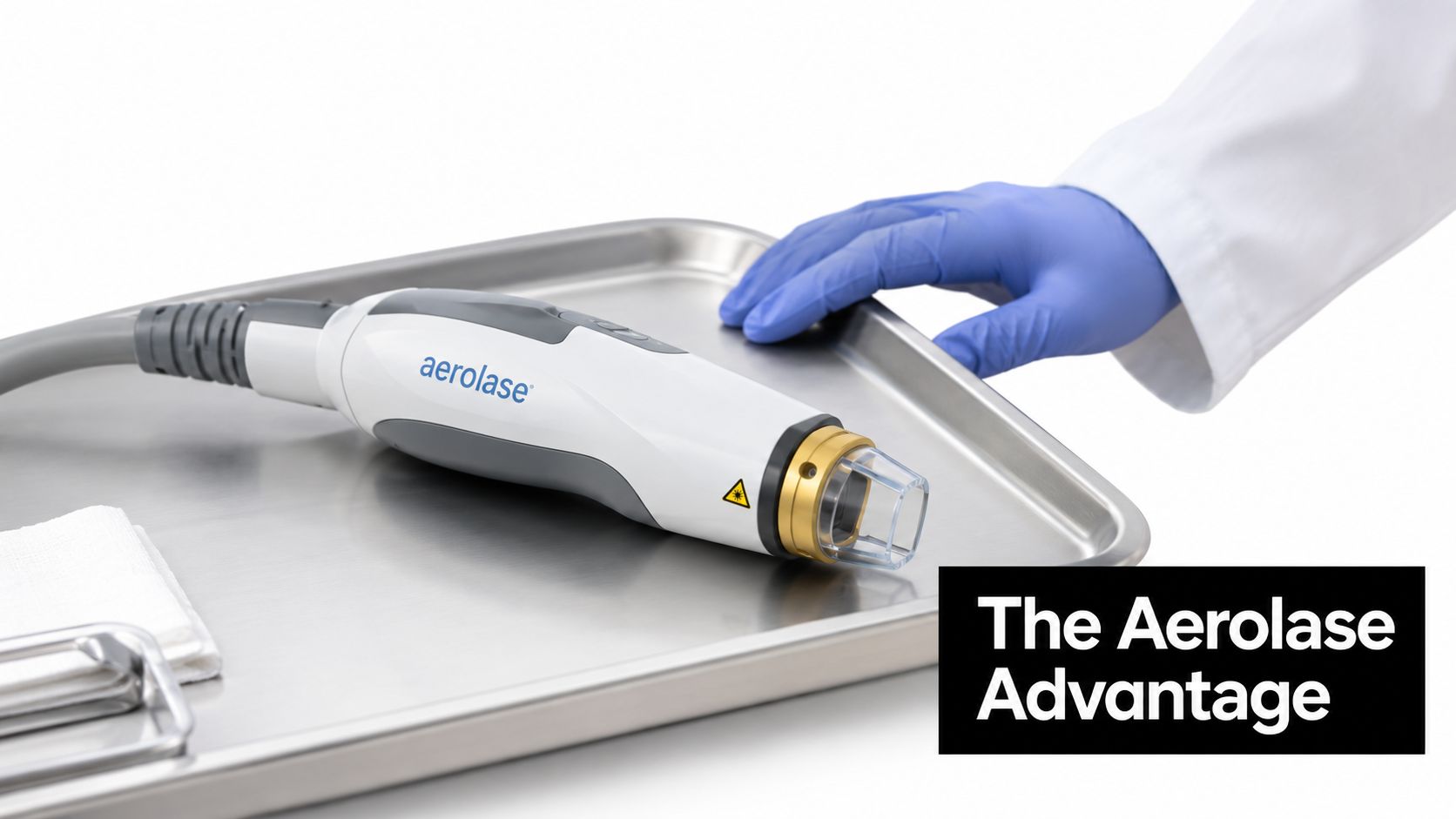
The 650-microsecond design is often presented as a more comfortable alternative to older, less adaptable approaches. Sensation still varies by area and personal sensitivity, so “painless” shouldn't be promised. A better expectation is a brief warmth or snap, with comfort supported by the device and the practitioner's technique.
Skinsation Aesthetics Inc. offers Aerolase laser hair removal, including a booking option for Fitzpatrick 4 to 6 skin. Its explanation of the technology is available in Aerolase versus traditional laser, where clients can learn more before arranging a consultation.
Consultation and Treatment Preparation in London
A client with recently tanned skin, a history of dark marks, or irritation after waxing needs a personalized plan before treatment begins. During the consultation, the practitioner should assess your Fitzpatrick skin type, ask about sun exposure, and discuss any history of hyperpigmentation, hypopigmentation, scarring, or unusual reactions. They should also examine the hair, since laser energy needs a suitable pigment target in the follicle.
The device and its settings matter. Shorter wavelengths can interact more strongly with melanin near the skin's surface. Aerolase uses a 1064 nm Nd:YAG wavelength, which has lower melanin absorption and reaches deeper into the skin. Its 650-microsecond pulse duration gives the practitioner another way to control how energy is delivered to the follicle, supporting the safer treatment approach often needed for melanin-rich skin. A clear explanation of how laser hair removal works can make the role of wavelength easier to understand.
What to disclose before booking
Bring your complete skin and hair history to the consultation. Mention previous laser treatments, reactions to waxing or depilatory products, active irritation, medications, recent tanning, and any change in hair growth. Sudden facial hair growth may justify asking whether a medical assessment is appropriate before cosmetic treatment.
Before your appointment, avoid sun exposure and self-tanner on the treatment area. Our guide to how to prepare for laser hair removal lists the full pre-treatment checklist. Tanned skin has more melanin activity at the surface, which makes energy management harder. Waiting for the skin to return to its usual state supports a safer assessment and steadier treatment planning.
Why a test spot should never feel optional
A test spot provides information that a questionnaire cannot. Skin may look calm immediately after treatment, while an unsuitable response can cause delayed darkening or lightening. Testing a discreet area lets the practitioner assess the chosen wavelength and settings before treating a larger zone.
Use the consultation to ask direct questions:
Which wavelength will you use? For darker skin, ask whether the treatment uses a 1064 nm Nd:YAG platform.
How will you protect the epidermis? Ask about cooling, pulse duration, and setting adjustments.
What should I stop before treatment? Confirm advice about sun, self-tanner, shaving, and irritating skincare.
What reaction should I report? Ask how the clinic handles blistering, crusting, unusual pain, or pigment changes.
Skinsation Aesthetics Inc. offers Aerolase laser hair removal, including a booking option for Fitzpatrick 4 to 6 skin. This preparation helps you judge whether the clinic considers your skin individually rather than applying one generic protocol.
What to Expect During Your Sessions
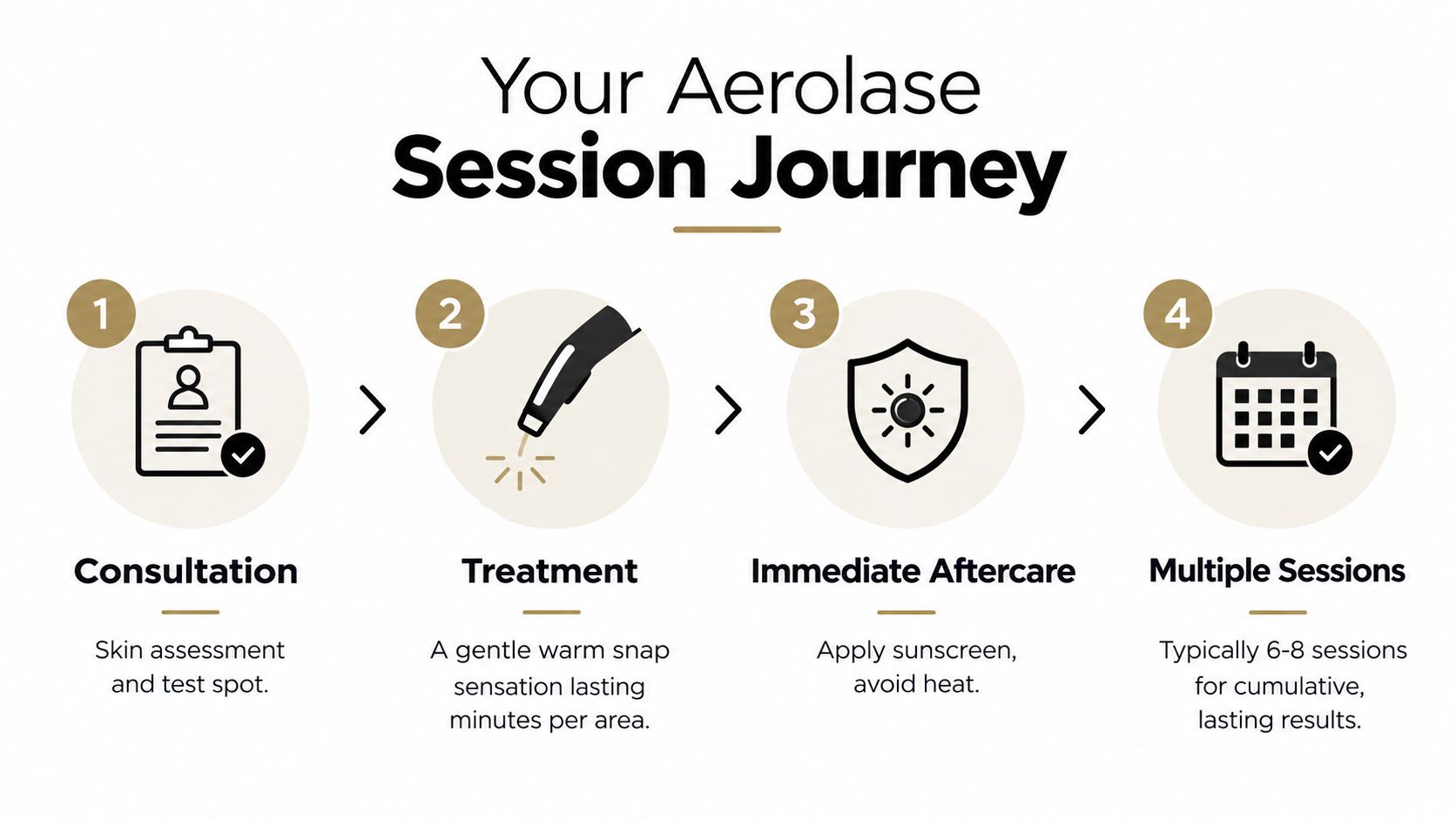
Your first session begins with a review of the treatment area and the agreed settings. The practitioner cleans the skin, positions the Aerolase handpiece, and works methodically across the area. You may feel a quick warm snap as each pulse reaches the follicle, although sensation varies with the body zone, hair density, and your personal tolerance.
The immediate skin response can include warmth, mild redness, or small temporary bumps around treated follicles. These effects usually settle as the skin calms. Cooling measures and a gentle approach help keep the treatment experience manageable.
Why one appointment isn't enough
Hair grows through several phases, and the laser is most effective when the follicle is in a responsive active-growth phase. Because follicles aren't synchronised, a single appointment can't address every hair equally. Health Canada explains that repeated treatments are usually required for this reason.
For darker skin, one California clinical source describes a common planning range of four to eight sessions, spaced approximately four to eight weeks apart, while noting that lighter skin may require fewer sessions. Your actual schedule depends on the area, hair characteristics, skin response, and the practitioner's assessment. A clinic shouldn't guarantee an identical result for every client.
Care after the appointment
Treat the area gently after treatment. Avoid unnecessary heat and friction, and follow the clinic's specific instructions about cleansing, moisturising, sun exposure, and sunscreen. Don't pick at the skin or add strong exfoliants immediately after a session.
Aftercare principle: the laser creates the treatment response, but calm skin gives that response the best chance to settle without avoidable inflammation.
Contact the clinic if you notice blistering, crusting, unusual pain, or a marked change in pigmentation. Those reactions deserve prompt professional attention, particularly on melanin-rich skin.
The meaningful result develops cumulatively. With each appropriate session, treated follicles may produce less noticeable growth, and many clients value the reduction in shaving, waxing, and the irritation associated with those routines. The aim is long-term reduction, not a promise that every follicle will behave identically.
Choosing the Right Clinic and Practitioner
Choosing a clinic for laser hair removal on Black skin requires more than comparing appointment availability. The provider should understand why Fitzpatrick IV to VI skin needs careful wavelength selection, why a test spot matters, and how cooling and conservative settings support the epidermis.
Start with the device. 1064 nm Nd:YAG technology is generally preferred for darker skin because its energy is absorbed less by surface melanin than 755 nm alexandrite. That distinction should be clear in the consultation, not buried in vague language about “advanced laser technology.”
A London, Ontario clinic checklist
Look for answers to these questions:
Experience with skin of colour: Does the practitioner regularly treat clients with darker skin, rather than presenting you as an unusual case?
Technology clarity: Can the clinic name the wavelength, device, pulse duration, and cooling method?
Assessment quality: Does the practitioner review tanning, self-tanner, medications, previous reactions, and hair-growth patterns?
Test-spot policy: Will the clinic test a small area before a full treatment plan?
Communication: Does the practitioner explain realistic outcomes and possible pigment changes without making guarantees?
Aftercare support: Will you receive clear instructions and know who to contact if your skin reacts unexpectedly?
A clinic that avoids these questions or promises identical results for everyone deserves caution. The safest provider will explain both the benefits and the limitations of treatment.
Why practitioner judgement remains central
A suitable device can't replace a trained operator. The practitioner must decide when to proceed, when to lower energy, when to postpone because of tanning or irritation, and when a client needs medical advice instead of cosmetic treatment. They also need to recognise a normal short-term response versus a reaction that requires follow-up.
In London, Ontario, clients can compare providers by asking to see the exact laser used for Fitzpatrick IV to VI skin and by requesting a personalised consultation rather than booking a generic service. A clinic offering Aerolase should still assess each person individually. The technology creates an important safety advantage, but the treatment plan determines how that advantage is used.
Advanced laser hair removal can be a practical option for Black clients who want long-term reduction, particularly when shaving or waxing contributes to repeated irritation. The strongest decision combines the right wavelength, a controlled pulse, thoughtful preparation, and a practitioner who respects the complexity of melanin-rich skin.
Skinsation Aesthetics Inc. offers Aerolase laser hair removal for clients seeking a carefully planned approach to unwanted hair, including Fitzpatrick IV to VI skin. Visit Skinsation Aesthetics Inc. to review the available booking options and arrange a consultation in London, Ontario.
Comments