

How to Get Rid of Milia: What Works and What to Avoid

You've probably got one of those tiny white bumps near your eye or cheek that won't budge, won't pop, and has started to annoy you every time you catch it in the mirror. In our London clinic, that's the moment people usually realise they're not dealing with a whitehead at all. They're dealing with milia, and treating them like acne is exactly how people waste months and scar their skin.
What Milia Are and Why They Will Not Pop
Milia are small keratin-filled cysts trapped under the skin. They often appear on the face, especially around the eyelids and cheeks, and they can affect people of any age or sex according to NCBI. They feel firm because they sit just beneath the surface, but they are not clogged pores waiting to be emptied like a pimple.
The core difference people miss
A whitehead is a clogged pore with oil and dead skin. A closed comedone is still connected to the follicle. Milia do not have the same opening, so squeezing them usually only inflames the skin around them.
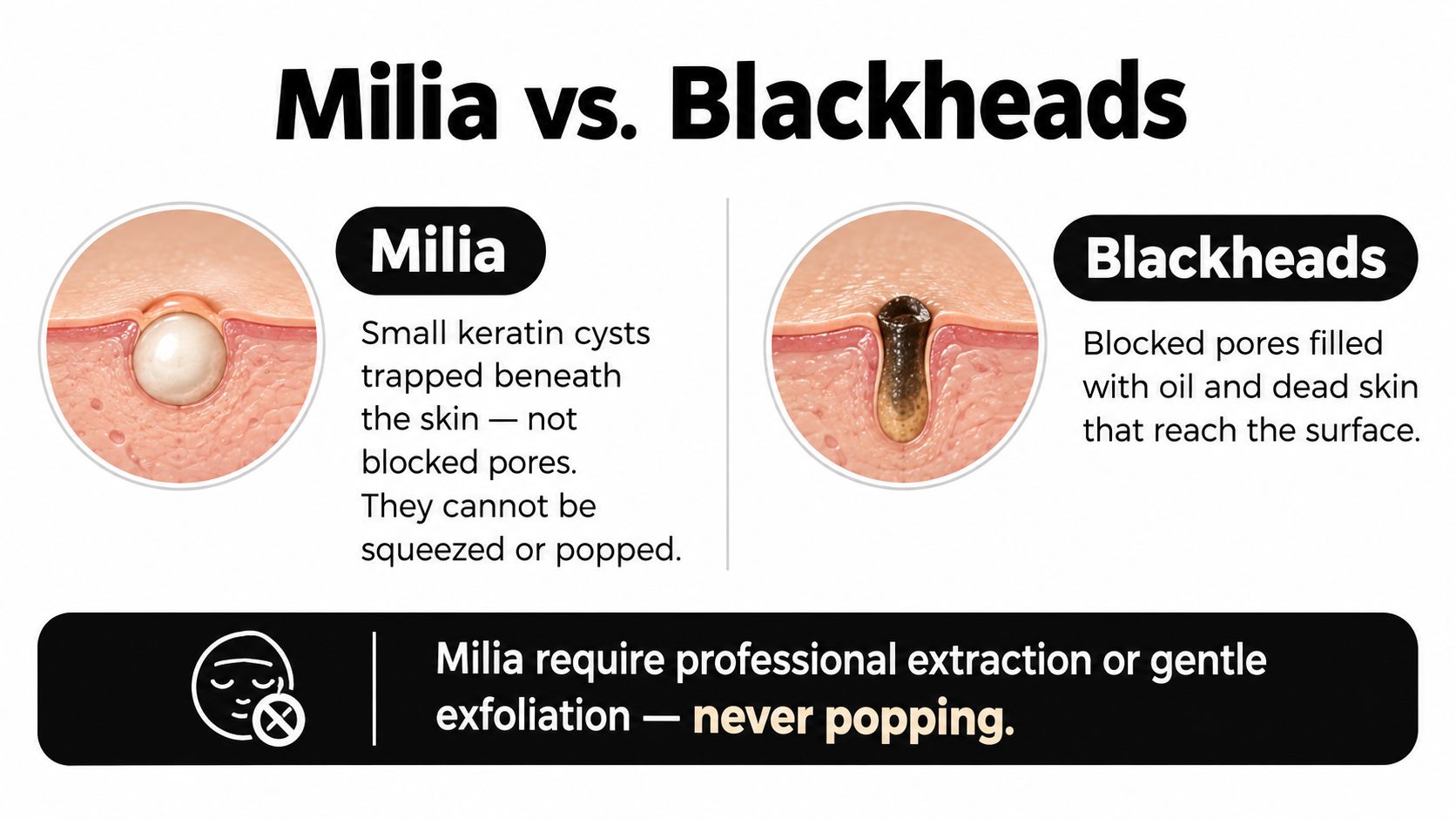
Feature | Milia | Whitehead | Closed Comedone |
|---|---|---|---|
What it is | Keratin cyst trapped under the skin | Clogged pore with visible pus or sebum | Plugged follicle under the skin |
Surface opening | No ordinary pore opening | Yes, often a visible opening | Yes, but closed at the top |
Best approach | Professional extraction or gentle prevention | Acne care, depending on the lesion | Acne-focused care |
Can you pop it at home | No | Sometimes, but not ideal | No |
If you are trying to sort out what you have, this guide to skin purging versus real breakouts helps because people often mistake one small bump for another.
Practical rule: if it feels like a firm grain of rice under the skin and never comes to a head, stop treating it like acne.
The point is simple. If you want to know how to get rid of milia, start with the right diagnosis, then choose the right removal method.
Common Causes and Everyday Habits Behind Milia
In London, Ontario, I see the same triggers again and again. Heavy eye creams, rich balms, sun damage, and skin that has been irritated or traumatised all show up in the history. Some people get milia for no clear reason at all, so blaming yourself for the wrong product is usually too simple.
What tends to feed them
The skin around the eyes is thin and delicate, so thick products can sit there and make trapped keratin more likely. Sun exposure also changes the skin over time, and skin that has gone through rashes, burns, or other trauma can hold onto keratin more easily. That is the pattern we look for in the clinic, not one single culprit.
Why the diagnosis still matters
Not every small bump is milia. Closed comedones, syringomas, xanthelasma, and other lesions can look similar, especially around the eyes. A trained eye matters because the wrong diagnosis leads to the wrong treatment, and that can make the area worse.
Your daily routine can either feed or starve this pattern, and exfoliation is where many get it wrong. If you want to compare what gentle home exfoliation should look like, our exfoliator guide is the place to start, and a lighter routine often begins with choose a gentle exfoliating cleanser.
Clinic note: recurring milia usually point to skin behaviour, not poor hygiene.
For people in London, Ontario, the advice is the same every time. Reduce the triggers, keep products lighter near the eyes, and do not assume every white bump is acne.
Why You Should Not Squeeze, Pick, or Needle Milia at Home
Do not squeeze milia at home. There is no normal pore to empty, so pressing harder only bruises healthy skin and leaves the keratin cyst in place.
Why home tools backfire
A household needle may look precise, but it is not sterile, and the skin around the eyes is unforgiving. Improper manipulation can lead to infection, scarring, inflammation, and post-inflammatory pigmentation. Thin eyelid skin shows the damage fast, and even a small mistake can leave a mark.
What happens when people keep trying
Repeated picking keeps the area inflamed. The bump often stays, while the skin around it turns rougher, redder, and more obvious. I would rather see someone leave it alone for a few weeks than walk in with a scar from forcing a result.
A clinician should confirm what the bump is before anyone touches it. That is not overcautious, it is basic skin sense.
Home Prevention That Helps
If you want fewer new milia, keep the routine simple and consistent. Use a gentle cleanser, avoid piling heavy products around the eyes, and choose lighter textures whenever your skin allows it. Home care helps with prevention. It does not clear bumps that are already formed.
What I tell clients to do
Exfoliate lightly and consistently: Mild exfoliation can help skin shed more evenly. For product ideas, use our exfoliator recommendations as a starting point, then keep the approach gentle.
Use retinoids carefully: A small amount at night can support turnover for people who tolerate them, but do not bring them too close to the eye area without guidance.
Switch to lighter eye products: Thick creams are a common pattern in clients who keep getting bumps under the eyes.
Wear daily SPF: Sun damage plays a role, so sunscreen belongs in the routine if you want fewer recurrences.
If your current cleanser is part of the problem, choose a gentle exfoliating cleanser is a sensible swap once your skin tolerates exfoliation.
What not to chase
Do not scrub harder because the bump is stubborn. More friction only irritates the skin. Some skin types do well with professional exfoliation, but aggressive at-home scrubbing usually creates redness and sensitivity, especially in skin that marks easily. For a clearer comparison between home care and clinic-based exfoliation, our dermaplaning overview is worth a look.
Home care can reduce new milia, but it will not reliably clear every existing one.
Professional Milia Removal at Skinsation Aesthetics in London
At Skinsation Aesthetics in London, Ontario, milia removal is a bookable service, and the pricing is listed on our site. A standard appointment is quick, usually around 30 minutes, and it starts with confirming that the bump is milia before anything is removed.
What the appointment looks like
We cleanse the area, confirm the lesion, and perform sterile extraction with controlled technique. The process uses a tiny opening and gentle expression of the keratin, which is why it works when squeezing at home doesn't. Downtime is minimal, and patients go right back to their day without making a big production out of it.
The main advantage is control. In the clinic, we use a sterile environment and a trained hand. That matters most around the eyes, where the skin is thin and mistakes show fast.
Why people choose the clinic route
If you've got more than one skin concern, we can also look at the broader pattern rather than treating just one bump in isolation. Our Skin Imperfection Treatments page shows the other concerns we handle, and the milia removal service page is the right place to book if the bump is persistent and confirmed as milia.
My advice: if it's been sitting there for weeks and you've already tried leaving it alone, stop guessing and get it removed properly.
For London, Ontario clients, the cleanest route is still the simplest one. Book the removal, confirm the diagnosis, and let a trained esthetician deal with it once.
When to See a Doctor Instead and Quick Answers
Some bumps are not routine milia. Get assessed if you have large clusters, lesions that change, bleed, become painful, or look inflamed, or bumps right on the eyelid margin. Babies need a different approach too, since newborn milia often clear on their own, while persistent baby lesions should be seen by a doctor rather than treated as a cosmetic issue. In adults, a biopsy is sometimes needed when the diagnosis is unclear Ontario Dermatologist.
Quick answers
Can milia go away on their own?Yes. Many do, especially in babies, and uncomplicated adult milia can also fade over time.
Why do I keep getting milia under my eyes?The under-eye area is thin, often overloaded with products, and prone to trapped keratin. Heavy creams, sun exposure, and prior skin irritation are common patterns.
Does milia removal hurt?Most clients describe it as a quick pinch during sterile extraction. A single-lesion appointment is brief, controlled, and usually needs no numbing.
Will they come back?Sometimes. Removing one milia does not stop new ones from forming, so prevention still matters. The goal is to clear the bump in front of you and cut down the habits that keep feeding more of them.
If the bumps keep returning, or you are not sure they are milia, get them checked properly. In London, Ontario, that saves time and keeps your skin safer.
Skinsation Aesthetics Inc. offers professional milia removal for people who want the bump handled properly instead of picked at home. If you're dealing with stubborn milia in London, Ontario, visit Skinsation Aesthetics Inc. and book the service that fits your skin instead of guessing.
Comments