

Strawberry Legs: Causes and How to Smooth Skin

You step out of the shower, glance at your thighs or shins, and notice dark dots where you just shaved. They can look like dirt, but scrubbing harder usually isn't the answer. Strawberry legs describes a dotted appearance around hair follicles, not a single diagnosis.
At our clinic, we help clients sort out whether the dots are linked to shaving, ingrown hairs, clogged follicles, inflammation, or keratosis pilaris. The right next step depends on the cause: home care can calm uncomplicated roughness, while waxing or laser may make more sense when hair removal is the main trigger.
What Strawberry Legs Look Like on Real Skin
After a shower in London, Ontario, you might spot a field of dark dots across your legs and wonder whether your skin is clean. Often, those dots are visible follicles or hair beneath the skin, not a sign of poor hygiene.
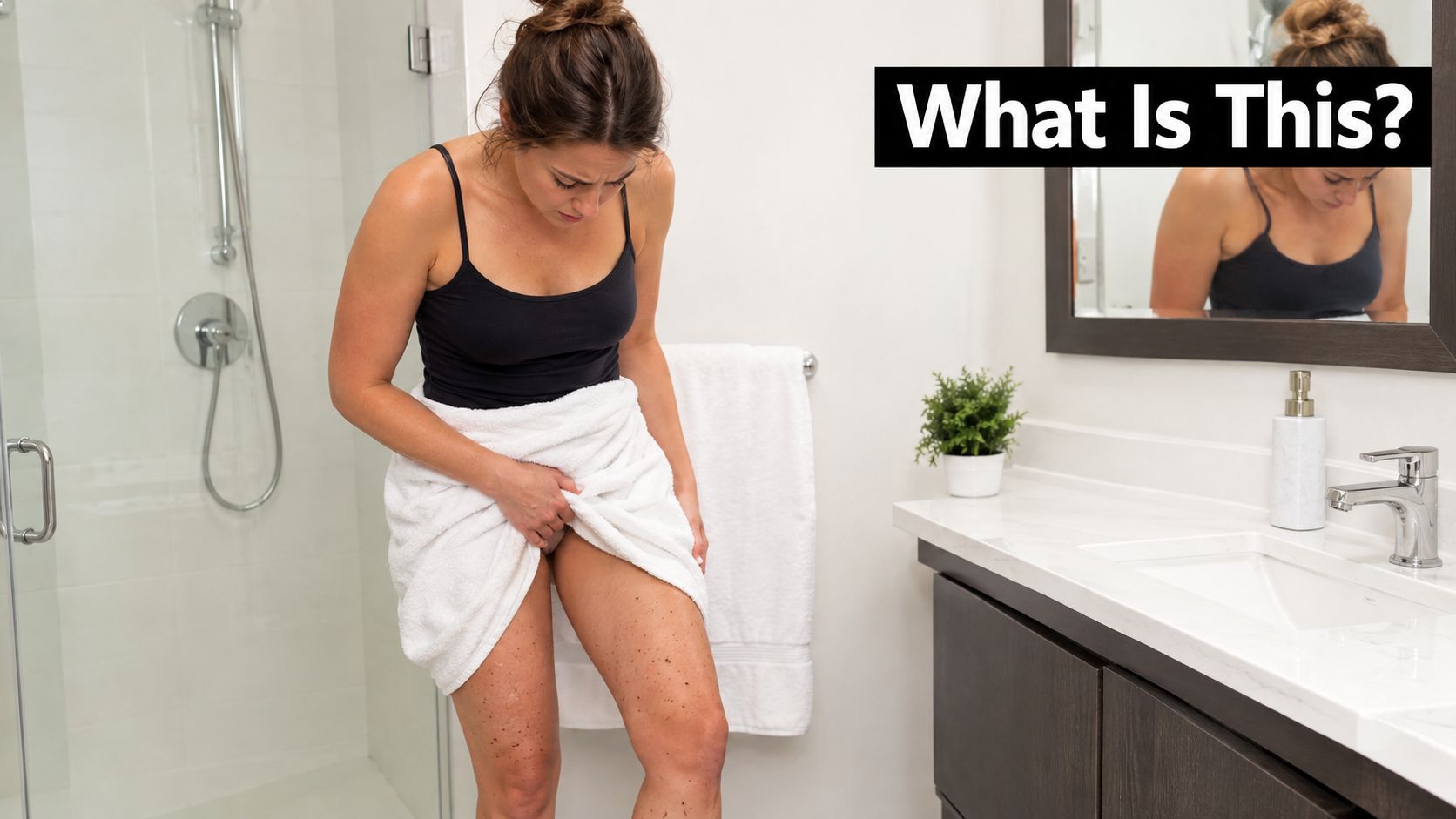
In our London clinic, we see this pattern in people who've shaved for years. The same dotted look can come from razor irritation, clogged follicles, ingrown hairs, folliculitis, or keratosis pilaris. Sometimes more than one factor is involved.
The distinction matters. A dark mark left after a bump settles isn't the same thing as an active, irritated follicle, and neither should be treated as dirt to scrub away. Below, we'll help you recognise the different patterns, understand what gentle home care can do, and compare waxing with laser hair removal.
The Main Causes Behind Strawberry Legs
The dots can look similar in a mirror but feel and behave differently. Itchy or tender red bumps may indicate active inflammation. If a hair appears curled beneath the skin, an ingrown hair may be contributing. By contrast, uniform rough plugs without pus can fit keratosis pilaris, a condition in which keratin builds up around hair follicles.
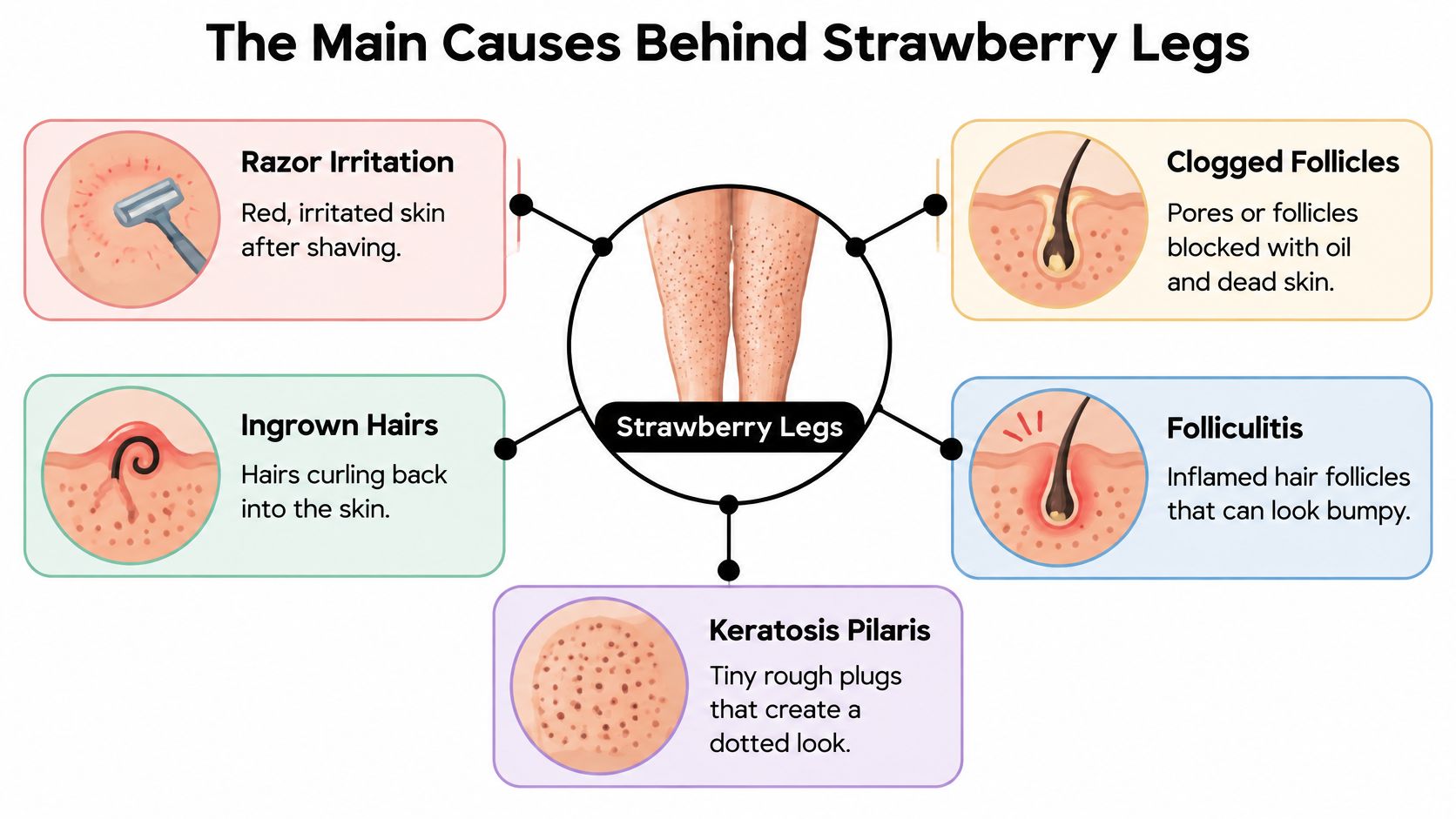
Shaving can irritate the skin around follicles. Waxing and clothing friction can also contribute to folliculitis, which involves inflamed hair follicles. The Canadian Dermatology Association notes that these are common triggers, and that shaving-related irritation on women's lower legs may be itchy (Canadian Dermatology Association guidance on folliculitis).
Flat brown or red marks may remain after a bump has settled. Those marks are different from a raised, sore, or pus-filled spot that's still inflamed. A single label like “strawberry legs” can't tell you which pattern you have.
Practical rule: Don't scrub or shave over skin that's sore, raw, or visibly inflamed. More friction can make irritation worse.
Why Shaving Keeps the Dots Coming Back
A razor cuts hair at the surface, leaving a short shaft that can show through the skin as a dark shadow. The blade also passes over the follicle opening, and repeated friction can leave surrounding skin irritated.
As the cut hair grows, its sharp tip can curve back into the skin. That can lead to an ingrown hair and another visible bump. Then the next shave repeats the cycle before the skin has had much time to settle. The razor resets the problem at the surface while the follicle underneath keeps producing hair.
For practical guidance on reducing shaving-related bumps, see our razor-bump prevention guide. If ingrown hairs are part of the pattern, this discussion of laser hair removal for ingrown hairs may also help you understand the role hair reduction can play. Another useful resource explains how to adjust your shaving routine to prevent ingrowns.
Home Habits That Calm Strawberry Legs
A gentler routine can reduce irritation and help uncomplicated roughness. If you continue shaving, choose a sharp, clean razor, use light pressure, and shave with the grain. Stop if the skin feels sore rather than making repeated passes over the same area.
Gentle exfoliation can help with rough, plugged follicles, but aggressive scrubbing isn't a shortcut. For keratosis pilaris, consistent moisturising and a keratolytic ingredient such as lactic acid, salicylic acid, urea, or an alpha-hydroxy acid may help smooth roughness. Topical retinoids can also reduce follicular plugging, but they may irritate skin and are best selected with a professional. The Canadian guide to glycolic acid and salicylic acid offers more on these exfoliating ingredients.
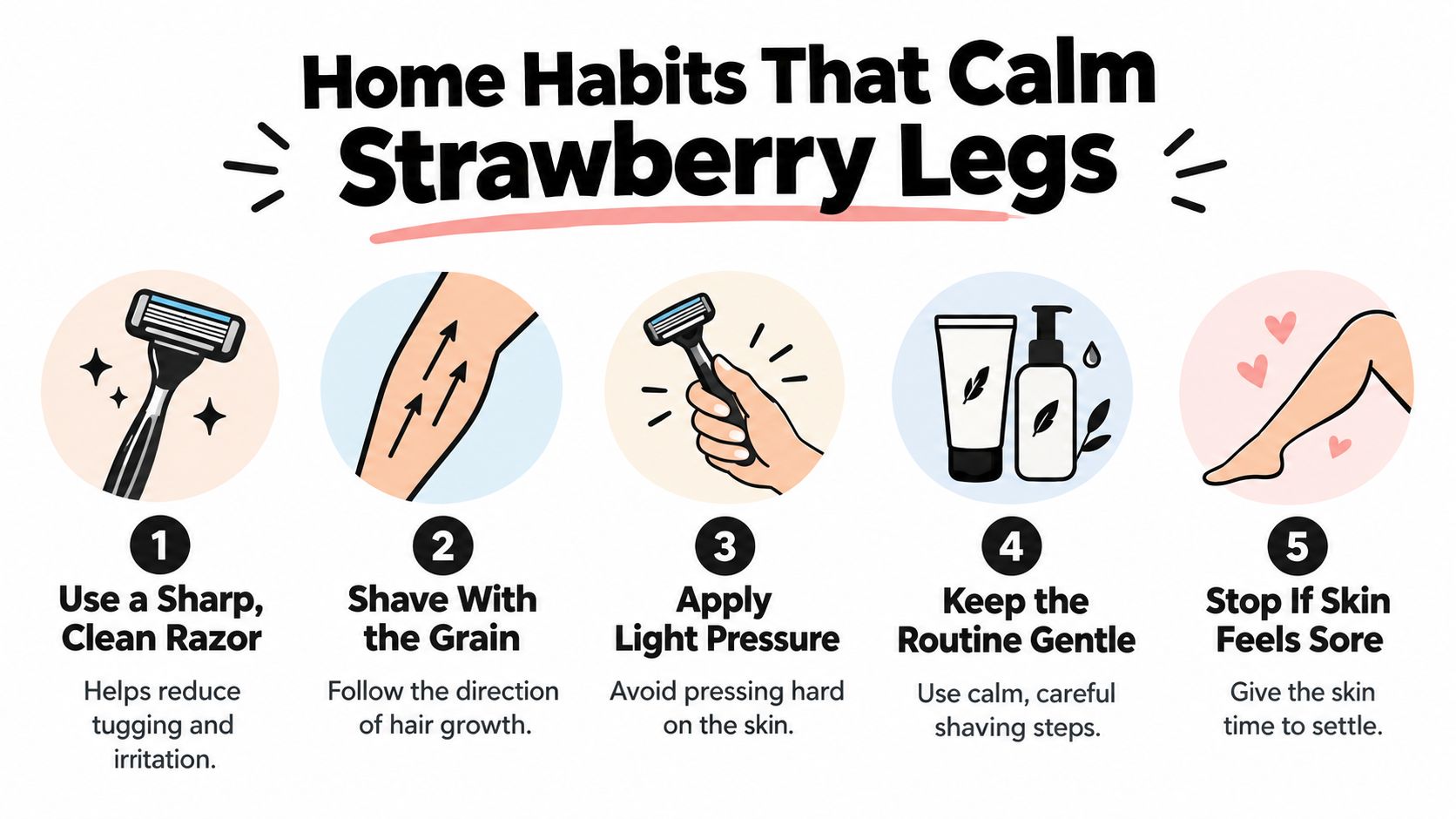
Finish with a plain moisturiser to support the skin barrier. Keratosis pilaris can return when treatment stops, so think of home care as ongoing maintenance, not a permanent erase. Don't exfoliate pustules or broken, raw skin. For advice on reducing ingrown hairs linked to waxing, see our waxing and ingrown-hair guide.
Laser Hair Removal and Waxing Compared
Waxing removes hair from the root, so it avoids the freshly cut stubble that can create a shadow after shaving. It's a shorter-term alternative, though hair can grow back and ingrown hairs can still occur.
Laser hair removal is the stronger long-term option when shaving and recurring hair are driving the dots. By reducing hair growth, it can lessen repeated shaving irritation and the number of sharp hair tips that may re-enter the skin. It isn't a guaranteed cure for keratosis pilaris, and the evidence for laser as a treatment for KP remains limited. Late fall can be a practical time to begin, before spring and summer sun make treatment planning more complicated.
Method | What it does to the hair | Effect on dotted follicles | Time horizon |
|---|---|---|---|
Shaving | Cuts hair at the skin's surface | Can leave stubble shadow and trigger irritation or ingrowns | Short-term |
Waxing | Pulls hair from the root | May reduce visible stubble, but ingrowns can still happen | Shorter-term alternative |
Laser | Reduces hair growth | May help when recurring hair and shaving cause the dots | Longer-term reduction |
Skinsation Aesthetics offers laser hair removal and wax hair removal in London. The right choice depends on what's causing the dots, as well as an individual assessment. For a fuller comparison, read our Canadian guide to laser hair removal versus waxing and our overview of laser hair removal in London, Ontario, for different skin tones.
When Strawberry Legs Need a Doctor First
Painful bumps, pus-filled spots, spreading redness, recurring lesions, or bumps that leave scars shouldn't be treated as a routine cosmetic concern. See a physician or dermatologist first, especially if symptoms are worsening or aren't settling.
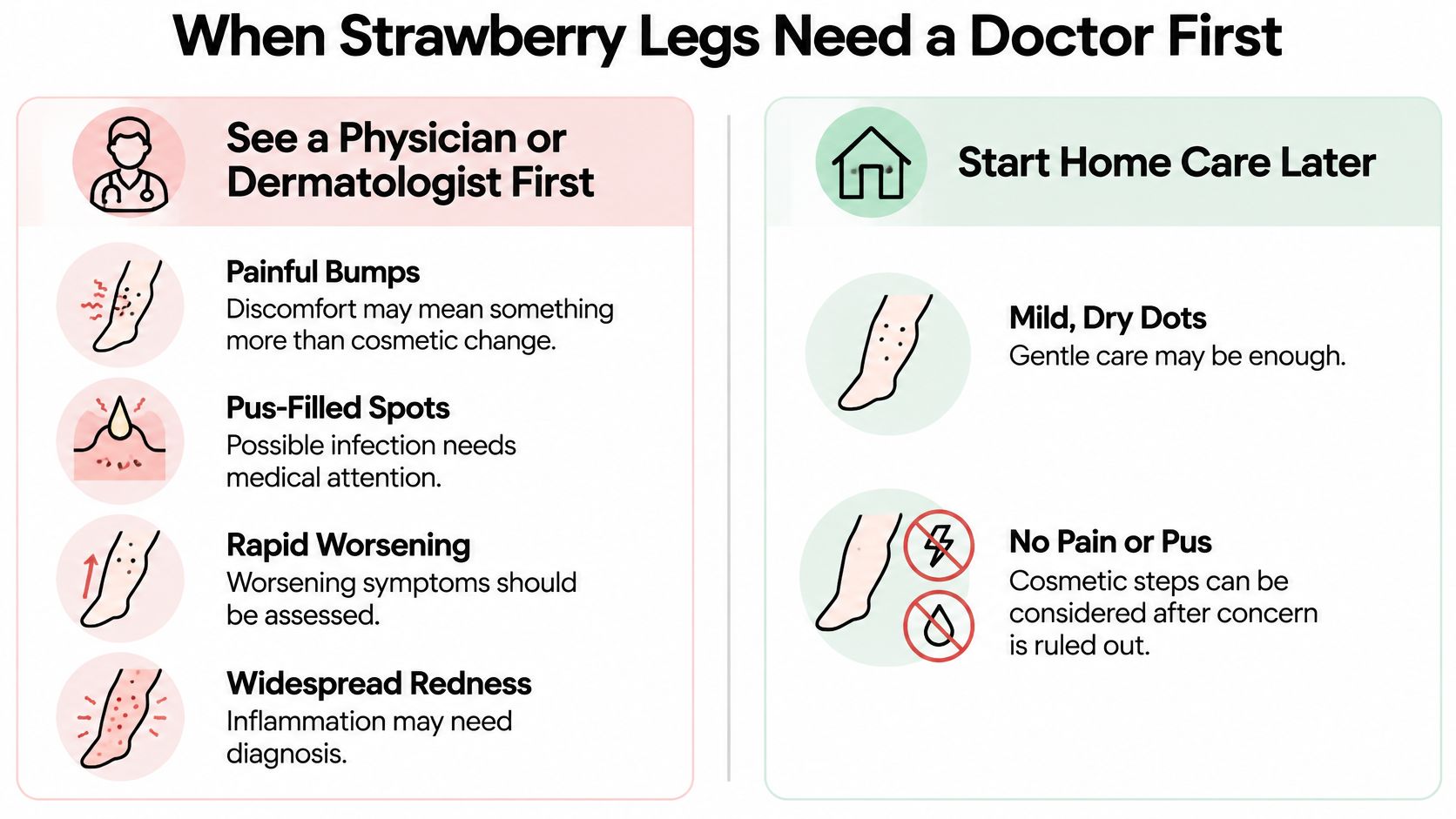
An assessment also matters before laser. Active folliculitis should settle before energy-based treatment. Skin tone, recent tanning, hair colour, and medication history all affect treatment planning. The Canadian Dermatology Association says laser hair reduction can be used across skin colours, but darker skin with black hair may require a different laser, and pigment changes are more likely on darker or tanned skin (guidance on laser hair removal).
Health Canada warns that unsuitable devices or technique can lead to pain, redness, swelling, burns, blisters, infection, scarring, or eye injury. At our clinic, a visit starts by sorting out the cause, not by booking energy treatment over inflamed skin. Medical concerns belong with a regulated healthcare professional.
Strawberry Legs Questions We Hear Most
Are strawberry legs permanent?
Not necessarily. The look may fade when the trigger settles, but keratosis pilaris can persist or return. Ongoing care may be needed.
Does laser hair removal get rid of strawberry legs?
It can reduce dots linked to hair, shaving trauma, and ingrowns. It won't immediately clear existing pigment or reliably cure keratosis pilaris.
Does waxing help?
It can give you a break from the razor and reduce stubble shadow for a while. Regrowth still occurs, and waxing can also lead to ingrown hairs.
How long until I see a difference?
Many people notice less shadow as hair growth drops over a series of visits. Skin colour left behind after irritation can take longer to change, so hair reduction and clearer-looking skin may not happen at the same pace.
Book a laser hair removal consultation at Skinsation Aesthetics in London by calling 519-933-8538 or visiting skinsation.me.
Skinsation Aesthetics offers laser hair removal and waxing, with treatment planning based on whether hair removal is contributing to your strawberry legs. To discuss your options, visit Skinsation Aesthetics Inc., call 519-933-8538, or book a consultation in London.
Comments