

Top 5 Skin Treatments to Try Before Fall in London Ontario

54% of Canadians experience moderate to severe winter dryness, so the best skin treatments to try before fall in London, Ontario are XERF, EXO|E/Phoenix Complex, Aerolase, chemical peels, and dermaplaning. The right choice still depends on your concern, desired result, available recovery time, skin tone, and a professional assessment.
Ready to reset summer-tired skin before fall? The familiar London, Ontario shift from sunny days to cooler routines can expose dullness, uneven tone, breakouts, rough texture, and dehydration that developed over the summer. Fall treatment planning shouldn't mean choosing the strongest procedure automatically. It means matching the treatment to your skin and your calendar.
This seasonal guide is designed to remain useful each year, while treatment recommendations can be refreshed as technologies and clinic protocols evolve. Every option below has different timing, downtime, contraindications, and skin-tone considerations. Daily sunscreen remains essential, and professional pre- and post-treatment advice matters just as much as the procedure itself. For at-home support, explore these effective skin repair actives before booking.
Ontario skin health also deserves a practical perspective. Cancer Care Ontario reported that adults aged 50 and older accounted for over 80% of skin cancer cases in 2016, with incidence increasing over time among older age groups in its Ontario skin cancer reporting. Cosmetic treatments don't replace medical assessment or sun protection, but they can support a thoughtful plan for pigmentation, texture, hydration, and collagen.
1. XERF for firmness and texture
Has summer left your skin less firm, rougher, or uneven in texture? XERF may suit London clients who want to address those concerns without committing to an aggressive resurfacing procedure. The platform uses monopolar radiofrequency with dual frequencies in a single shot. Canadian clinic information describes the treatment as requiring no needles, numbing, or downtime from Midtown Health and Wellness Centre.
That profile can be useful before fall photos, a wedding, or a return to a busy professional schedule. XERF may sit between a light maintenance facial and a treatment with more recovery. Limited interruption does not make every client suitable, however. A consultation should review skin condition, laxity, sensitivity, medical history, and whether the priority is firmness, texture refinement, or both.
When XERF makes sense
XERF can be considered for mild laxity, early fine lines, and uneven texture when collagen support is the goal. More pronounced laxity or deeper textural concerns may call for another treatment or a staged combination. The trade-off is that a lower-recovery option may provide a more gradual change than a more intensive procedure.
Timing still matters. A busy London professional may find the appointment easier to schedule around work and social commitments, while someone with active inflammation or a compromised skin barrier may need to postpone treatment. If an important event is approaching, allow time for an assessment and for any temporary response to settle.
Practical rule: Do not book an energy-based treatment immediately before an important event. Your provider should set the timing and treatment intensity for your skin.
XERF is commonly planned as a series rather than a single appointment. Canadian treatment guidance describes two initial sessions spaced one month apart, followed by maintenance every 6 to 12 months. These intervals do not guarantee the same result for every person, but they show why early fall planning is more practical than a last-minute booking.
Compare XERF versus Thermage and Ultherapy, then ask Skinsation Aesthetics whether the treatment fits your firmness, texture, recovery, and event-timing goals.
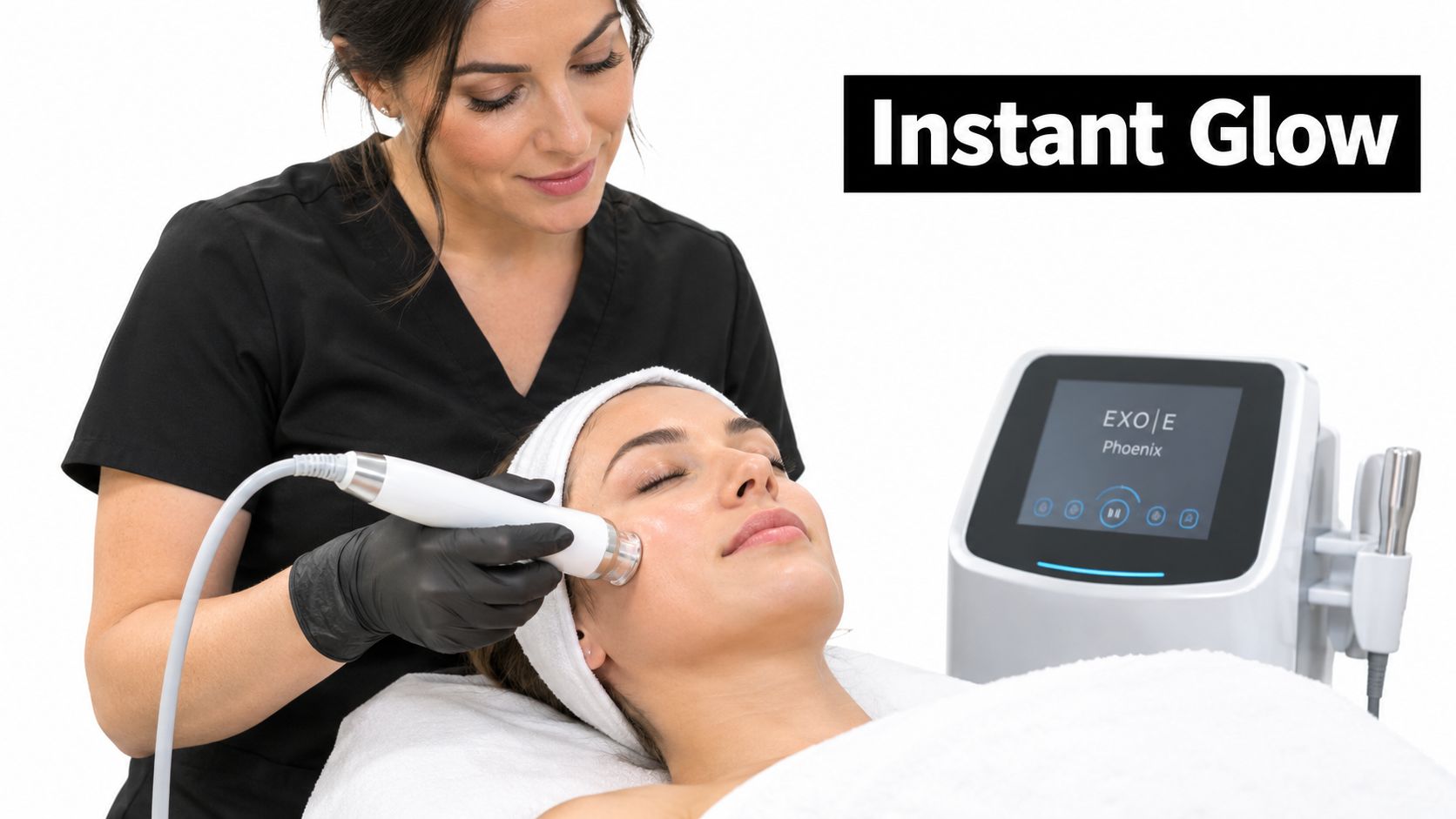
2. EXO|E/Phoenix Complex for hydration and glow
Some clients don't need aggressive resurfacing before fall. They need skin that looks rested, hydrated, and more luminous after months of heat, outdoor exposure, and inconsistent routines. The EXO|E/Phoenix Complex is positioned as a multi-step treatment combining exfoliation, infusion, and rejuvenation technology to refresh dull-looking skin while supporting a smoother, more comfortable complexion.
This option can work well for a London client who wants visible polish with a lighter recovery profile. A professional returning to the office, attending a dinner, or preparing for early fall photography may prefer a treatment focused on cleansing, hydration, and radiance rather than deeper correction.
Choose it for a lower-disruption reset
The treatment's appeal is its flexibility. It can be considered for dehydration, dullness, uneven-looking tone, and the general loss of luminosity that often follows summer. It isn't the right answer for every concern, though. Deep acne scarring, significant laxity, or stubborn pigmentation may require a more targeted plan, and a glow treatment shouldn't be sold as a substitute for medical evaluation of a changing lesion or persistent skin problem.
A monthly approach may be discussed for clients who want cumulative maintenance, while a shorter pre-event plan can focus on comfort and surface radiance. The timing should reflect how your skin behaves, not just the date on the calendar.
A brighter complexion is useful, but a calm, supported skin barrier is the better starting point for fall.
After treatment, keep the routine simple. Hydrating serums, a gentle moisturiser, and broad-spectrum sunscreen are more useful than immediately layering multiple exfoliants or retinoids. Canadian guidance continues to emphasize year-round sunscreen and barrier support, especially when seasonal changes can increase dryness as outlined in this fall skincare guide.
For clients comparing options, EXO|E/Phoenix can be the more practical choice when the priority is immediate refreshment and minimal disruption. It may also complement a longer-term plan involving collagen support or pigment management, provided the provider sequences treatments appropriately.

3. Aerolase for acne, redness, and pigmentation
Aerolase is worth considering when post-summer concerns include acne, facial redness, pigmentation, or a complexion that looks persistently uneven. Canadian clinic materials describe Aerolase Neo Elite as Health Canada approved and suitable for all skin types and tones, including darker complexions, with minimal discomfort in this Canadian Aerolase treatment overview.
That broad suitability is important, but “safe for all skin tones” doesn't eliminate the need for individualized settings and assessment. A client with post-inflammatory hyperpigmentation after summer breakouts may need a careful approach that considers current inflammation, recent sun exposure, skincare ingredients, and the risk of triggering further pigment changes.
Match the laser to the concern
Aerolase may be a fit for someone whose main issue is active acne or lingering redness rather than dry surface roughness. For example, a London client who experiences summer breakouts and then notices dark marks may benefit from a plan that addresses the active concern while protecting the surrounding skin. A client with rosacea or persistent redness should receive appropriate professional guidance, because reactive skin can worsen when treated too aggressively or combined with irritating home care.
The treatment can also appeal to people who want a technology-based option without the discomfort associated with some conventional laser experiences. Still, results depend on the concern, treatment plan, and consistency with aftercare. No laser can erase every mark in one appointment.
Skin-tone consideration: A consultation should cover recent tanning, pigment history, medications, active inflammation, and how your skin has responded to energy-based treatments before.
Canadian patient-satisfaction evidence supports the broader value of clinician-led aesthetic planning. In the Canada HARMONY Study, combined aesthetic treatment improved validated FACE-Q measures for facial appearance, skin satisfaction, psychological function, and social function, with all reported P values below .0001 in the published study. That evidence doesn't guarantee a particular Aerolase result, but it reinforces the importance of treating the patient's priorities rather than chasing a generic glow.
Explore what Aerolase treats in London, Ontario, and compare the approach with this guide to lasers and resurfacing facials.
4. Chemical peels for progressive resurfacing
Chemical peels remain one of the most adaptable ways to address post-summer dullness, uneven tone, congestion, and rough texture. A professional peel uses a selected acid formulation to exfoliate targeted layers of skin, and the strength can be adjusted according to your concern, tolerance, skin tone, and recovery needs.
Fall can be a sensible season for resurfacing because many clients spend less time in intense outdoor conditions than they do during summer. That doesn't remove UV exposure in London, Ontario, and it doesn't make sunscreen optional. Newly treated skin still needs careful protection, especially when pigmentation is part of the treatment goal.
Start with the level your skin can handle
A client new to professional exfoliation may be better served by a superficial peel than by choosing the strongest available option. Someone with congestion may need a different formulation from someone concerned with pigmentation or fine lines. The right peel is the one that provides a controlled challenge without leaving the barrier unnecessarily irritated.
A London client planning around an event should discuss timing early. Peeling, redness, tightness, or flaking may affect the appearance of the skin during recovery, and the response varies by formulation and individual sensitivity. If you have active dermatitis, unexplained irritation, a recent tan, or a history of pigment complications, postpone treatment until a qualified provider confirms that it is appropriate.
Recovery comes first: Don't add retinoids, acids, scrubs, or multiple new products while your skin is settling after a peel.
A measured home routine supports the result. Use a gentle cleanser, a bland moisturiser, and daily sunscreen. Avoid picking or accelerating visible flaking, since impatience can create more irritation and undermine the even tone you're trying to achieve.
Pricing and treatment depth also deserve an honest conversation. Canadian pricing commentary places CO2 laser resurfacing around $2,000 to $6,500 or more, while full-face ablative resurfacing is described around $3,000 to $8,000 or more in this Canadian pricing discussion. Those figures concern laser resurfacing, not a standard chemical peel, but they illustrate why treatment intensity, downtime, and budget should be discussed together. For more context, read about the cost of a chemical peel and the benefits of smoother skin with a peel.
5. Dermaplaning for quick smoothing
Dermaplaning is the practical choice for clients who want an immediate smoother surface without committing to significant downtime. A sterile blade removes built-up dead skin cells and vellus hair, often called peach fuzz, leaving the complexion feeling softer and looking more polished.
The treatment can be especially useful before a fall presentation, dinner, wedding, or photo session. It also makes sense as maintenance between more intensive procedures, provided the skin is calm and the treatment isn't being used over active acne lesions, open areas, or an inflammatory condition.
A gentle option with clear limits
Canadian clinic information describes dermaplaning as removing roughly 2 to 3 weeks of accumulated dead skin cells, with results commonly lasting 3 to 4 weeks and no downtime from London Plastic Surgery. Those time frames help explain why clients may schedule it as a recurring maintenance treatment rather than expect permanent correction.
Dermaplaning can improve surface smoothness and help skincare and makeup apply more evenly. It won't correct deeper acne scarring, significant laxity, or persistent pigmentation on its own. It also isn't a good choice for every breakout-prone client. If you have active inflammatory acne, a provider may recommend settling the condition before using physical exfoliation.
Avoid layering strong actives around the appointment. Retinoids, chemical exfoliants, and other potentially irritating products can make the skin less comfortable, while sun exposure after treatment can increase sensitivity and complicate pigment management.
Best use: Choose dermaplaning when your priority is a smooth, event-ready surface, not deep collagen remodelling.
Afterward, use hydration and sunscreen rather than immediately chasing more exfoliation. A gentle moisturiser, a comfortable barrier-supporting serum, and daily broad-spectrum SPF are usually more sensible than a crowded routine. Clients with very sensitive or redness-prone skin should mention that history before booking, since a lower-intervention plan may be safer.
Top 5 Pre-Fall Skin Treatments in London, ON, Comparison
Treatment | Implementation complexity 🔄 | Resource requirements ⚡ | Expected outcomes ⭐ | Ideal use cases 📊 | Key advantages & tips 💡 |
|---|---|---|---|---|---|
XERF (Radiofrequency Microneedling) | High, device-dependent, clinician-trained; typically 3–6 sessions | Moderate–High cost; topical numbing; 24–48h downtime; sessions 4–6 weeks apart ⚡ | ⭐⭐⭐⭐, strong tightening, texture and scar improvement; results continue 3–6 months | Skin laxity, acne scarring, pre-event non-surgical lifting | Deep collagen remodeling; plan first session 1–2 weeks before events; use SPF50+ |
EXO | E / Phoenix Complex Treatment | Low–Moderate, multi-step protocol but non-invasive | Low cost per visit; no downtime; monthly maintenance recommended ⚡ | Immediate brightening, hydration, mild sun damage and uneven tone | Immediate glow and hydration; start series 4–6 weeks before seasonal change |
Aerolase Laser Treatment | Moderate, requires laser training; protocol across indications | Moderate cost; fast sessions (15–30 min); minimal to no downtime ⚡ | ⭐⭐⭐⭐, effective for acne, pigmentation, vascular concerns after a series | Active acne, post-inflammatory hyperpigmentation, rosacea, diverse skin tones | Virtually painless platform; space treatments 2–4 weeks; avoid exfoliants 48h |
Chemical Peels | Variable, from simple superficial to technically deeper peels | Low–Moderate cost; downtime varies (none → 1–2 weeks) depending on strength ⚡ | ⭐⭐⭐⭐, dramatic improvement in texture, tone, pigmentation after appropriate strength | Sun damage, age spots, texture issues, acne scars (best in lower UV seasons) | Customizable strengths; plan 1–2 weeks before events; strict sun protection |
Dermaplaning | Low, manual blade technique, quick to perform | Low cost; 20–30 min; zero downtime; repeat every 3–4 weeks ⚡ | ⭐⭐⭐, immediate smoothness and better product absorption; temporary (3–4 weeks) | Event prep, makeup-ready skin, maintenance between deeper treatments | Painless, instant results; avoid on active/cystic acne; hydrate post-treatment |
Book Your Fall Skin Reset
The best skin treatments to try before fall in London, Ontario aren't identical for every client. Choose XERF when firmness and texture are your main priorities. Consider EXO|E/Phoenix Complex when dehydration, dullness, and an immediate glow matter most. Aerolase may be the more relevant discussion for acne, redness, or pigmentation, while chemical peels suit clients seeking progressive resurfacing. Dermaplaning remains the straightforward option for quick surface smoothing before an event or as maintenance between deeper treatments.
The treatment's strength is only one part of the decision. Timing, contraindications, recent sun exposure, skin tone, current skincare, active inflammation, medication history, and your event deadline all affect what can be performed safely. A professional assessment can also prevent an expensive mismatch, such as choosing a high-intensity procedure when your skin needs barrier repair first.
Seasonal planning matters in London because summer exposure and the beginning of indoor heating can create competing needs. Canadian coverage has reported that 54% of Canadians experience winter dryness, and dry, itchy skin affects 54% of Canadians during winter in Ipsos-linked reporting. That makes hydration and aftercare part of the treatment plan, not an afterthought.
Ontario residents are already seeking skin-related support across different care settings. In 2023, Ontario pharmacies recorded 112,718 minor-ailment visits for skin-related conditions, representing 21% of all minor-ailment services, with adults aged 35 to 64 making up 47% of users in this Canadian analysis. The message is practical. Skin concerns are common, and a personalized plan can be more useful than adding another untested product to your bathroom shelf.
If you're in London, Ontario, book a consultation or suitable service through Skinsation Aesthetics' online booking page. Bring your current product list, mention recent sun exposure and any history of sensitivity or pigmentation, and allow time for the recommended aftercare. Whatever treatment you choose, protect the result with daily UV protection and follow the provider's instructions closely.
Skinsation Aesthetics Inc. offers personalized medical facials, hydradermabrasion, dermaplaning, advanced microneedling, chemical peels, laser treatments, and skin rejuvenation services for London, Ontario clients planning a fall reset. Visit Skinsation Aesthetics Inc. to explore suitable services and arrange care that matches your skin goals, timeline, and recovery needs.
Comments