

Dermaplaning vs Microdermabrasion For Your Skin

When it comes to exfoliating treatments, two popular options often come up: dermaplaning and microdermabrasion. Choosing between them really boils down to your skin's specific needs and what you're hoping to achieve.
Think of dermaplaning as a gentle, precise resurfacing. We use a blade to manually remove the top layer of dead skin cells along with all that fine, vellus hair (you know, the "peach fuzz"). The result? An instant, luminous glow.
Microdermabrasion, on the other hand, is more of a powerful mechanical polish. It uses fine crystals or a diamond-tipped wand to buff away dead skin, making it a go-to for tackling textural concerns like fine lines, clogged pores, and minor scarring.
Understanding the Core Differences
Both treatments are fantastic for revealing a fresher complexion, but their methods and primary benefits are quite different. Getting to know these distinctions is the key to picking the right service for your skin. While they both exfoliate, one focuses on surface brightness and smoothness, while the other works a bit deeper to refine the skin's texture over time.
For a quick overview, here's a simple breakdown of how they stack up against each other.
Quick Look Dermaplaning vs Microdermabrasion
Feature | Dermaplaning | Microdermabrasion |
|---|---|---|
Primary Goal | Instant brightness and vellus hair removal. | Improved skin texture and tone. |
Exfoliation Method | Manual exfoliation with a sterile scalpel. | Mechanical exfoliation with a diamond tip or crystals. |
Ideal Candidate | Most skin types, including sensitive and dry. | Oily skin, mild acne scars, and uneven texture. |
Downtime | None. | Minimal, with possible temporary redness. |
Key Benefit | Creates a smooth canvas for makeup. | Stimulates collagen production over time. |
This table gives you a great starting point, showing how dermaplaning is all about that immediate glow-up, while microdermabrasion plays a longer game, helping to improve skin texture with consistent treatments.
This visual helps clarify the most important differences at a glance: the main purpose, the technique used, and what to expect afterward.
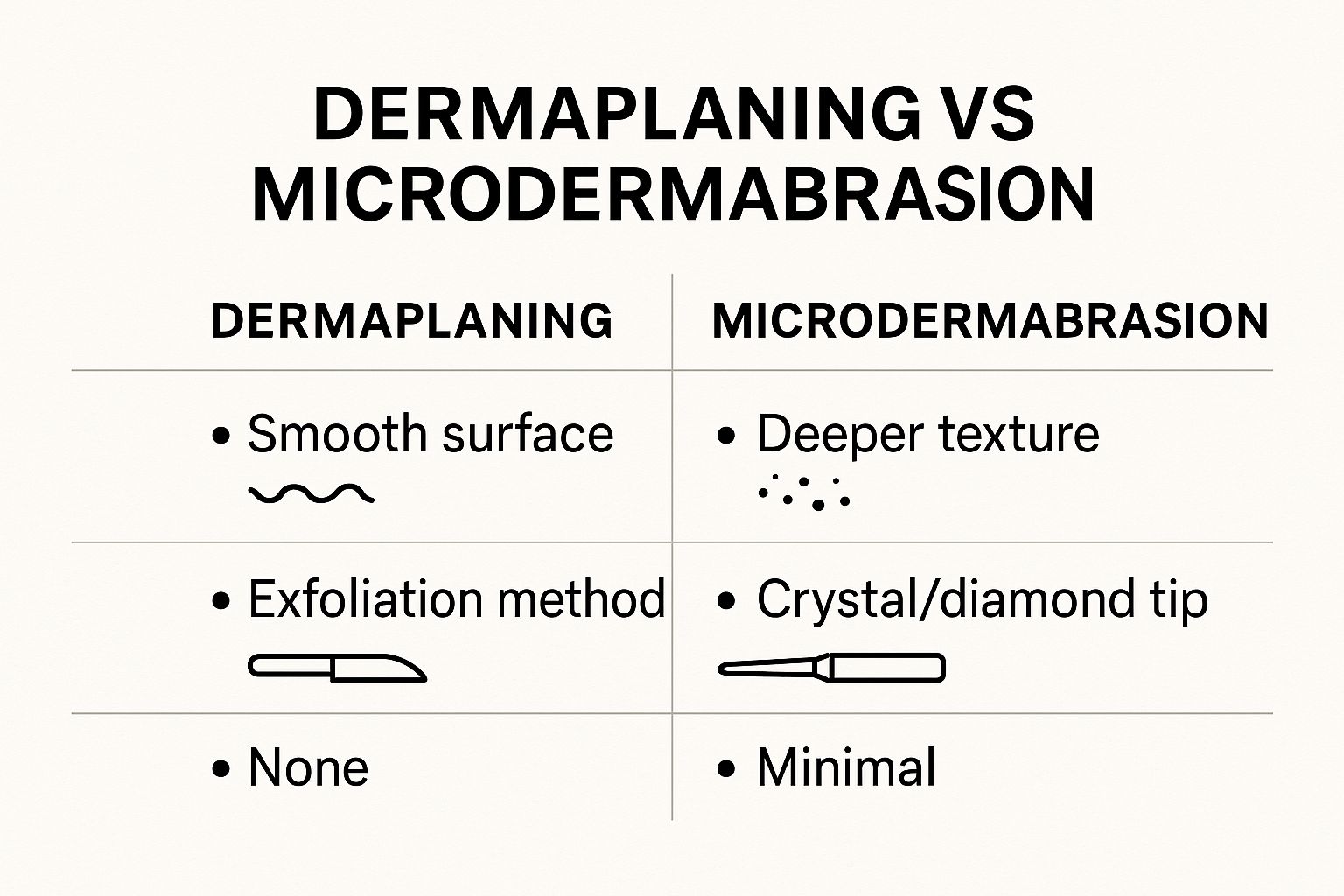
As you can see, dermaplaning is all about achieving that surface-level perfection with absolutely no recovery time needed. In contrast, microdermabrasion digs a little deeper to address texture and might leave you with a bit of temporary redness.
Here at Skinsation Aesthetics in London, Ontario, we’re huge fans of dermaplaning for giving our clients that immediate, radiant glow. It’s a fantastic standalone treatment and also works beautifully to prep the skin for more advanced procedures, like our Aerolase laser treatments, ensuring you get the absolute best results.
What Is Dermaplaning? A Path To Instantly Brighter Skin
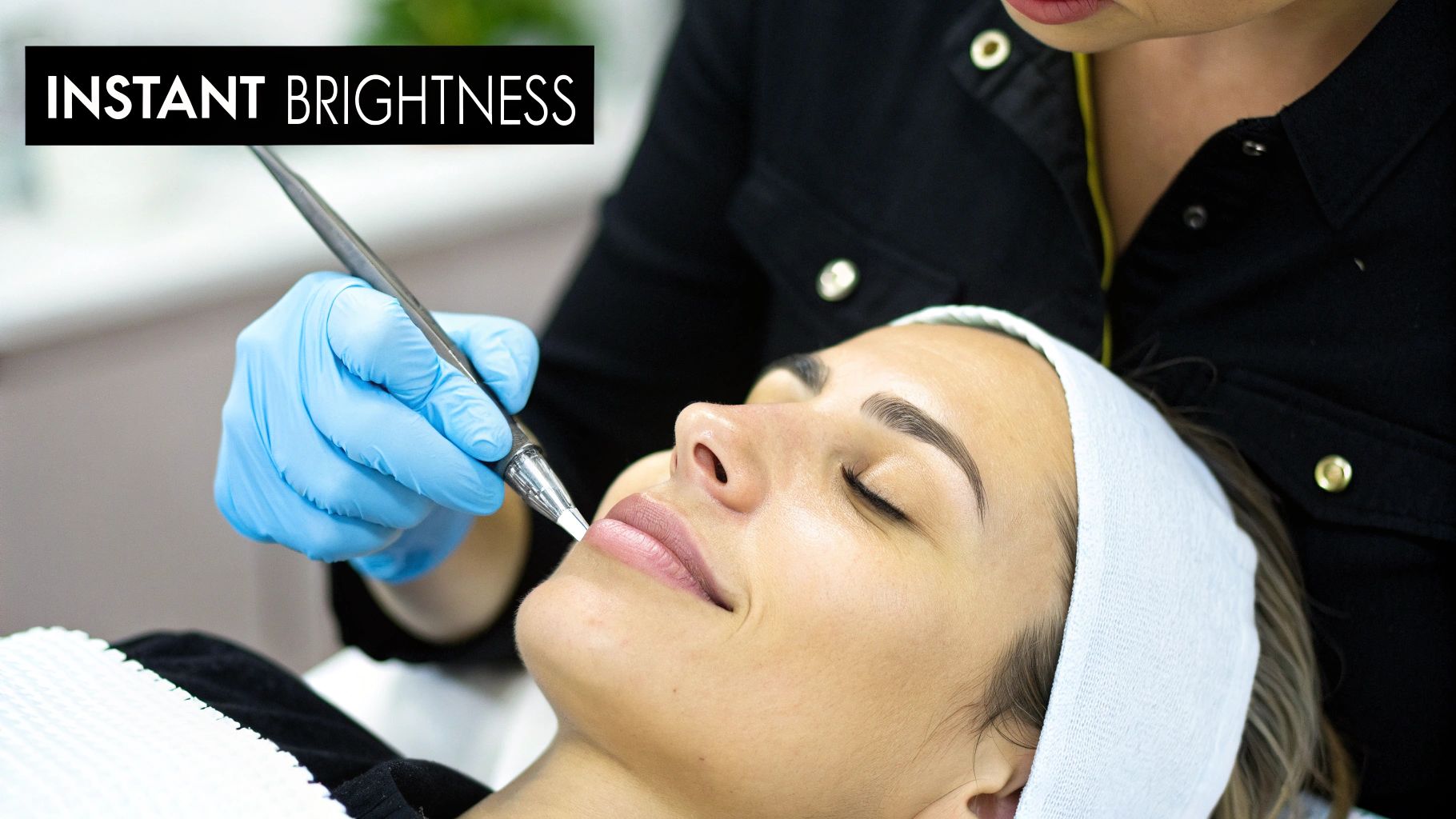
Think of dermaplaning as a meticulous physical exfoliation that delivers an immediate, visible boost to your skin’s tone and texture. It’s a delicate procedure where a trained aesthetician uses a sterile, surgical-grade scalpel to gently scrape away the uppermost layer of dull, dead skin cells.
This process also whisks away that fine vellus hair—what most of us call "peach fuzz"—that can trap oils and dirt, leaving your skin feeling unbelievably smooth.
Beyond Simple Exfoliation
The magic of dermaplaning doesn't stop at just removing dead skin. By creating such a pristine, smooth surface, it sets the stage for a flawless makeup application that looks more natural and stays put much longer.
Even better, this fresh canvas dramatically improves how well your skincare products are absorbed. Your favourite serums and moisturizers can penetrate deeper and work more effectively, which means you’re getting the most out of every single drop from your at-home routine.
Dermaplaning has really taken off in Canada, and it's easy to see why. People love that it removes both fine vellus hair and dead skin cells in one go, resulting in a smoother, brighter complexion. Its minimal downtime and gentleness make it a go-to for anyone wanting instant results without the recovery period.
Who Is An Ideal Candidate For Dermaplaning?
One of the best things about dermaplaning is just how versatile it is. It's a fantastic option for most skin types, including those with dry, mature, or sensitive skin who often find other exfoliation methods too aggressive.
Because it's non-invasive, there is absolutely no downtime. This makes it the perfect treatment to book before a wedding or special event when you want that instant, radiant glow. It’s not for everyone, though—we generally don’t recommend it for anyone with active or cystic acne, as the blade could easily irritate existing breakouts. If you want to dive deeper, you can check out our guide on demystifying dermaplaning and its benefits.
Here at Skinsation Aesthetics, in the heart of London, Ontario, our certified aestheticians perform this signature service with the highest level of precision and care. We make sure you have a safe, comfortable experience that brings out your skin's natural luminosity. It’s truly a foundational step for anyone wanting instantly brighter, smoother skin.
Diving Deeper: Understanding Microdermabrasion For Skin Renewal
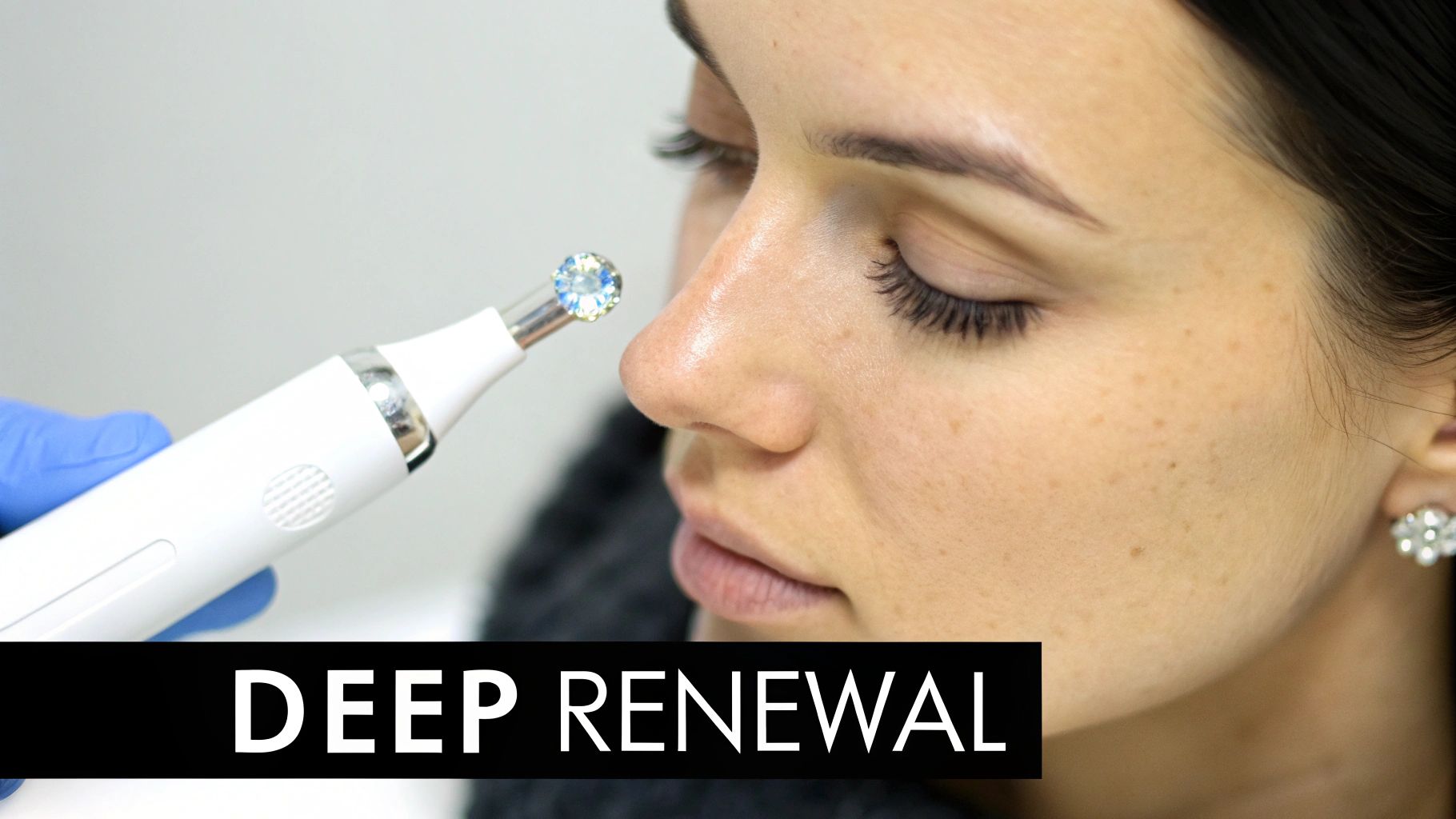
While dermaplaning is fantastic for a surface-level glow-up, sometimes you need to go a little deeper. That’s where microdermabrasion comes in. Think of it as a more powerful form of physical exfoliation that uses a specialized mechanical device to resurface your skin.
This isn't just about removing dead skin; the process is designed to tackle more stubborn textural concerns. It's often the treatment of choice for softening fine lines, fading mild hyperpigmentation, minimizing the look of enlarged pores, and even reducing shallow acne scars. By methodically buffing the skin, it also gives your natural collagen production a helpful nudge, which is key to keeping skin firm and smooth.
The Two Main Techniques
When you hear "microdermabrasion," it usually refers to one of two distinct methods. Though they work differently, both aim for the same goal: a thoroughly exfoliated and renewed complexion.
Crystal Microdermabrasion: This is the classic approach. A handheld device sprays a fine stream of medical-grade crystals (often aluminum oxide) across the skin to sand away the outermost layer. At the same time, a built-in vacuum whisks away the used crystals and dead skin cells.
Diamond-Tip Microdermabrasion: As the name suggests, this newer technique uses a wand tipped with natural or synthetic diamonds. Instead of spraying particles, the diamond tip directly buffs the skin. Many technicians prefer this method because it’s less messy and offers a bit more precision, especially around sensitive areas like the eyes.
Both techniques are highly effective at revealing the fresher, more even-toned skin hiding underneath. If you're curious to learn even more about Microdermabrasion, there are some great resources that break down the process in detail.
Is Microdermabrasion The Right Fit For You?
Microdermabrasion has been a go-to exfoliating treatment for years for a reason—it works, particularly for skin concerns that go beyond simple dullness. Because it physically abrades the skin’s surface, it’s a proven way to improve texture and kickstart that all-important collagen response.
But that intensity also means it isn't for everyone. If you have highly sensitive skin, active acne breakouts, or an inflammatory condition like rosacea, this treatment is likely too aggressive. The abrasive action can easily cause irritation and make those issues worse.
A Quick Note From Our Team: We believe in giving you the full picture on popular aesthetic treatments, and that includes being transparent about what we do—and don't—offer. Here at Skinsation Aesthetics in London, Ontario, we have chosen not to offer microdermabrasion. Instead, we focus on achieving incredible results for our clients using treatments like dermaplaning and our advanced Aerolase laser therapies. We've written an article about the marvels of microdermabrasion to help you understand its role in the wider world of skincare, even if it's not on our menu.
Comparing Treatment Goals and Skin Suitability
Deciding between dermaplaning and microdermabrasion really comes down to what you want to achieve for your skin and what your skin type can handle. While they're both fantastic exfoliation treatments, they go about it in very different ways and solve different problems. Thinking about "dermaplaning vs microdermabrasion" isn't about which is better overall, but which is better for you.
We like to explain it like this: dermaplaning is a fine-tuning tool for the surface, giving you that instant "wow" factor. Microdermabrasion is more like a power sander, meant to work on deeper texture issues over a series of sessions. The right choice completely depends on the finish you're after.
Aligning Treatment with Your Primary Goal
First things first, what are you trying to fix? Are you getting ready for a big event here in London, Ontario, and just want your skin to look bright and smooth for the weekend? Or are you playing the long game, hoping to soften some old acne marks or fine lines?
For Instant Radiance and Smoothness: Dermaplaning is, without a doubt, the winner. It whisks away all the dead skin cells and fuzzy vellus hair, leaving you with an immediate glow and a perfect base for makeup.
For Improving Deeper Textural Issues: Microdermabrasion is built for this. It’s designed to tackle things like sun damage, shallow acne scars, and uneven texture by encouraging new collagen to grow over time.
This difference is everything. We see it in our clinic all the time—clients who want that gentle exfoliation with the bonus of removing peach fuzz almost always lean toward dermaplaning. It's a feature microdermabrasion simply doesn't have. On the other hand, those looking to resurface deeper concerns like acne scarring or stubborn hyperpigmentation are better candidates for microdermabrasion. If you want to dig deeper, you can explore more on these key differences.
While both treatments exfoliate, only dermaplaning removes vellus hair for ultimate smoothness, whereas microdermabrasion focuses on resurfacing deeper textural irregularities. This is the fundamental difference that should guide your decision.
Suitability for Different Skin Types
Your skin type is a huge factor in figuring out which treatment will be safe and give you the best results. What’s amazing for someone with oily, tough skin could be a recipe for irritation for someone with a sensitive complexion.
Dermaplaning is Ideal For:
Most Skin Types: It’s a gentle, manual exfoliation, which makes it a great option even for dry and sensitive skin.
Mature Skin: It’s fantastic for softening the look of fine lines and bringing back a youthful glow without being harsh.
Dull Skin: Perfect for anyone who feels their skin just looks tired and needs an immediate pick-me-up.
Here at Skinsation Aesthetics, we find dermaplaning is a go-to for so many of our clients because it delivers consistent, beautiful results with absolutely no downtime.
Microdermabrasion is Better Suited For:
Oily and Congested Skin: The suction and exfoliation work wonders to help clear out pores and minimize blackheads.
Less Sensitive Skin: The process involves mechanical abrasion, which can be too much for people with rosacea, eczema, or highly reactive skin.
Skin with Textural Concerns: This is its specialty—improving the feel of skin affected by minor scarring or sun damage.
In the end, it’s about balancing what you want with what your skin needs. Dermaplaning offers a gentle and immediate path to radiance, which is why it has become such a beloved staple treatment at our clinic.
Making the Right Choice for Your Skin Type
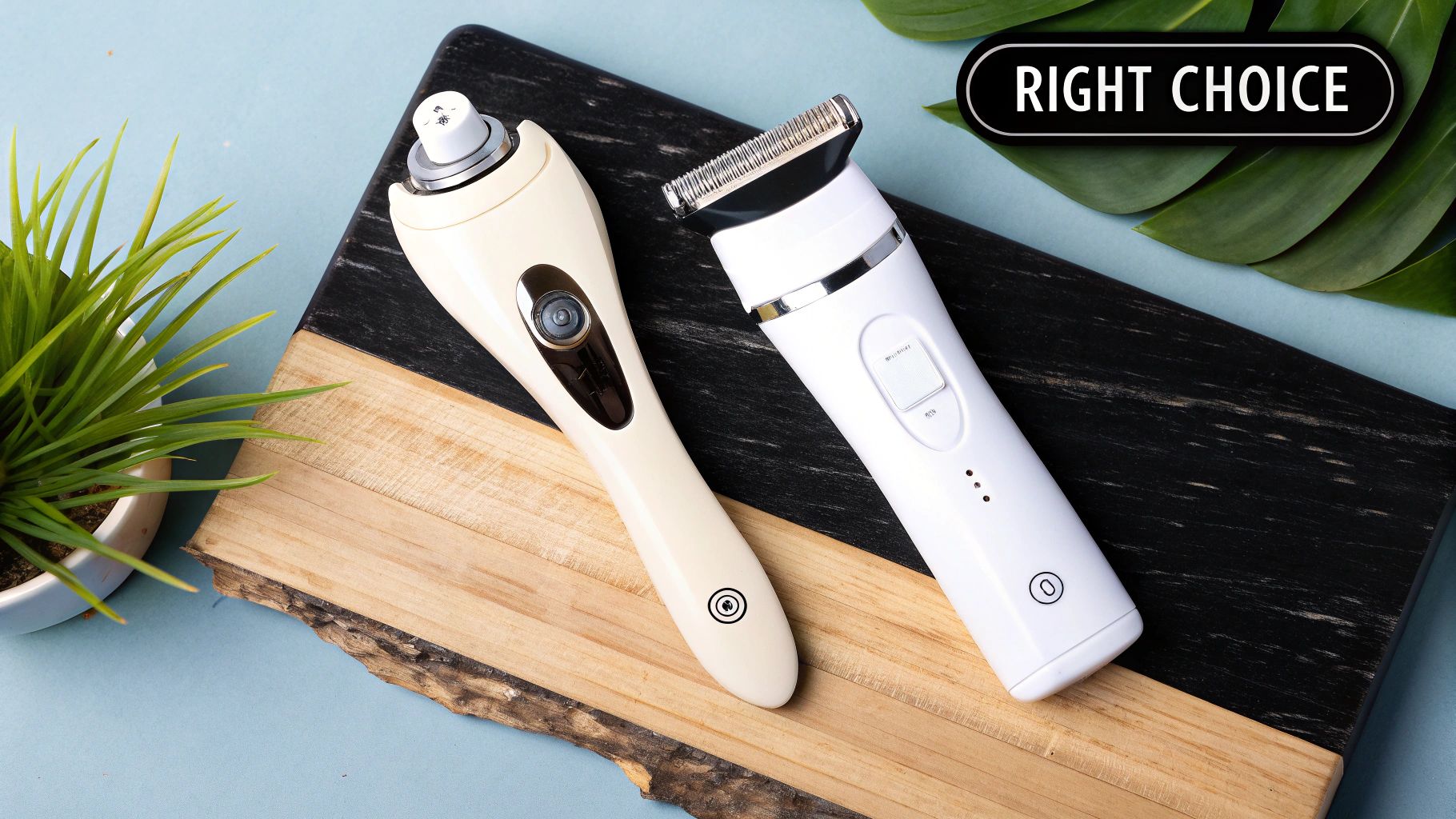
Trying to decide between dermaplaning and microdermabrasion can feel overwhelming, but it gets a lot easier when you think about your specific skin goals and what’s happening in your life right now. Instead of just listing pros and cons, let's focus on the why. What works for your best friend might not be the right fit for you.
To make it simple, let's walk through a few real-world scenarios. This will help you figure out which treatment truly matches what your skin needs, especially if you're weighing your options here in London, Ontario.
When to Choose Dermaplaning
Dermaplaning is hands-down the go-to for anyone who needs immediate results with absolutely no interruption to their schedule. It really shines when surface perfection is the goal.
Choose dermaplaning if you:
Have a big event coming up and want an instant glow. Because there's zero downtime, it's the perfect facial to get right before a wedding or party for luminous, camera-ready skin.
Want your makeup to look flawless. Dermaplaning is unique because it removes that soft vellus hair (peach fuzz), creating a perfectly smooth canvas that microdermabrasion just can't match.
Have sensitive or dry skin. It’s a gentle, manual exfoliation, so it brightens your complexion without the friction or suction that can sometimes irritate more delicate skin types.
This treatment is all about instant gratification, which is why it's a client favourite here at Skinsation Aesthetics. You walk out looking and feeling fantastic right away.
When to Consider Other Options
While dermaplaning is brilliant for that immediate surface renewal, it isn't built to tackle deeper textural problems. Knowing its limits is just as important as knowing its strengths.
You might want to explore other exfoliation methods if your main issues are:
Shallow acne scars or sun damage. For these kinds of textural concerns, you'll likely see better long-term results from treatments that work a bit deeper to stimulate collagen, such as our Aerolase laser.
Stubborn hyperpigmentation. Dermaplaning can help lighten surface discolouration, but deeper patches of pigment often need a different strategy to achieve significant fading, where a targeted treatment like Aerolase would be more effective.
It’s also critical to know when to say no. For example, dermaplaning is not a good idea if you have active or cystic acne breakouts. The blade can easily spread bacteria across the skin, making inflammation much worse.
The surest way to get healthy, glowing skin is to start with a professional assessment. A trained aesthetician can properly analyze your skin’s condition and create a treatment plan that will get you to your goals safely and effectively.
Ultimately, nothing beats a one-on-one consultation to figure out the best path forward. If you're in the London, Ontario area and think the instant brightening and smoothing of dermaplaning sounds like what you’re looking for, we’d love to chat. Schedule a consultation at Skinsation Aesthetics, and we’ll help you make the best choice for your skin's future.
How Dermaplaning Sets the Stage for Advanced Laser Treatments
While people often get caught up in the "dermaplaning vs. microdermabrasion" debate for pure exfoliation, one of dermaplaning's most significant advantages is how it prepares the skin for other treatments. Think of it like this: you wouldn't paint on a dusty, uneven canvas, would you? Dermaplaning clears away that top layer of dead cells and fine hairs, creating a perfectly smooth surface for what’s next.
This step is especially critical when bringing advanced technology into the mix. By giving treatments a clear, direct path into the skin, we ensure they can work more deeply and evenly.
The Aerolase and Dermaplaning Combination
Here at Skinsation Aesthetics, we’ve seen incredible results by pairing dermaplaning with our Aerolase Neo Elite laser. It’s a powerful duo. The laser’s energy can do its job far more efficiently, which means better results when we’re targeting things like pigmentation, redness, or signs of aging.
Here’s why it works so well:
Boosts Laser Performance: When that barrier of dead skin and vellus hair is gone, the Aerolase laser has a straight shot to the melanin or hemoglobin it’s designed to target.
Ensures an Even Treatment: A smooth surface means the laser energy is distributed uniformly across the skin. This prevents patchy results and promotes a much more balanced, consistent outcome.
Deeper Rejuvenation: You get the best of both worlds—the instant gratification of smooth, renewed skin from dermaplaning, plus the long-term collagen-building power of the Aerolase laser working deep beneath the surface.
This strategic pairing offers a multi-layered approach to skin health, addressing both surface texture and deeper cellular concerns in a single, comprehensive session. It’s a complete skin rejuvenation strategy available right here at our London, Ontario clinic.
To see where dermaplaning fits in the wider world of aesthetic treatments, you can explore a comprehensive guide to non-invasive and laser treatment options. And for a closer look at the specific technology we use, check out our guide to Aerolase laser treatments.
Frequently Asked Skincare Questions
When you're trying to decide between treatments like dermaplaning and microdermabrasion, it's natural to have a few questions. To help clear things up and make you feel confident about your choice, here are the answers to some of the most common things we get asked by our clients here in Canada.
Will My Facial Hair Grow Back Thicker After Dermaplaning?
This is probably the number one myth we hear, and the answer is a definite no. Dermaplaning shaves the fine vellus hairs (what we call 'peach fuzz') right at the surface of your skin. It doesn't touch the hair follicle, which is deep underneath.
Because the follicle isn't affected, your hair grows back with the exact same texture and colour it had before. Sometimes, as the hair breaks the surface, the blunter tip can feel a bit different, but rest assured, the hair itself hasn't changed at all.
How Often Should I Get These Treatments?
Getting great results is all about consistency, but the right schedule depends on the treatment you choose.
Dermaplaning: We usually suggest coming in every 3 to 4 weeks. This timing works beautifully with your skin’s natural regeneration cycle, helping you keep that smooth, glowing look going strong.
Microdermabrasion: This one is a bit more personalized. You might start with a series of treatments every 2 to 4 weeks to tackle specific concerns, and then switch to a maintenance schedule to keep up the results.
Are At-Home Versions As Effective As Professional Treatments?
You've probably seen at-home tools for these treatments, but honestly, they don't compare to a professional service. A certified aesthetician, like our team here in London, Ontario, is trained to use a sterile, surgical-grade scalpel that offers precision and safety you just can't get from a store-bought device.
The difference really comes down to professional-grade equipment and an expert’s touch. This is what minimizes the risk of irritation, infection, or even scarring—risks that are much higher when using consumer tools. Seeing a pro means getting a safer, more effective treatment with results you can count on.
Ready to see what a professional dermaplaning session can do for your glow? The team at Skinsation Aesthetics Inc. is here to design a treatment plan that helps reveal your most radiant skin. Book your consultation online today!
Comments