

What to Do After a Facial to Keep Your Skin Glowing

You’ve just left Skinsation Aesthetics with that incredible, fresh-from-the-facial glow. Now, the goal is to keep it. The first 12 hours are your golden window to protect your skin and lock in those amazing results.
Think of your skin as a delicate canvas that has just been primed; it’s highly receptive to all the good stuff we just applied, but it's also temporarily more vulnerable. The main goal right now is simple: keep it clean, calm, and happy.
Your Immediate Post-Facial Care Guide
The most important thing to remember is to let your skin breathe and recover. That means what you don't do is just as important as what you do. For the first few hours, it's all about a hands-off, gentle approach.
Hands Off for Optimal Healing
I can't stress this enough: keep your hands away from your face! It's the number one rule. Your hands carry more bacteria than you realize, and touching your freshly treated skin can transfer germs right into your newly cleansed pores. This can easily lead to breakouts or irritation, undoing all the hard work we just did.
Postpone Your Workout and Heat Exposure
While a good sweat session is great for your health, it’s best to skip it on facial day. Strenuous exercise increases blood flow and sweat, which can seriously aggravate sensitive, post-facial skin.
For the same reason, you'll want to steer clear of saunas, steam rooms, and hot tubs for at least 24 hours. Too much heat can cause inflammation and counteract the calming benefits of your treatment. Many of our facials, like those featuring our popular Hydrojelly masks, are designed to soothe and hydrate. You can learn more about the benefits of a Hydrojelly mask and see why keeping your skin cool and calm is so vital to your results.
To make it super simple, here's a quick cheat sheet for the next few hours.
Immediate Facial Aftercare The Dos and Don'ts
What You Should Do | What You Should Avoid |
|---|---|
Drink plenty of water to stay hydrated from the inside out. | Touching, picking, or squeezing your skin. |
Change your pillowcase to a clean one tonight. | Applying makeup or any active ingredients like retinoids or AHAs. |
Use a gentle, non-foaming cleanser with lukewarm water. | Hot showers, saunas, steam rooms, or hot tubs. |
Gently pat your skin dry with a clean, soft towel. | Strenuous exercise that causes heavy sweating. |
Relax and let your skin absorb all the nutrients. | Exposing your skin to direct sunlight without protection. |
Following these simple guidelines helps ensure your skin heals beautifully and you get the most out of your treatment.
That evening, when it’s time to wash your face, use only lukewarm water and a gentle, non-foaming cleanser. Pat your skin dry with a clean towel—no rubbing! This ensures you don't strip away the potent, professional-grade serums your aesthetician carefully applied.
If your skin feels unusually sensitive or shows signs of irritation right after your facial, this a practical guide on how to calm irritated skin offers some great strategies for immediate relief.
Caring for Your Skin in the First Three Days
The 24 to 72 hours after your facial are when the real magic settles in. Think of this as a crucial renewal and repair window for your skin. It's extra receptive and a little more sensitive right now, so treating it with a gentle, thoughtful approach will lock in that gorgeous glow you walked out with.
This timeline gives you a quick snapshot of those first few critical hours. It really boils down to three simple things: hands off, no sweat, and a super gentle wash.
Honestly, less is more in the moments right after your treatment. Just give your skin the space it needs to breathe and absorb all the benefits without any interference.
Prioritize Sun Protection
Sunscreen isn't just a suggestion—it's non-negotiable after a professional treatment. Your skin has been freshly exfoliated, leaving a new, delicate surface that's incredibly vulnerable to UV damage. Even on those classic cloudy days here in London, Ontario, those rays can still cause harm.
Most professional facials involve treatments that temporarily thin the skin's outer layer, making it more susceptible to the sun. This is particularly important in Canada, where UV levels can be surprisingly high, even in cooler weather. Being diligent with a broad-spectrum sunscreen of SPF 30 or higher can make a huge difference in protecting your investment and preventing sun-induced damage. You can learn more about the importance of aftercare from this in-depth beauty industry analysis.
Simplify Your Skincare Routine
For the next three days, it’s time to press pause on your heavy hitters. This isn't the moment for potent serums packed with retinoids, vitamin C, or exfoliating acids like AHAs and BHAs. Using them too soon can backfire, leading to redness, irritation, and inflammation that completely undermines the calming, restorative work of your facial.
Instead, let’s get back to basics:
Gentle Cleanser: Reach for a creamy, soap-free cleanser and use only lukewarm water. You want to avoid anything that foams up aggressively or leaves your skin feeling tight and stripped.
Soothing Moisturizer: A simple, non-comedogenic moisturizer is your best friend right now. Look for one that focuses on hydration and barrier support with ingredients like ceramides, hyaluronic acid, and glycerin.
Minimal Products: Just stick to the essentials: cleansing, moisturizing, and sunscreen. This minimalist approach gives your skin a chance to heal and rebalance itself without feeling overwhelmed.
By simplifying your routine, you’re creating the perfect healing environment for your skin. This focused, gentle care supports the recovery process, prevents irritation, and ensures you get to enjoy the beautiful, long-lasting results from your treatment at Skinsation Aesthetics.
Choosing The Right Products For Your Post-Facial Routine
Slathering on the wrong skincare after a professional facial can undo all that good work in a flash and leave your fresh, sensitive skin feeling pretty irritated. Think of the week after your treatment as a critical healing phase. Your product choices really, really matter. Your skin's protective barrier is a bit vulnerable right now, so the mission is simple: soothe, hydrate, and protect with the gentlest ingredients you can find.
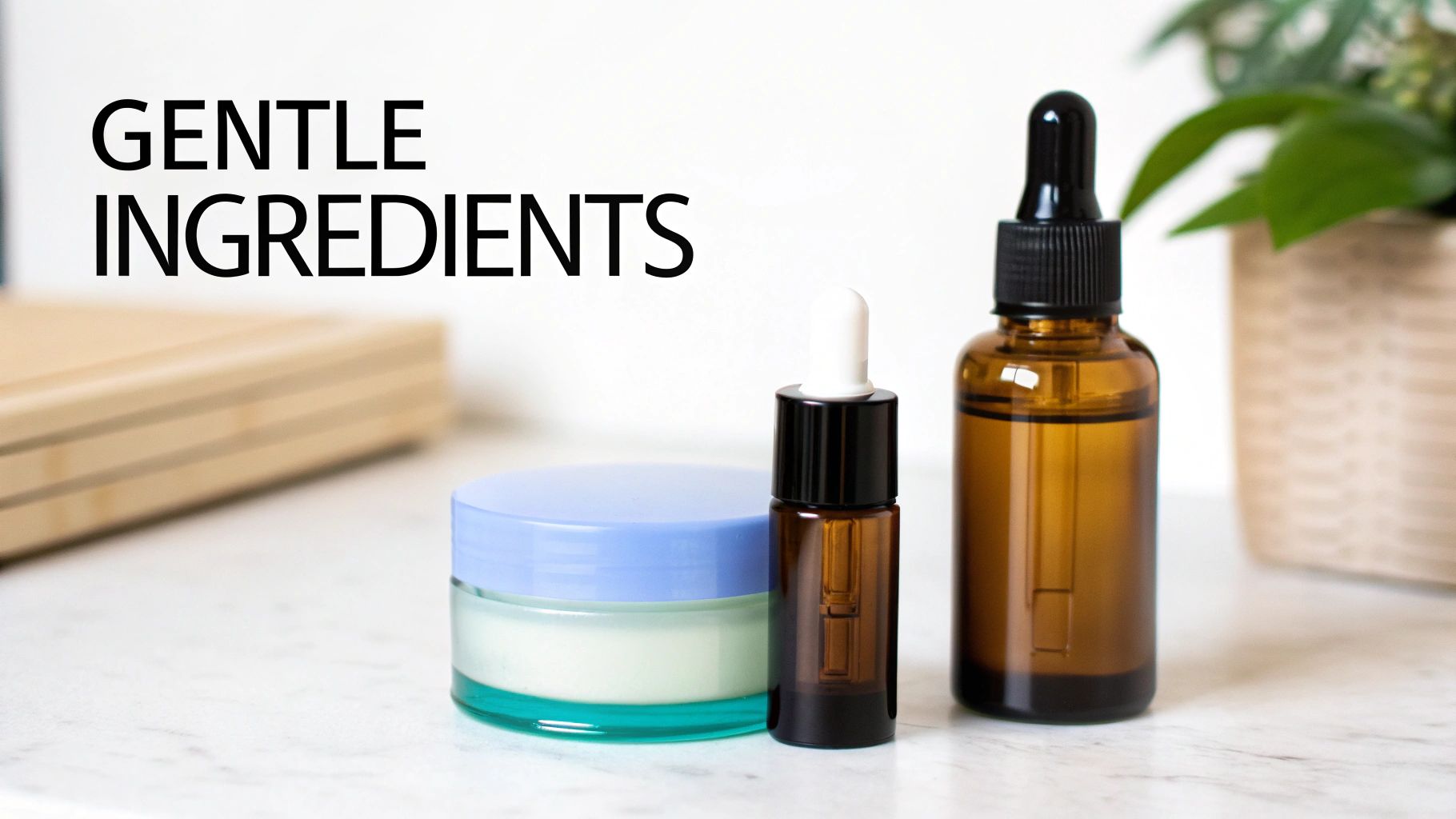
This is your cue to embrace a "less is more" philosophy. Ditch your complex, multi-step routine for a few days and stick to a minimal lineup of products built for recovery.
Hero Ingredients To Look For
Your bathroom counter should feature products packed with calming, restorative ingredients. These are the good guys that will help the healing process along without causing any drama.
Hyaluronic Acid: This is a hydration superstar. It’s a humectant that pulls moisture into the skin, giving you that deep, lightweight hydration that’s absolutely essential for a speedy recovery.
Ceramides: Think of these as the building blocks of your skin's barrier. Applying them topically helps strengthen that barrier, locking in precious moisture and shielding your skin from outside irritants.
Niacinamide: Famous for its anti-inflammatory magic, niacinamide is fantastic for calming down any redness you might have after your facial and just generally supporting your skin’s health.
A strong skin barrier is the secret to getting those amazing, long-lasting results. To learn more, take a look at our guide on the best skin barrier repair products for Canadians.
Think of your post-facial skincare like a nourishing soup for your skin—simple, comforting, and packed with only the good stuff. Avoid anything too complex or spicy that could cause a reaction.
Ingredients and Products To Avoid
Knowing what to leave on the shelf is just as crucial. Your skin is in no mood for anything harsh, stimulating, or aggressive right now. You’ll want to steer clear of exfoliants like AHAs, BHAs, and retinoids for at least three to five days.
It's also a good time to become a label-reader and get familiar with some of the Top Skin Care Ingredients to Avoid that can cause irritation. Keep an eye out for alcohol-based toners, synthetic fragrances, and harsh cleansers with sulfates (like sodium lauryl sulfate), which can strip your skin and lead to inflammation.
Instead, reach for a creamy, soap-free cleanser and a simple, lightweight moisturizer that won't clog your pores (look for "non-comedogenic" on the label). This gentle, pared-back approach is the best way to make sure your skin recovers beautifully and you can hang onto that incredible glow you got here at Skinsation Aesthetics.
Aftercare for Advanced Treatments Like Aerolase
While a classic facial is deeply relaxing, advanced treatments like chemical peels, microneedling, and laser therapies are working on a whole different level. They kickstart a more intensive renewal process in your skin, so nailing the aftercare is absolutely key to getting those incredible results and ensuring everything heals beautifully. Here at Skinsation Aesthetics, we make sure you leave our London, Ontario clinic knowing exactly what to do during this crucial healing phase.
Post-Care for Chemical Peels and Microneedling
After a chemical peel, it’s normal to see some redness followed by light flaking for a few days. The golden rule? Do not pick or pull at the peeling skin. Seriously, just let it shed on its own. Picking can lead to scarring or hyperpigmentation, which is the last thing you want. Your job is to focus on hydration and be militant about sun protection to shield that vulnerable new skin.
Microneedling creates tiny micro-channels to get that collagen production going, which means keeping things clean is non-negotiable to prevent infection. For the first 24 hours, you’ll want to skip makeup entirely and only use the gentle, approved products your aesthetician recommends. Think simple: a gentle cleanser and a hydrating serum are all you need to support the healing process. For both of these treatments, you'll need to press pause on any exfoliants and retinoids for at least a week.
Maximizing Your Aerolase Laser Results
One of the things our clients love most about the Aerolase laser is the minimal downtime. It’s a favourite at Skinsation Aesthetics for tackling everything from acne to signs of aging. But "minimal downtime" doesn't mean "no aftercare." To really make the most of your investment, a few simple rules are essential.
Even though your skin might look and feel totally fine right after an Aerolase session, the treatment is triggering a powerful collagen-remodelling process deep down. Protecting your skin during this time is what makes all the difference for maximizing those rejuvenating effects.
For the first few days, just treat your skin with a little extra TLC. This means:
Strict Sun Avoidance: Your skin is going to be more sensitive to UV rays. You need to be wearing a broad-spectrum SPF 30 or higher every single day—even on those cloudy Canadian days.
Gentle Skincare Only: Stick with a mild, non-abrasive cleanser and a moisturizer that supports your skin’s barrier. You’ll need to avoid all active ingredients like retinoids, AHAs, and BHAs for at least five to seven days.
Keep it Cool: For the first 48 hours, avoid hot showers, saunas, and intense workouts. This helps prevent any unnecessary irritation or inflammation while your skin is in its healing phase.
Following these steps ensures your skin heals perfectly, allowing the full benefits of the laser to shine through. If you want to dive deeper into how this amazing technology works, you can explore your complete guide to Aerolase laser treatments and see why it’s a game-changer for so many of our clients.
Knowing When to Call Your Aesthetician
It’s totally normal for your skin to look a little pink or feel a bit tight right after a facial. Think of it as a sign that we’ve successfully kicked your skin's renewal cycle into gear. After all, your skin just had a professional-grade deep clean.
This mild sensitivity and redness is just part of the process, and it usually fades within a few hours to a day. But it's crucial to know the difference between a normal healing response and something that needs a professional eye.
Normal Reactions vs. Warning Signs
Sometimes, your skin might send signals that go beyond the typical post-facial glow-up phase. You know your skin best. If something feels off or a reaction seems to be lingering longer than it should, it’s always better to check in with us.
Your safety and long-term skin health are our top priorities. Never hesitate to reach out if you have any concerns. A quick call can provide peace of mind and ensure your skin is healing perfectly.
Get in touch with us here at Skinsation Aesthetics in London, Ontario, if you experience any of the following:
Persistent Redness or Swelling: If the pinkness gets worse instead of better, or if any swelling lasts for more than 24-48 hours.
Blistering or Crusting: These are not normal reactions and could point to something more serious that needs immediate attention.
Signs of an Allergic Reaction: Watch out for things like hives, unexpected rashes, or a relentless, intense itch that you just can't shake.
Pain or Burning: A little sensitivity is one thing, but any feeling of actual pain or a burning sensation is a definite red flag.
We’re here to guide you through every step of your skincare journey, and that absolutely includes your aftercare.
Your Post-Facial Questions, Answered
After a facial, clients often have a few questions about what to do next. We get it! You've invested in your skin and want to make sure you get the most out of it. Here are the answers to some of the most common things people ask us.
Can I Wear Makeup Right After My Facial?
The golden rule is to wait at least 12-24 hours before applying any makeup. Think of it this way: your pores are freshly cleansed and wide open. They're ready to soak up all the good stuff, but that also makes them more susceptible to bacteria and clogging from cosmetics. Let your skin breathe and enjoy that natural glow for a little while!
Help! Why Am I Breaking Out After My Facial?
Don't panic—this is usually a good sign! It's likely what we call "skin purging." Your facial has kickstarted your skin's natural renewal cycle, pushing any underlying congestion (like hidden blackheads or brewing blemishes) up to the surface.
These little pop-ups are temporary and should clear within a week. If you're seeing anything that looks widespread, painful, or inflamed, that's different, and you should give us a call.
How Often Should I Be Getting a Facial?
For most skin types, booking a professional facial every 4 to 6 weeks is the sweet spot. This schedule syncs up perfectly with your skin's natural cell turnover cycle, allowing us to work with your skin as it renews itself.
Of course, this can change based on your specific goals. At your appointment, we can map out a personalized schedule that makes sense for you and your skin.
Consistency is everything when it comes to achieving long-term skin health. Regular visits mean we can track your progress, adapt your treatments to your skin's changing needs, and keep you on track to reaching your goals.
Is It Okay to Work Out After a Facial?
It's best to take a rest day from the gym. We recommend skipping any strenuous exercise, saunas, or steam rooms for at least 24 hours post-facial. Why? Intense heat and sweat can easily irritate your freshly treated, sensitive skin. It can also introduce bacteria into those clean, open pores you just paid to have cleared out!
A gentle walk around your London, Ontario neighbourhood is totally fine, though.
Ready to maintain that glow or plan your next treatment? The experts at Skinsation Aesthetics Inc. are here to support your skincare journey with personalized advice and advanced treatments. Book your next appointment online today!
Comments