

Your Guide to Chemical Peels for Hyperpigmentation in Canada

Hyperpigmentation—those frustrating dark spots or patches—pops up when your skin gets a little too enthusiastic about producing melanin, the pigment that gives it colour. This is usually triggered by things like old acne scars, hormonal shifts that cause melasma, or a bit too much fun in the sun. Chemical peels are a fantastic, direct solution. They use specialized formulas to exfoliate the skin's surface, lifting away those discoloured cells to show off the brighter, more even complexion hiding underneath.
How Peels Uncover Your Best Skin
Think of hyperpigmentation like a stubborn coffee stain on your favourite white shirt. You can try dabbing at it with spot treatments, but to truly lift it, you need something that can work its way into the fibres. A chemical peel is that professional-grade treatment for your skin, using carefully chosen solutions to gently remove the outer layers where all that extra pigment has set up camp.
The whole process is really just a controlled way of speeding up your skin’s natural renewal cycle. By helping you shed the damaged, discoloured cells, the peel reveals the fresher, more evenly toned skin that’s been waiting just below the surface. It’s not about bleaching the skin; it’s about removing the layers that are holding onto the unwanted colour.
The Science of Fading Dark Spots
So, how does it actually work? The magic of chemical peels for hyperpigmentation is their ability to precisely target and break up those clusters of melanin. The acidic solutions dissolve the "glue" holding dead, pigmented cells together. As these layers gently peel away in the days following your treatment, the visible discolouration goes right along with them.
This process gives your skin a few key advantages in the fight for clarity:
Faster Cell Renewal: Peels give your skin a nudge to regenerate more quickly, pushing out old, pigmented cells and replacing them with fresh, healthy ones.
Better Product Penetration: Once that top layer of dead skin is gone, your at-home skincare products, like brightening serums, can sink in deeper and work much more effectively.
A Little Collagen Boost: Many peels also encourage new collagen growth. This not only improves skin texture and strength but also gives you a smoother, more radiant look overall.
For many of us here in London, Ontario, dealing with sun damage after our gorgeous but powerful summers is a top priority. Chemical peels are one of the most direct and efficient ways to reverse that visible damage and get back to a beautifully uniform skin tone.
Setting the Stage for Clearer Skin
Ultimately, a chemical peel isn’t just a one-time fix; it’s a reset for your skin that sets the stage for a lasting, clearer complexion. It’s an active step that addresses the spots you can see while also encouraging a healthier renewal process from within. By clearing away the buildup of pigmentation, it gives you a clean canvas to work with.
This is exactly why a professional consultation is so critical. A skilled aesthetician, like our experts here at Skinsation Aesthetics in London, Ontario, can properly assess the specific type and depth of your hyperpigmentation. From there, we can recommend the perfect peel for your skin’s needs, paving the way for the best possible results and helping you achieve that radiant skin you absolutely deserve.
Comparing the Best Chemical Peels for Hyperpigmentation
Walking into the world of chemical peels can feel a bit overwhelming, especially when you’re trying to fade those stubborn dark spots. But here’s the thing: choosing the right peel is the most important step in getting the results you want. Not all peels are the same, and each one has a unique way of tackling hyperpigmentation.
To get that clear, glowing complexion, we need to match the peel’s strength and specific properties to your skin type, tone, and the kind of discolouration you’re dealing with. Let's break down the top contenders so you can feel confident about your options.
1. The Natural Innovator: Zena Algae Peel
First up and our top recommendation is a real game-changer in the clinic: the Zena Algae Peel. This is a powerhouse treatment that’s 100% natural, which sets it apart from the rest. Instead of traditional acids, it gets its strength from a special blend of algae, minerals, and microscopic silicate spicules harvested from freshwater lakes in Ukraine.
Think of these tiny spicules as keys that unlock your skin's own renewal process. When they’re massaged into the skin, they create tiny channels that kickstart a massive collagen-building response and seriously speed up cell turnover. This whole process works from the inside out, breaking apart pigment and lifting it away. It’s been incredible for our clients dealing with post-acne marks, sunspots, and even tricky melasma.
Because it’s completely free of harsh chemicals, the Zena Algae Peel is incredibly safe for all skin tones, even those that are more likely to develop post-inflammatory hyperpigmentation (PIH). For our clients here in London, Ontario, it’s our go-to for a natural but seriously effective solution. We are proud to offer this innovative treatment at Skinsation Aesthetics.
2. The Classic AHA: Glycolic Acid Peel
Glycolic acid is probably the peel you’ve heard the most about. It's an alpha-hydroxy acid (AHA) that comes from sugarcane, and its claim to fame is its tiny molecular size. That small size lets it get down into the skin where it can really work its magic.
Once it’s absorbed, it goes to work dissolving the "glue" that holds onto old, pigmented skin cells. This encourages a deep exfoliation, sloughing away the discoloured top layers to bring forward the brighter, fresher skin hiding underneath.
Best For: Sun damage, post-acne marks on drier or normal skin types, and giving the skin an overall brighter look.
How It Works: Exfoliates the surface and helps break up melanin clusters.
Considerations: It can make the skin sensitive, especially at higher strengths. This is one where a professional’s guidance is non-negotiable.
This diagram really simplifies how peels work on a fundamental level.
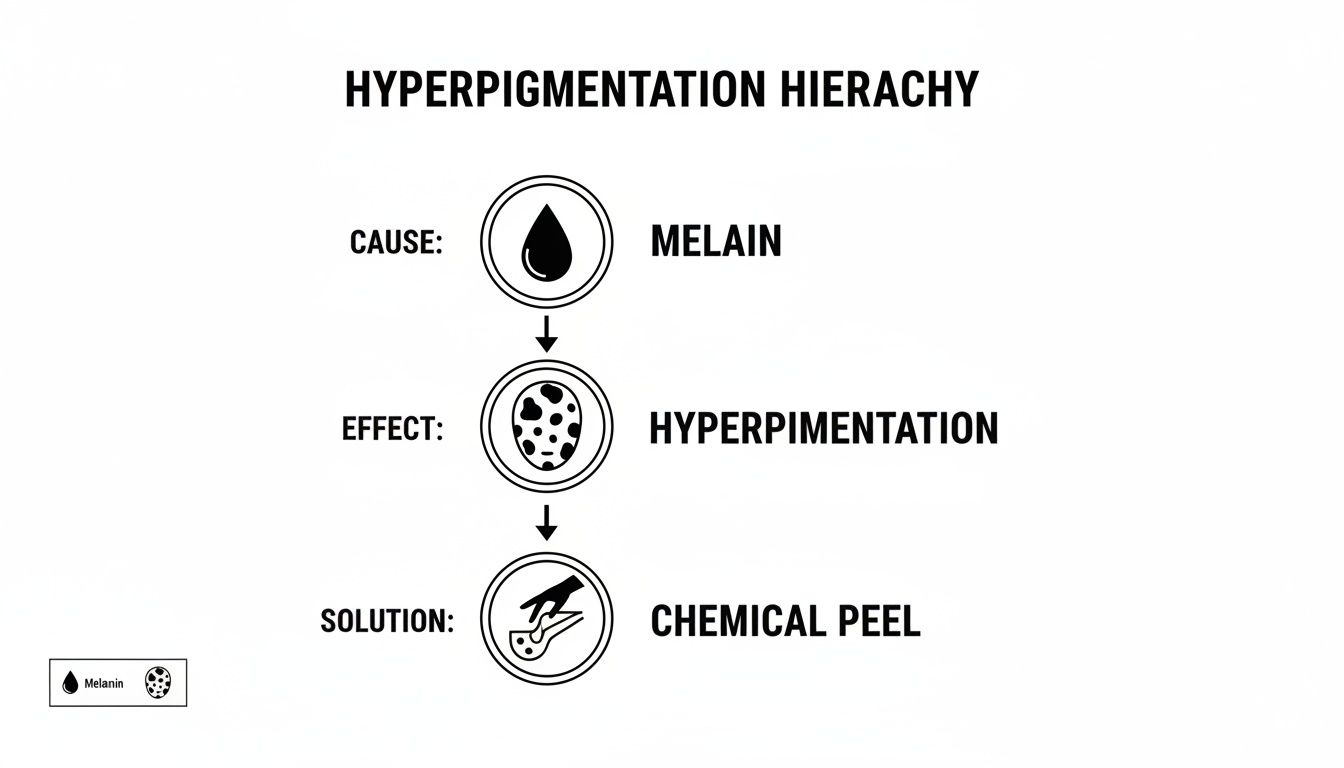
You can see it right there: the peel directly targets the visible problem (hyperpigmentation) by getting to the root of the issue (excess melanin).
3. The Pore-Clearing BHA: Salicylic Acid Peel
Salicylic acid is a beta-hydroxy acid (BHA), and it plays by a different set of rules. Unlike AHAs, which are water-soluble, salicylic acid is oil-soluble. This is its superpower. It means it can dive deep into your pores and exfoliate from the inside.
This makes it the undisputed champion for anyone whose hyperpigmentation is tied to acne. By cleaning out clogged pores and calming inflammation, it doesn’t just fade the dark marks left behind by old breakouts—it helps stop new ones from forming and leaving their mark in the first place.
For clients with oily or acne-prone skin, a salicylic acid peel is a fantastic two-for-one. It tackles the active breakouts and the discolouration they cause, leading to a much clearer and more even complexion over time.
4. The Multi-Acid: Jessner’s Peel
A Jessner’s peel is a medium-depth peel that’s a bit of a cocktail. It combines three powerful ingredients: salicylic acid, lactic acid (another AHA), and resorcinol. This blend works together to address a few different issues all at once.
The salicylic acid gets into the pores, the lactic acid exfoliates the surface while adding a bit of hydration, and the resorcinol helps break down rough, damaged skin. The combined effect is amazing for lightening hyperpigmentation, smoothing out skin texture, and minimizing the look of acne scars.
To make things even clearer, let's look at these peels side-by-side.
Comparing Top Chemical Peels for Hyperpigmentation
Choosing the right chemical peel can seem complex, but understanding the key differences makes the decision much easier. This table breaks down our top contenders, highlighting what makes each one unique and who it's best suited for.
Peel Type | Key Ingredient(s) | Ideal For | Main Benefit for Pigmentation |
|---|---|---|---|
Zena Algae Peel | Algae, Silicate Spicules | All skin types, including sensitive and darker skin tones; stubborn pigmentation | Stimulates deep renewal to lift pigment from within, without harsh chemicals. |
AHA Peel | Glycolic Acid | Drier/normal skin, sun damage, mild discolouration | Exfoliates the surface to remove pigmented dead cells and brighten skin. |
BHA Peel | Salicylic Acid | Oily, acne-prone skin with post-inflammatory hyperpigmentation (PIH) | Clears pores to treat acne and fade the dark marks it leaves behind. |
Jessner’s Peel | Salicylic Acid, Lactic Acid, Resorcinol | Sun damage, acne scarring, uneven texture | A multi-acid blend that targets pigmentation on multiple levels for a comprehensive result. |
This comparison shows there's truly a peel for every concern. The key is professional guidance to select the one that will deliver the best and safest results for your unique skin.
Choosing the Right Peel for Your Skin
At the end of the day, picking the perfect chemical peel isn't a decision you should make alone. It really needs to be guided by a professional. An experienced aesthetician can properly assess the type and depth of your pigmentation, factor in your skin’s sensitivity, and map out a treatment plan that will be both safe and effective.
Whether it’s the natural strength of the Zena Algae Peel or a time-tested acid solution, a personalized approach is always the best way forward. A consultation at a clinic like Skinsation Aesthetics ensures your journey to clear, even-toned skin is built on expertise and tailored just for you.
Why The Zena Algae Peel Is a Game Changer For Clear Skin
When you're looking for a powerful treatment for hyperpigmentation, most roads lead to traditional chemical peels. But there's one treatment that stands out from the crowd with its unique, nature-powered approach: the Zena Algae Peel. Here at Skinsation Aesthetics in London, Ontario, we’ve seen first-hand how this peel delivers incredible results without the harsh chemicals found in typical acid-based formulas.
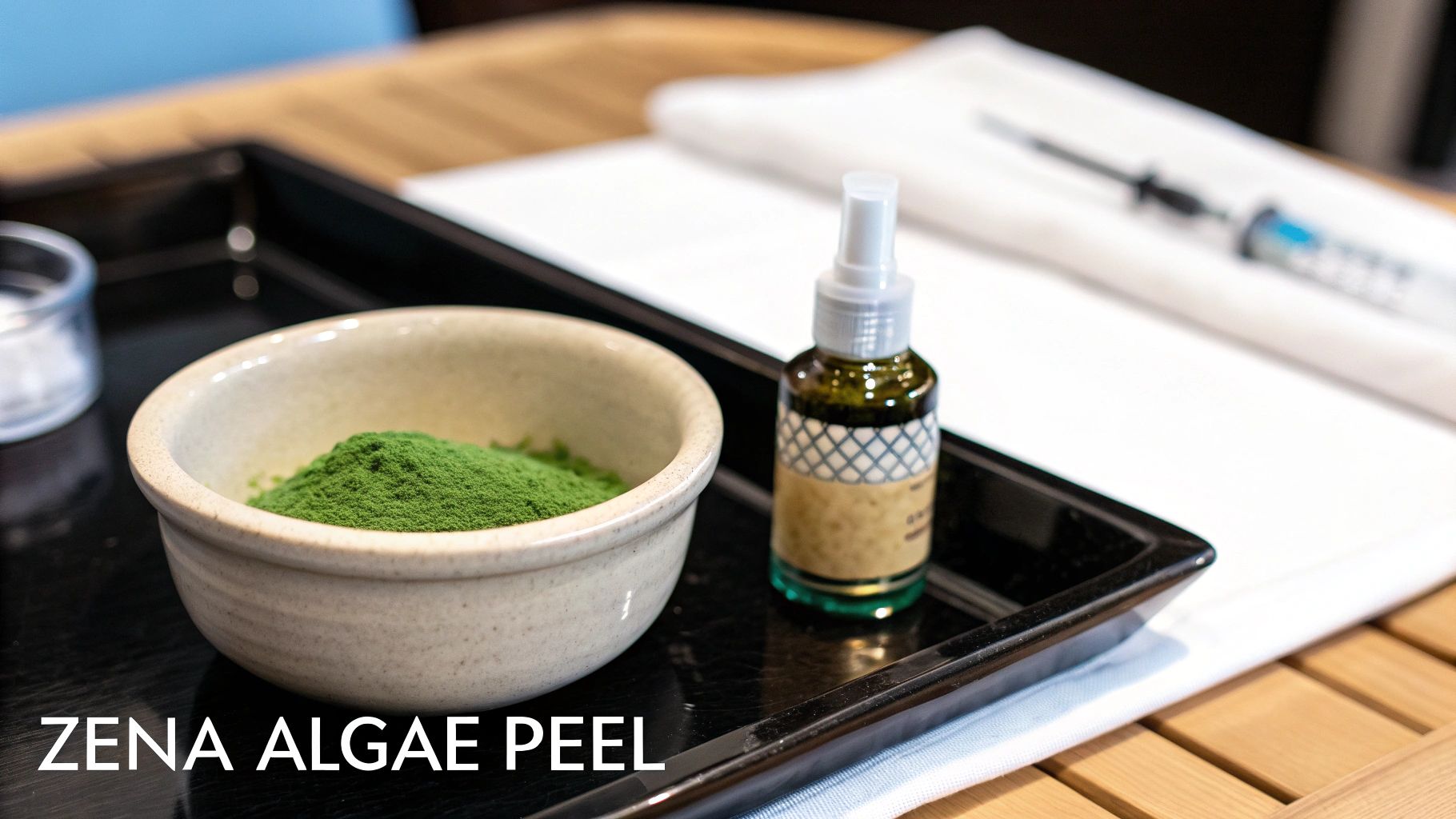
Unlike its counterparts, the Zena Algae Peel gets its strength from a 100% natural blend. It’s made of algae, minerals, and microscopic silicate spicules that are sustainably sourced from pristine Ukrainian lakes. This unique recipe makes it a potent yet surprisingly gentle way to tackle stubborn discolouration.
A Deeper Dive into the Natural Mechanism
So, how does it work? Think of the microscopic spicules in the peel as millions of tiny needles that kickstart your skin’s own powerful renewal process. When we massage the peel into your skin, these spicules create micro-channels that get right down into the epidermal layer, triggering a healing and rejuvenation response from the inside out.
This one-of-a-kind mechanism brings a few key benefits to the table for fighting hyperpigmentation:
Accelerated Cell Turnover: The spicules put your skin's natural exfoliation cycle into overdrive. This pushes pigmented cells up to the surface where they can shed away much, much faster than they would on their own.
Stimulated Collagen Production: Those tiny micro-channels send a signal to your skin to ramp up collagen and elastin production. This is fantastic for repairing damaged tissue, smoothing out old acne scars, and improving your skin’s overall texture.
Enhanced Blood Circulation: The treatment gives your microcirculation a serious boost, which means more oxygen and nutrients are delivered to your skin cells. This not only nourishes the skin but also helps break apart and flush away stubborn pigment deposits.
The Zena Algae Peel doesn't just work on the surface; it prompts a deep, biological response that rebuilds healthier, clearer skin from within. It’s a smarter approach that works with your body, not against it.
Uniquely Safe For All Skin Tones And Stages
One of the best things about the Zena Algae Peel is its incredible safety profile, which makes it an ideal choice for the diverse communities here in Canada. Many deeper chemical peels come with a risk of causing post-inflammatory hyperpigmentation (PIH), which is a particular concern for those with darker skin tones.
Because the Zena peel is completely free of acids and harsh chemicals, that risk is practically eliminated. It’s a reliable and effective solution for all Fitzpatrick skin types, from the very fairest to the deepest complexions.
Even better, its natural formula makes it one of the very few professional peels considered safe to use during pregnancy and breastfeeding. This gives expectant and new mothers a much-needed option to continue treating skin concerns like melasma without worry, at a time when most other treatments are off the table. To see the kind of transformations we’re talking about, check out our article showcasing some amazing Zena Algae Peel before and after Canadian results.
The Real-World Results in London Ontario
For our clients at Skinsation Aesthetics, the Zena Algae Peel has quickly become a go-to solution for a whole range of persistent skin issues. The treatment is incredibly effective at targeting and reducing visible pigmentation from sun damage, post-acne marks, and hormonal changes.
But it does more than just fade dark spots. Our clients consistently tell us their skin texture is smoother, their acne scars are less noticeable, and they have a healthy, revitalized glow. It manages to do all of this simply by harnessing the power of nature to encourage your skin to heal itself, revealing a clearer, more even, and radiant complexion.
Glycolic Acid Versus Salicylic Acid for Your Pigmentation
When you start looking into chemical peels for hyperpigmentation, two names pop up constantly: glycolic acid and salicylic acid. Both are fantastic at what they do, but they go about it in completely different ways. This makes each one better suited for certain skin types and specific kinds of discolouration.
Getting to know their unique strengths is the first step in picking the right treatment for your journey to clear, even-toned skin.
Glycolic acid is an alpha-hydroxy acid (AHA) and its claim to fame is its tiny molecular size. Picture it as a super-small key that can easily get into the deeper layers of your skin. This lets it dissolve the "glue" holding old, pigmented cells together, kicking off a thorough exfoliation that lifts away sun damage and the lingering marks from past breakouts.
On the other hand, salicylic acid is a beta-hydroxy acid (BHA), and its defining feature is that it’s oil-soluble. This special quality makes it the absolute hero for anyone with oily or acne-prone skin. It can dive right into clogged pores to clear out blockages and calm the inflammation that so often leads to post-inflammatory hyperpigmentation (PIH).
Glycolic Acid The Surface Renewal Expert
Because glycolic acid is a master of surface renewal, it’s a go-to choice for tackling pigmentation caused by the sun and other external factors. It speeds up cell turnover, helping to shed layers of sun-damaged skin and reveal a brighter, more uniform complexion hiding underneath. It also gives your skin a nice collagen boost, which helps improve overall texture and glow.
This makes it a great match for:
Sunspots and Age Spots: It directly targets and breaks up the pigment clusters caused by UV exposure.
Dullness: By whisking away the top layer of dead cells, it brings back your skin's natural radiance.
Mild Acne Scars: It helps to smooth out texture and fade the discolouration left behind by old blemishes.
Glycolic acid’s main job is to unglue and lift away the visible problem, making it a powerful tool for reversing the signs of environmental damage.
Salicylic Acid The Pore-Clearing Specialist
Salicylic acid takes a different approach. It targets the root cause of pigmentation that often plagues people with acne. Because it’s oil-soluble, it can get inside sebum-filled follicles and exfoliate from within, clearing out the congestion that leads to pimples in the first place.
Its anti-inflammatory properties are another huge plus. By calming the irritation that comes with acne, it helps prevent those dark spots from even forming. This makes salicylic acid a double-duty champion for anyone struggling with both active breakouts and the marks they leave behind. You can find a more detailed comparison in our Canadian guide to Glycolic Acid vs. Salicylic Acid.
The Evidence for Canadian Skin
Here in Southwestern Ontario, we know how the shift from long winters to intense summer sun can wreak havoc on skin. Hyperpigmentation is a major concern for many Canadians seeking skincare solutions.
A Canadian study highlighted the effectiveness of glycolic acid (GA) chemical peels. In a group of participants with post-acne hyperpigmentation, GA peels led to an average pigment reduction of 75% by the fourth session. This was a significant improvement over the 50% reduction seen with salicylic acid peels in the same study. You can read the full research about these clinical trial findings on chemical peels for post-acne pigmentation.
This data is right in line with what we see with the customized, medical-grade peels we offer at Skinsation Aesthetics. Our trained professionals carefully tailor the depth and concentration to safely treat the diverse skin tones in our community, ensuring you get effective results with minimal downtime.
At the end of the day, choosing between glycolic and salicylic acid isn't about which one is "better," but which one is better for you. A professional consultation is the only way to properly analyze your specific type of hyperpigmentation, your skin type, and your goals.
Whether your dark spots are from sunbathing or breakouts, an expert assessment at a clinic like Skinsation Aesthetics will make sure you get the most effective treatment for a clear and confident complexion.
Your Chemical Peel Journey From Start to Finish
Deciding to treat your hyperpigmentation with a chemical peel is a big step towards clearer, more radiant skin. It helps to know exactly what to expect, so the whole process feels less like a mystery and more like the exciting journey it is. At a professional clinic like Skinsation Aesthetics, we’ve structured the experience to be supportive and clear from the moment you walk in.
The entire process kicks off with the most important step of all—your consultation. This is where your aesthetician really gets to know you and your skin, becoming your trusted guide.
The Initial Consultation: Your Personalized Blueprint
Your first consultation is so much more than a quick chat. It's a proper deep dive into your skin's health and history. An expert aesthetician will take a close look at your skin, figuring out the specific type and depth of your hyperpigmentation. Whether it's stubborn post-acne marks, sunspots from summers spent in Southwestern Ontario, or hormonal melasma, getting the diagnosis right is absolutely key.
This is your time to talk about your concerns, lifestyle, and what you hope to achieve. This conversation gives us everything we need to design a personalized treatment plan just for you, recommending the best chemical peels for your hyperpigmentation. For instance, we might suggest the gentle but powerful Zena Algae Peel we offer right here at our London, Ontario clinic. You’ll walk out feeling informed, with a clear roadmap of what’s coming next.
The Treatment: What Happens in the Clinic
When you come in for your treatment, our focus is entirely on your comfort and safety. The process itself is very methodical, so you can just relax and let us take care of everything.
Here’s a step-by-step look at a typical peel appointment:
Deep Cleansing: First, your aesthetician will thoroughly cleanse your skin. This gets rid of any oils, makeup, or dirt, making sure the peel solution can penetrate evenly and do its job properly.
Protective Barrier: We might apply a protective ointment to sensitive spots like the corners of your eyes, nose, and mouth to prevent any irritation.
Peel Application: The chemical peel solution is then carefully applied to the treatment area. It’s normal to feel a mild tingling, stinging, or warming sensation as the peel starts to work—this is just a sign that it's doing what it's supposed to, and it's temporary.
A professional treatment is a precisely controlled process. Your aesthetician is watching your skin's reaction in real-time, making sure the peel works effectively while always putting the health and safety of your skin first.
Pre-Peel and Post-Peel Care: Your Role in Success
Your journey doesn’t stop when you leave the clinic. In fact, what you do at home is just as important as the treatment itself for getting those fantastic results. Proper prep and recovery are vital for making the most of your peel and ensuring a smooth, easy healing process.
Before Your Peel:
Avoid Exfoliants: For at least a week before your appointment, stop using retinoids, AHAs, BHAs, and any physical scrubs. This prevents your skin from becoming over-sensitized.
Sun Protection: Be extra careful with a broad-spectrum SPF to protect your skin from UV damage.
Stay Hydrated: Drink plenty of water and keep your skin well-moisturized from the inside and out.
After Your Peel:
Gentle Cleansing: Stick to a mild, soap-free cleanser and use lukewarm water. No scrubbing or harsh washcloths!
Deep Hydration: Apply a rich, soothing moisturizer often. This helps support your skin's healing barrier.
Sunscreen is Non-Negotiable: Your skin is going to be very sensitive to the sun. A high-SPF, broad-spectrum sunscreen is a must, every single day, even when it’s cloudy.
Following these simple guidelines helps protect your investment and paves the way for a beautifully even and glowing complexion.
How to Maintain and Enhance Your Peel Results
A chemical peel is a fantastic reset for your skin, but the journey to a consistently clear complexion doesn’t stop when you walk out of the clinic. Think of it less as a one-and-done fix and more as a powerful head start. To protect that investment and keep your skin glowing, a dedicated at-home routine is everything.
I like to tell my clients to think of their peel as tilling the soil; now, we need to nurture it with the right ingredients to see the best growth. This is where professional-grade skincare comes in, working to maintain the clarity your peel has revealed and stop new pigmentation in its tracks.
Building Your Post-Peel Skincare Routine
After a peel, your skin is much more receptive to active ingredients, making it the perfect time to introduce some real powerhouse products. A consistent routine is your best defence against hyperpigmentation making a comeback.
Here’s what your maintenance plan should absolutely include:
Broad-Spectrum SPF: This is non-negotiable. Seriously. Daily use of a high-SPF sunscreen protects your vulnerable new skin from UV rays, which are the number one trigger for dark spots.
Vitamin C Serum: This is your antioxidant hero. Vitamin C helps to brighten the entire complexion, fade any lingering discolouration, and shield your skin from environmental damage.
Retinoids: These vitamin A derivatives are amazing for speeding up cell turnover. This helps keep pigment from settling in and improves your overall skin texture.
For more tips on nurturing your skin after a professional treatment, check out our guide on what to do after a facial to keep your skin glowing.
Pairing Peels with Complementary Treatments
To tackle stubborn or deep-set pigmentation, sometimes combining treatments is the smartest strategy. It creates a synergistic effect, where each procedure actually boosts the results of the other.
Hyperpigmentation from sun damage is a huge issue for us here in southwestern Ontario. In fact, clinics in London, Ontario often see a significant increase in consultations for brown spots every single spring. Broader Canadian data on skin of colour revealed that chemical peels led to partial pigment reduction in 67% of cases, proving their value in a well-rounded treatment plan.
At Skinsation Aesthetics, we often pair chemical peels with microneedling. The peel lifts the surface pigment, and then microneedling works deeper to break up discolouration and stimulate new collagen. It’s a comprehensive solution for creating even-toned, revitalized skin.
Your aesthetician at Skinsation Aesthetics can build a long-term plan that might include a series of peels followed by other treatments. We’re your dedicated partner, committed to helping you achieve and maintain the beautiful, clear skin you deserve.
Your Top Chemical Peel Questions, Answered
It's completely normal to have questions before trying a new treatment. We get it! To help you feel confident and ready, we’ve put together answers to some of the most common questions we hear from clients at our London, Ontario clinic.
Is There Any Downtime?
Yes, but it really depends on the peel. A lighter peel, like a gentle glycolic acid treatment, might just leave your skin a little pink for a day or two. But for a more intensive peel, like the Zena Algae Peel, you can expect some real shedding. The skin will visibly peel for about 3 to 7 days as that old, pigmented layer makes way for the fresh, new skin underneath. We’ll always give you a clear, personalized timeline so you know exactly what to expect.
How Many Peels Will I Actually Need?
Think of treating hyperpigmentation as a journey, not a one-and-done deal. While your skin will likely look brighter after just one session, the real magic happens with a series of treatments. Most of our clients see the best, most lasting results after a series of 3 to 6 peels, scheduled about four weeks apart. This approach allows us to safely and progressively lift the pigment, layer by layer, for a beautifully even complexion.
Does It Hurt?
Most people tell us it feels like a mild to moderate tingling or a bit of warmth on the skin. This sensation only lasts for a few minutes while the peel is actively working. At Skinsation Aesthetics, your comfort is our priority. We're with you every step of the way, using professional techniques to make sure the experience is as relaxing as it is effective.
That tingling feeling is a good thing! It’s a sign that the peel’s active ingredients are getting to work, breaking down the bonds holding those stubborn pigmented cells together. It’s the first step toward revealing clearer skin.
At the end of the day, the right chemical peel is the one that’s perfectly matched to your skin and your goals.
Ready to finally get clear, even-toned skin? The experts at Skinsation Aesthetics Inc. are here to build a personalized plan that gets right to the source of your hyperpigmentation. Book your consultation online today and let's find the perfect solution for you.
Comments