

A Complete Guide to Laser Treatment for Spider Veins in Canada

Laser treatment for spider veins is a non-invasive way to get rid of those tiny, unwanted lines. Using highly focused light, the procedure heats and collapses the targeted veins, making them gradually disappear from view. It's a modern, precise method for getting clearer skin without harming any of the surrounding tissue.
How Laser Technology Removes Spider Veins
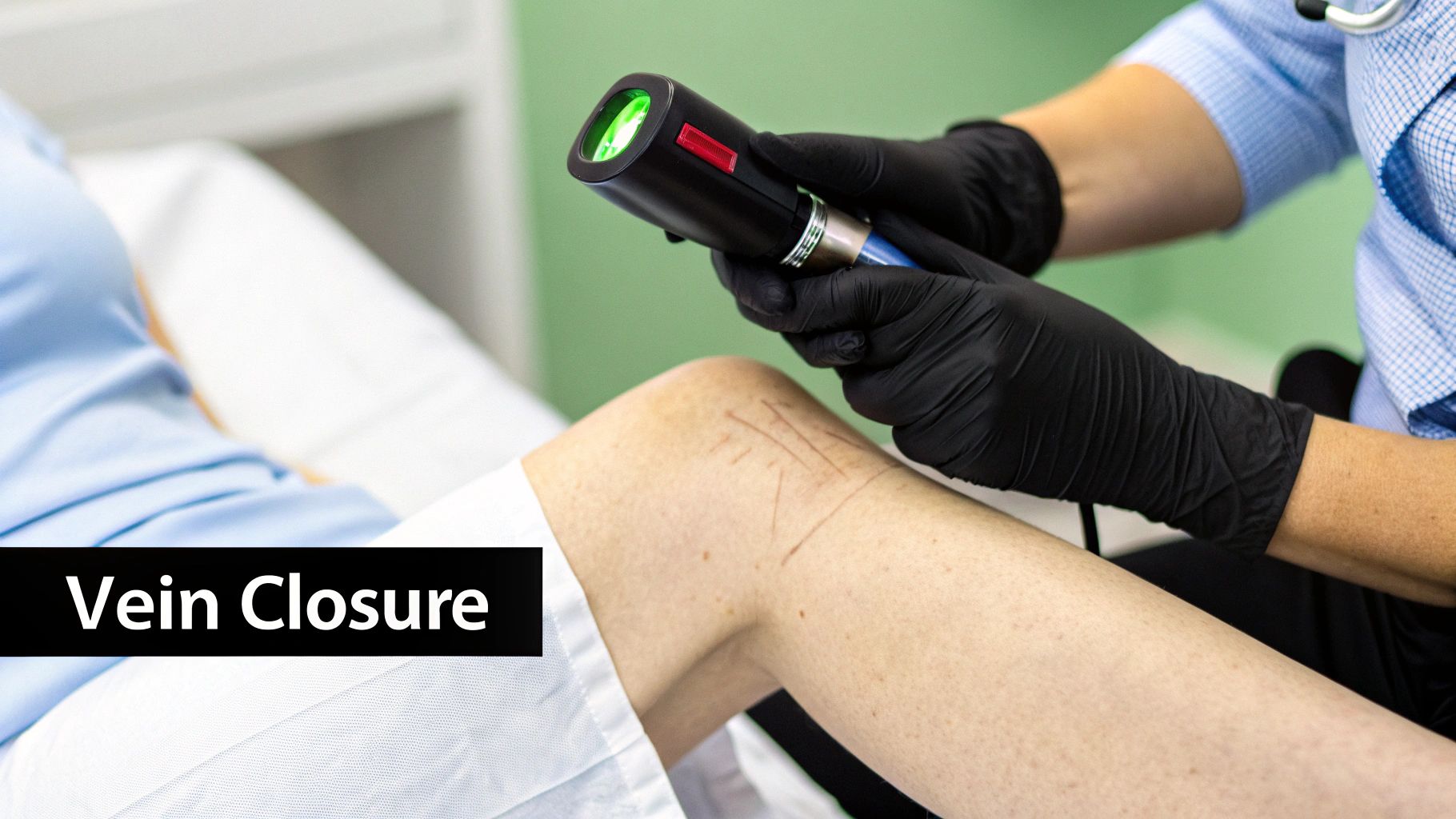
Imagine a spider vein is like a tiny, unused tunnel just below the surface of your skin. A laser treatment for spider veins works like a precision tool that seals that tunnel shut, all without disrupting the surrounding area. The science behind it, known as selective photothermolysis, is elegant and incredibly effective.
The process starts by directing a concentrated beam of light energy right at the vein you want to treat. The dark pigment in your blood, called haemoglobin, acts like a magnet for this light, absorbing it instantly.
As the haemoglobin absorbs the light, it converts it into heat. This gentle heat damages the inner wall of the blood vessel, causing it to coagulate and collapse on itself. With the vessel sealed shut, blood can no longer flow through it.
Understanding the Disappearing Act
Once the laser has closed the vein, your body’s own natural healing processes take over. Think of it as a clean-up crew. The collapsed vessel is flagged as waste tissue, and over the next few weeks, your body simply breaks it down and absorbs it.
Meanwhile, your circulatory system is smart. It automatically reroutes the blood flow to healthier, deeper veins nearby. The visible result? The spider vein slowly fades away, leaving you with clearer, smoother-looking skin.
At its core, laser treatment uses light to kickstart a natural healing response. The technology simply gives your body the nudge it needs to clear away those unwanted vessels for a smooth, natural-looking finish.
Why Do Spider Veins Appear?
Those tiny red, blue, or purple web-like patterns we call spider veins (or telangiectasias) are small, dilated blood vessels. While they're almost always harmless, many of our clients want them gone for cosmetic reasons. They often pop up due to a mix of factors, including:
Genetics: If your parents or grandparents had them, you're more likely to as well.
Hormonal Changes: Big hormonal shifts during puberty, pregnancy, or menopause can weaken the walls of your veins.
Sun Exposure: UV radiation breaks down collagen in the skin and can cause blood vessels to dilate, which is why they're so common on the face.
Prolonged Standing or Sitting: Jobs or lifestyles that keep you in one position for hours can increase pressure in the veins of your legs.
Here at Skinsation Aesthetics in London, Ontario, we use sophisticated laser systems to tackle these cosmetic concerns head-on. Our goal is to give you a targeted, non-invasive solution that helps bring back your skin’s clarity with very little downtime. To learn more about how different lasers achieve this, feel free to read our guide to Aerolase laser treatments and see why this technology gets such great results.
Finding the Best Laser Technology for Your Veins
It's easy to think that one laser is pretty much the same as another when it comes to treating spider veins. But in reality, the world of aesthetic technology is surprisingly diverse. Each type of laser has its own unique strengths, and picking the right one is absolutely crucial for getting the safe, effective, and lasting results you're looking for.
Think of it like choosing the right tool for a delicate job. You wouldn't use a sledgehammer to fix a watch, right? The same principle applies here. The laser needs to be perfectly matched to the task of delivering precise energy to the unwanted vein without damaging the skin around it.
Different technologies go about this in different ways, which is why some are better suited for certain types of veins, skin tones, and areas of the body than others.
A Look at Common Laser and Light Technologies
To really appreciate what makes a particular laser stand out, it helps to know the main players. At their core, these technologies all use a specific wavelength of light to target the haemoglobin (the red pigment in blood) inside the spider veins.
Aerolase Neo Elite (650-Microsecond Nd:YAG): As our number one choice, Aerolase represents a pinnacle in laser technology. It uses a 1064 nm wavelength, ideal for reaching veins at various depths. Its groundbreaking advantage is the 650-microsecond pulse duration. This ultra-fast pulse targets the vein with extreme precision, destroying it before the heat can spread to the surrounding skin. This makes it exceptionally effective and uniquely safe for all skin tones, including darker skin, with minimal discomfort and virtually no downtime.
Traditional Nd:YAG Lasers: These are the powerful workhorses of the aesthetics world. Their 1064 nm wavelength also penetrates deeper into the skin, making them a solid choice for those larger, deeper-set blue or purple veins. The downside? Their longer pulse durations mean more heat is delivered to the surrounding tissue, which can translate to more discomfort and a higher risk of side effects if not handled by an expert.
Pulsed Dye Lasers (PDL): With a shorter wavelength (usually around 585-595 nm), PDL excels at targeting the superficial red vessels you often see on the face. It’s highly effective for smaller veins. For instance, some studies have shown impressive clearance rates—one found certain PDLs achieved up to 89% clearance for small leg spider veins after just two sessions. You can read the full research about these findings to get a deeper understanding of where they shine.
Intense Pulsed Light (IPL): Often lumped in with lasers, IPL is a bit different. It uses a broad spectrum of light rather than one focused wavelength. This makes it a great option for tackling diffuse redness and tiny, widespread capillaries, but it's generally less precise and effective for distinct, individual spider veins when compared to a true laser.
To help you see the differences at a glance, we've put together a simple comparison of these technologies.
Comparing Laser Technologies for Spider Vein Treatment
This table breaks down the most common laser and light-based options, highlighting how they work, what they're best for, and their key advantages.
Technology Type | How It Works | Best For | Key Advantage |
|---|---|---|---|
Aerolase Neo Elite (650-Microsecond Nd:YAG) | Delivers 1064 nm energy in an ultra-fast 650-microsecond pulse, targeting the vein without heating surrounding skin. | All types of spider veins (red, blue, purple) on all skin tones, including the face and body. | Exceptionally safe for all skin tones, highly comfortable, and very effective with minimal risk. |
Nd:YAG (Traditional) | Uses a 1064 nm wavelength to deeply penetrate the skin and heat larger blood vessels. | Larger, deeper blue or purple spider veins on the legs and body. | Powerful and effective for more substantial veins. |
Pulsed Dye Laser (PDL) | Employs a shorter wavelength (585-595 nm) to target superficial blood vessels. | Small, red spider veins and broken capillaries, especially on the face. | Highly effective for fine, superficial redness and vessels. |
Intense Pulsed Light (IPL) | Delivers a broad spectrum of light to treat general redness and pigmentation. | Diffuse redness, flushing (rosacea), and very fine, widespread capillaries. | Great for treating larger areas with general redness. |
As you can see, while traditional options have their place, the technology behind Aerolase offers a uniquely versatile and safe solution.
The Aerolase Advantage: A New Standard in Vein Treatment
While older lasers certainly work, they often come with a trade-off. The energy needed to destroy a vein can also heat the surrounding skin, which can lead to discomfort, downtime, and potential side effects. This is exactly where Aerolase technology, specifically the Neo Elite laser, completely changes the game.
Aerolase is a type of Nd:YAG laser, but it operates in a way that’s totally unique. It delivers its energy in a pulse that lasts a mere 650 microseconds. To give you some perspective, that's faster than the time it takes for your skin’s nerve endings to even register pain.
This incredibly rapid energy delivery is the secret sauce. It allows the laser to heat and collapse the targeted vein so quickly that the heat doesn't have a chance to spread to the surrounding tissue. The result is a treatment that is both highly effective and remarkably gentle.
This unique mechanism makes Aerolase a far better choice for several reasons, especially for the wonderfully diverse community here in Canada.
Why Technology Matters for All Skin Tones
One of the biggest hurdles with older laser technologies has always been treating people with darker skin tones safely. Traditional lasers can be absorbed by melanin (the pigment in your skin) just as easily as they are by the haemoglobin in the vein, which unfortunately increases the risk of burns or changes in pigmentation.
The 650-microsecond pulse of Aerolase sidesteps this problem entirely. By getting the energy in and out so quickly, it selectively zaps the vein without giving the skin's melanin a chance to absorb too much heat. This innovation makes it a safe and effective laser treatment for spider veins on every single skin type and tone, from the very fairest to the very darkest.
For a clinic like Skinsation Aesthetics in London, Ontario, this is non-negotiable. We are committed to offering treatments that are not only effective but are safe for everyone in our community. Choosing advanced technology like Aerolase means we can help every client achieve their goals with confidence and minimal risk, making it our number one choice for spider vein removal.
Determining If You Are an Ideal Candidate
So, you're thinking about laser treatment for spider veins. It's a big decision, and one of the first questions on your mind is probably, "Will this actually work for me?" While laser technology is fantastic for many people, whether it's the right fit for you comes down to a few things: your health, your skin, and the specific veins you want to treat. Let's walk through what makes someone a great candidate.
Generally, the best candidates are in good overall health and have a clear idea of what to expect. The treatment is most effective on those small, superficial spider veins—the red, blue, or purple web-like lines that are less than 3mm wide. We're talking about the little vessels right under the skin's surface, not the larger, bulging varicose veins, which often require a different approach.
Who Is a Good Candidate for Treatment?
Being a perfect match for laser vein therapy goes beyond just having the right kind of veins. Your skin type and even your lifestyle habits can influence how safe and successful the procedure will be.
Here are a few things we look for in a strong candidate:
Visible Superficial Veins: The treatment is specifically designed for small, cosmetic spider veins, usually on the face or legs.
Good General Health: When you're healthy, your body's healing response is stronger, which helps you recover smoothly and without complications.
Realistic Expectations: It’s important to understand that results don't happen overnight. The goal is a significant fading over several sessions, not an instant vanishing act.
Not Pregnant or Breastfeeding: We advise waiting until after pregnancy and breastfeeding to start treatment, primarily for safety and because hormonal shifts can affect your veins.
The image below shows how different laser technologies stack up. You’ll notice Aerolase is at the top, which is what we use at our London, Ontario clinic because of its superior safety profile and effectiveness for a wider range of skin types.
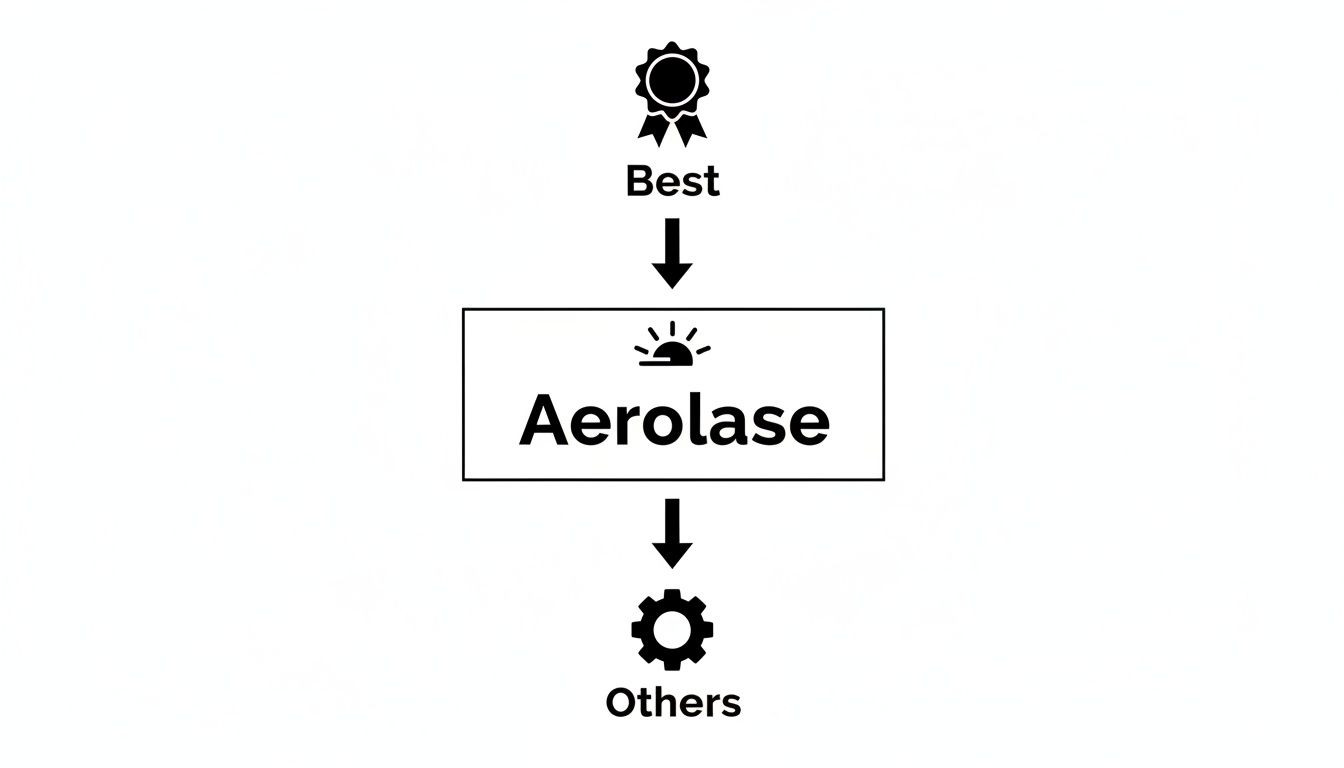
Choosing a clinic with top-tier technology like Aerolase is a huge part of a successful outcome, as it means more people can be treated safely and effectively.
Factors That May Make You Unsuitable
Just as there are ideal candidates, there are also a few situations where laser vein treatment might not be the best or safest option. We call these "contraindications," and they exist to protect your health.
For instance, if you have an active skin infection, a rash, or any open sores in the treatment area, we'll need to wait until you're fully healed. Going ahead could spread the infection or cause more irritation, which nobody wants.
The most important step in determining your candidacy is a professional consultation. An expert can assess your unique vein patterns, skin type, and medical history to provide a definitive and safe recommendation.
Other factors that might make laser treatment unsuitable include:
A history of blood clotting disorders.
Photosensitivity or taking medications that make your skin more sensitive to light.
Certain autoimmune diseases.
A tendency to form keloid scars.
The Importance of a Professional Consultation
Ultimately, you can read all you want online, but a self-assessment can only get you so far. The only real way to know if you're a candidate is to sit down with a qualified professional.
Here at Skinsation Aesthetics in London, Ontario, that's exactly what we do. During your one-on-one consultation, we’ll take a close look at your veins, review your medical history, and, most importantly, answer every single one of your questions. This conversation allows us to build a safe, personalized treatment plan just for you, ensuring you get the best possible care and results from your laser treatment for spider veins.
Your Treatment Journey from Start to Finish
Starting any new aesthetic treatment can feel a little intimidating, but knowing what to expect can make all the difference. Understanding the process from beginning to end helps you feel comfortable and in control. Let's walk through each phase of the laser treatment journey for spider veins, so you feel completely prepared every step of the way.
The whole process is designed to be as straightforward and non-invasive as possible, fitting easily into your life. Here at Skinsation Aesthetics in London, Ontario, our priority is making sure you feel informed and at ease, from your very first chat with us to seeing your final results.
Before Your Laser Session
Your journey actually begins well before the laser is even switched on. The first, and most important, step is the initial consultation. This is where we’ll sit down together to discuss your goals, take a close look at the veins you want to treat, and make sure this is the right path for you. It’s also the perfect time to ask every single question you have.
Once we’ve created your treatment plan, the prep work is simple. We usually recommend a few key things in the week leading up to your appointment to set you up for success.
Avoid Sun Exposure: Try to keep the treatment area out of the sun and skip the tanning beds. Sun-exposed skin can be more sensitive, and a tan can make it trickier for the laser to zero in on the vein instead of your skin pigment.
Pause Certain Products: We might ask you to temporarily stop using skincare products with ingredients like retinoids or exfoliants on the treatment area to prevent any irritation.
Review Medications: We'll go over any medications or supplements you’re taking during your consultation. Some things, like aspirin or certain herbal supplements that can thin the blood, might need to be paused for a short time.
On the day of your appointment, just come in with clean skin, free of any lotions, creams, or oils. It's that easy.
During the Laser Treatment
The treatment itself is surprisingly quick and direct. Most sessions for spider veins take between 15 and 30 minutes, really just depending on the size of the area we’re working on. Once you're settled and comfortable, we'll cleanse your skin and give you some protective eyewear.
As the laser is applied, you'll feel a quick sensation—most people describe it as a tiny, warm pinprick or like a small rubber band snapping against the skin. Modern technologies like Aerolase are built for comfort, delivering energy so fast that any discomfort is minimal. In fact, many clients find the treatment perfectly tolerable without needing any numbing cream at all.
The technician will guide the laser handpiece precisely along each vein. The focused light is absorbed by the pigment in the vein, causing it to heat up and collapse, all while leaving the surrounding skin completely untouched.
This incredible efficiency is why laser treatment for spider veins is often called a "lunchtime procedure." You can be in and out with very little interruption to your day. It’s a great example of how aesthetic technology balances fantastic results with patient comfort. You can see more about the specific vein treatments offered at Skinsation Aesthetics and how these advanced systems work.
After Your Treatment Session
Once the session is over, the healing process begins. It’s totally normal to see some mild redness or a bit of swelling in the treated area right after, almost like a minor sunburn. This usually fades within a few hours to a day.
There's practically no downtime. Many of our clients head right back to their daily routines. The recovery is remarkably smooth, with over 90% of patients reporting minimal interruption to their lives—many are back to light activities like walking or yoga the very same day.
Over the next few weeks, you'll start to see the treated veins gradually fade away. They might look a little darker at first, but that's just a sign that your body’s natural cleanup crew is at work, breaking down and absorbing the collapsed vessel. This fading process continues for up to six weeks, revealing clearer, more even-toned skin. To get the best possible clearance, a series of 2-4 sessions is usually the sweet spot.
Laser Therapy vs. Sclerotherapy for Vein Removal
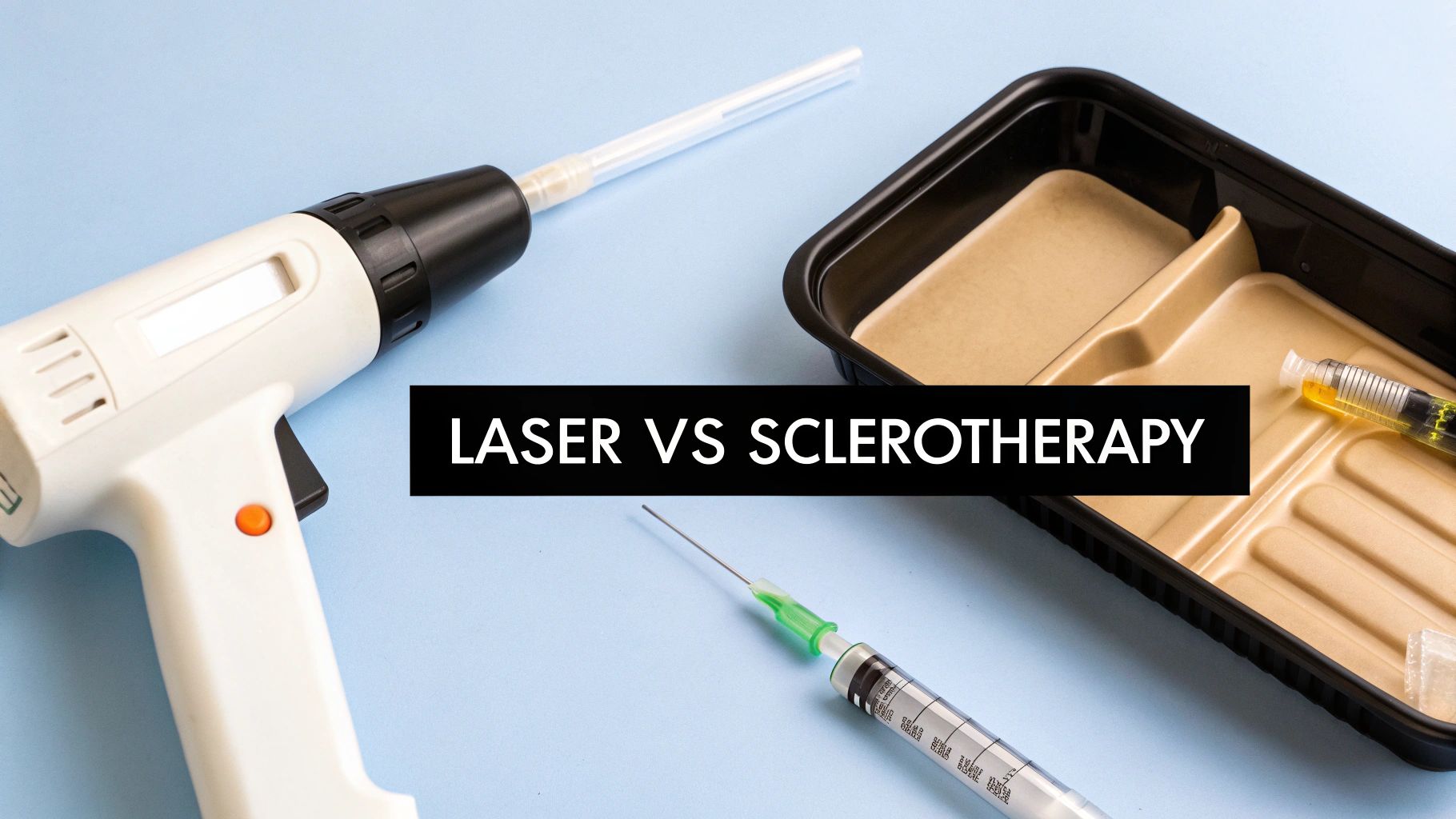
When you start looking into getting rid of spider veins, you'll quickly find two names at the top of every list: laser therapy and sclerotherapy. Both are excellent at what they do, but they get the job done in completely different ways, making each one better suited for specific situations. Figuring out the key differences is the first step toward choosing the right path for your body and your goals.
Laser therapy is a non-invasive treatment that doesn't involve a single needle. It uses a highly focused beam of light that safely passes through your skin to target the unwanted vein. The light's energy gently heats the vessel, causing it to collapse and naturally fade away over the following weeks.
Sclerotherapy, on the other hand, is an injection-based procedure. A very fine needle is used to introduce a special solution—called a sclerosant—directly into the vein. This solution irritates the vessel's lining, causing it to swell, seal shut, and eventually be reabsorbed by the body.
Here’s a simple way to think about it: laser treatment for spider veins works from the outside in, while sclerotherapy works from the inside out. This one distinction makes all the difference.
When Laser Treatment Is the Clear Winner
The most obvious advantage of laser therapy is that it’s completely non-invasive. For anyone with a fear of needles, this is a game-changer. It's also incredibly precise, making it perfect for targeting very fine, superficial veins that would be nearly impossible to inject accurately.
This precision makes laser the preferred choice for:
Facial Spider Veins: The delicate skin around the nose or on the cheeks is ideal for laser treatment, which can zap tiny red capillaries without breaking the skin.
Very Fine Leg Veins: Lasers are brilliant at clearing up those tiny, web-like mats of red veins that are often too small for a needle.
Patients with Needle Aversion: If injections make you anxious, laser therapy offers a highly effective alternative without the stress.
Here in our London, Ontario clinic, we use advanced systems like the Aerolase Neo Elite, which takes these benefits to another level. Its unique technology is exceptionally gentle, making treatments comfortable and safe for all skin types and tones—a crucial factor in a diverse country like Canada.
The Role of Sclerotherapy
While lasers are the champions of fine veins, sclerotherapy often comes out on top for larger, more noticeable spider veins on the legs. Because the sclerosant is injected directly into the vessel, it can effectively treat bigger or slightly deeper blue and purple veins that might not respond as well to a surface laser.
Sclerotherapy is usually the go-to for:
Larger Spider Veins: It's best for the more prominent vessels on the legs, especially if they are slightly bulging.
Reticular Veins: It's also great for treating those slightly larger, bluish "feeder" veins that often supply blood to clusters of smaller spider veins.
The real question isn't which treatment is "better," but which one is better for you. A tiny red vein on your cheek has completely different needs than a network of blue veins on your calf.
Making an Informed Choice
Ultimately, the best approach hinges on the size and location of your veins, as well as your personal comfort level. In some cases, a combination of both therapies might be the perfect strategy for achieving the clearest results.
That said, modern technology has massively expanded what lasers can do. Studies now show an efficacy rate of 80-95% for laser vein removal, confirming it as a powerful standalone option, particularly for facial veins where injections are rarely used. The risks are also remarkably low; fewer than 2% of patients report minor side effects like blistering. For our clients in Southwestern Ontario, Skinsation Aesthetics Inc. offers these state-of-the-art vascular laser treatments for all skin tones, capable of addressing not just veins but also pigmentation and overall skin texture. Learn more about these vascular treatment findings and see the data on their high success rates.
It's also worth noting that while laser therapy is fantastic for veins, it uses a different technology than Intense Pulsed Light (IPL). To learn more about that, you can check out our guide on what an IPL photofacial is and its rejuvenating benefits.
Your Questions About Laser Vein Removal, Answered
Deciding to go ahead with any new treatment is a big step, and it's only natural to have a lot of questions. When it comes to something as specific as laser treatment for spider veins, you deserve clear, honest answers to feel completely comfortable.
We've put together this FAQ to address the very same questions we hear every day from our clients here in London, Ontario. From how the treatment feels to how long the results will last, we're pulling back the curtain on the whole process.
Does Laser Spider Vein Treatment Hurt?
This is almost always the first thing people ask, and for good reason! Most of our clients describe the sensation as a quick, warm snap against the skin—kind of like a tiny rubber band flick. It’s a very brief feeling that’s over in an instant.
Modern laser technology has come a long way, with comfort being a top priority. The Aerolase Neo Elite laser we use at Skinsation Aesthetics, for example, delivers its energy in an incredibly fast 650-microsecond pulse. That speed is the secret sauce; it lets us target the vein precisely without overheating the surrounding skin, which makes a world of difference in how it feels.
Because the technology is so gentle and advanced, the vast majority of our clients find the treatment perfectly comfortable without needing any topical numbing cream.
This sophisticated design doesn't just make the treatment easier to sit through; it also means less irritation and a much smoother recovery.
How Many Sessions Will I Need and What Does It Cost in Ontario?
Everyone’s skin is different, so there’s no single recipe for success. Most people see the best results after a series of two to four treatments.
We typically schedule these sessions about four to six weeks apart. This little break gives your body time to do its job—naturally breaking down and absorbing the veins we just treated—before we go in to tackle any that remain.
As for the cost, it really depends on your specific situation. The price for laser treatment for spider veins in Ontario isn't a flat fee because it's based on factors like:
The Size of the Area: A few small veins on your nose will be a different investment than treating larger networks on your legs.
The Density of the Veins: The more veins packed into one area, the more time and precision the treatment will require.
The Number of Sessions: Your total cost is directly tied to the number of treatments needed to get the job done right.
The only way to get a firm number is to come in for a consultation. Here at Skinsation Aesthetics in London, we’ll take a close look at your skin and give you a personalized quote, so you know exactly what to expect.
Are the Results from Laser Vein Removal Permanent?
This is a fantastic question. The short answer is yes—the veins we treat are gone for good. Once the laser collapses a vein and your body clears it away, that specific vessel will not come back.
However, it's important to remember that the treatment doesn't stop new spider veins from developing down the road. The factors that caused them in the first place—genetics, hormones, or lifestyle—might still be at play.
To keep your skin looking clear for as long as possible, a few simple habits can help:
Always wear sunscreen to protect your skin from sun damage.
Maintain a healthy weight to ease pressure on your leg veins.
Get regular exercise to keep your circulation strong.
Try to avoid sitting or standing in one position for too long.
Many of our clients find that a quick maintenance session every few years is a great way to stay on top of any new veins that pop up, keeping their skin consistently clear.
What Are the Side Effects?
One of the best things about modern laser vein removal is how safe it is. The treatment is completely non-invasive, and any side effects are usually very minor and don't last long.
Right after your session, you might notice:
Mild Redness: The area might look a little flushed, but this typically fades within a few hours.
Slight Swelling: A bit of puffiness around the treated veins is also normal and usually goes down within a day.
Temporary Darkening: The veins can sometimes look a little darker right after treatment before they start to fade. This is a sign the process is working!
Serious side effects are extremely rare, especially when you're in the hands of a qualified professional using top-tier equipment. The gentle pulse of the Aerolase laser minimizes these risks even further, making laser treatment for spider veins a trustworthy choice for clearer skin.
Are you ready to say goodbye to unwanted spider veins and hello to clear, confident skin? At Skinsation Aesthetics, our expert team uses the premier Aerolase technology to deliver safe, comfortable, and effective treatments for clients in London, Ontario. Book your consultation today and take the first step toward the beautiful skin you deserve.
Comments