

A Guide to Using a Red Light Therapy Belt

Think of a red light therapy belt as your own personal, flexible wellness tool. It’s a wearable device loaded with special LEDs that shine specific wavelengths of light right onto your skin and into the tissues underneath. You can wrap it around your waist, your sore back, or even a joint, making it incredibly convenient for use to boost skin health, ease aches and pains, or help your muscles recover.
Understanding Red Light Therapy Belt
Welcome to the exciting world of red light therapy! This wellness approach has been gaining a lot of fans here in London, Ontario, and all across Canada. A red light therapy belt is a super practical way to tap into the power of specific light wavelengths without needing to book a clinic appointment for every session.
This guide is here to walk you through the science, show you the real-world benefits for your skin and pain levels, and make it clear what you can expect from a professional treatment.
At its heart, the idea is pretty simple. The belt delivers focused red and near-infrared light directly to your cells. This process, called photobiomodulation, gives your cells an energy boost, which kicks off a whole chain of positive effects. To really get a grip on how it works, it helps to understand the bigger picture of light therapy.
To give you a quick snapshot, here’s a simple breakdown of what these belts are all about.
Red Light Therapy Belt at a Glance
Feature | Description |
|---|---|
Technology | Uses Light Emitting Diodes (LEDs) to deliver specific light wavelengths. |
Key Wavelengths | Primarily uses Red Light (approx. 630-660 nm) and Near-Infrared (approx. 810-850 nm). |
Primary Use | Treatment for pain management, muscle recovery, and skin rejuvenation. |
Design | Flexible and wearable, designed to be wrapped around various body parts like the waist or joints. |
Mechanism | Works through a process called photobiomodulation, stimulating cellular energy (ATP) production. |
Benefits | Reduces inflammation, alleviates pain, boosts collagen, and supports tissue repair. |
This table shows just how versatile these devices can be, fitting a powerful therapy into a simple, easy-to-use package.
The Rise of Wellness Solutions
The buzz around these devices is undeniable, especially right here in southwestern Ontario. Within London's vibrant wellness community, red light therapy belts are quickly becoming a favourite for people looking for effective, non-invasive solutions they can use themselves.
This local interest is part of a much bigger trend. The beauty device market in Canada is growing rapidly, with more people seeking effective solutions they can use in their daily lives. Here in London, we've seen a noticeable increase in client questions about red light-integrated skincare, as more people embrace these belts for benefits like boosting collagen.
A red light therapy belt isn't just another gadget; it's a flexible partner in your wellness journey. It’s designed to bring the targeted energy of light therapy into your daily routine, offering support for everything from post-workout soreness to enhancing your skin’s natural radiance.
Our goal here is to pull back the curtain on this popular tool and show you exactly how it works and what it can realistically do for you. Whether you're trying to soothe a nagging ache or give your skin a much-needed boost, this guide will give you the clear, straightforward answers you're looking for.
How Light Energy Recharges Your Body's Cells
At its most basic, a red light therapy belt is designed to deliver very specific wavelengths of light energy deep into your body's tissues. This entire process is called photobiomodulation, which sounds complicated, but you can think of it as giving your cells a highly targeted energy boost—a non-invasive way to spark healing and activity right where you need it most.
Imagine every cell in your body has tiny power plants inside called mitochondria. Their main job is to produce something called adenosine triphosphate (ATP), which is the essential energy molecule that every single cell uses to function, repair damage, and simply survive. Just like your phone battery drains with use, our cellular energy can get depleted from everyday stress, an old injury, or just the natural ageing process.
That's where the red light therapy belt comes in. It acts like a portable charger for your cells. The light particles, or photons, painlessly penetrate your skin and get absorbed by those little mitochondria, helping them produce ATP much more efficiently. It's like topping up your cellular batteries.
Red vs. Near-Infrared Light
Not all light is created equal. These belts typically use two distinct types of light that work together, but each has its own special job. Understanding the difference helps you know what kind of results you can realistically expect.
Red Light (approx. 630-660 nm): These are shorter wavelengths that work closer to the skin’s surface. This is why red light is fantastic for skin rejuvenation—it gets absorbed right by the skin cells, helping to stimulate collagen and improve your skin's overall tone and texture.
Near-Infrared Light (approx. 810-850 nm): With its longer wavelength, near-infrared (NIR) light can penetrate much deeper into the body. It can reach down into muscles, joints, and even nerves, making it the go-to for reducing inflammation, soothing aches and pains, and helping muscles recover faster.
By delivering this supercharged energy, a red light therapy belt helps kickstart your body’s natural healing and rejuvenation processes from the inside out. This boost in cellular function is what translates into tangible benefits like reduced pain and healthier-looking skin.
This simple concept map shows how the device, the science, and the benefits all connect to one another.
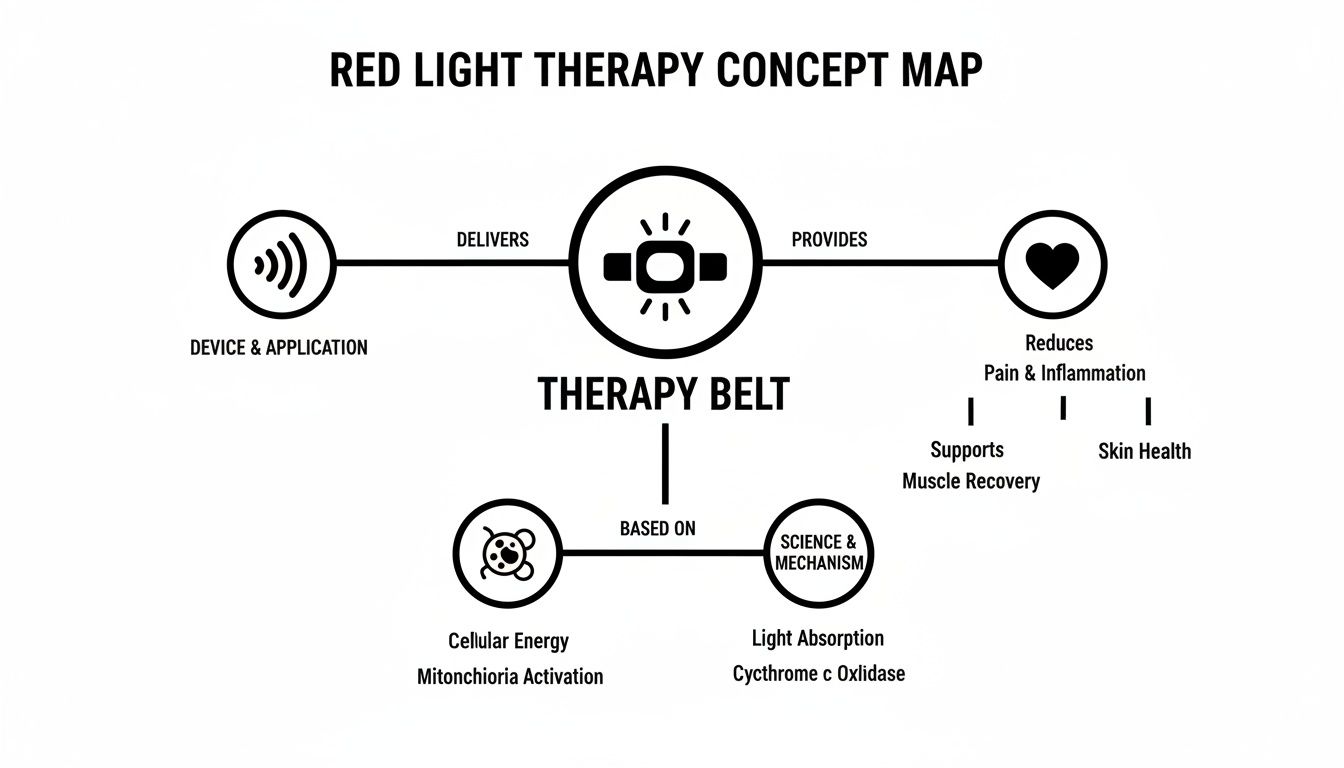
As you can see, the therapy belt is the tool that delivers the light, which in turn triggers the cellular science, ultimately leading to real wellness benefits. Grasping how this light recharges your cellular batteries is the first step to understanding all the amazing things it can do.
Real-World Benefits for Your Skin and Body
Okay, so now we know how a red light therapy belt works to recharge your cells. Let's get into the good stuff: the real, tangible benefits you can actually see and feel. For most of us here in Canada, the advantages boil down to two key areas: giving your skin a healthy glow and helping your body recover from daily life.
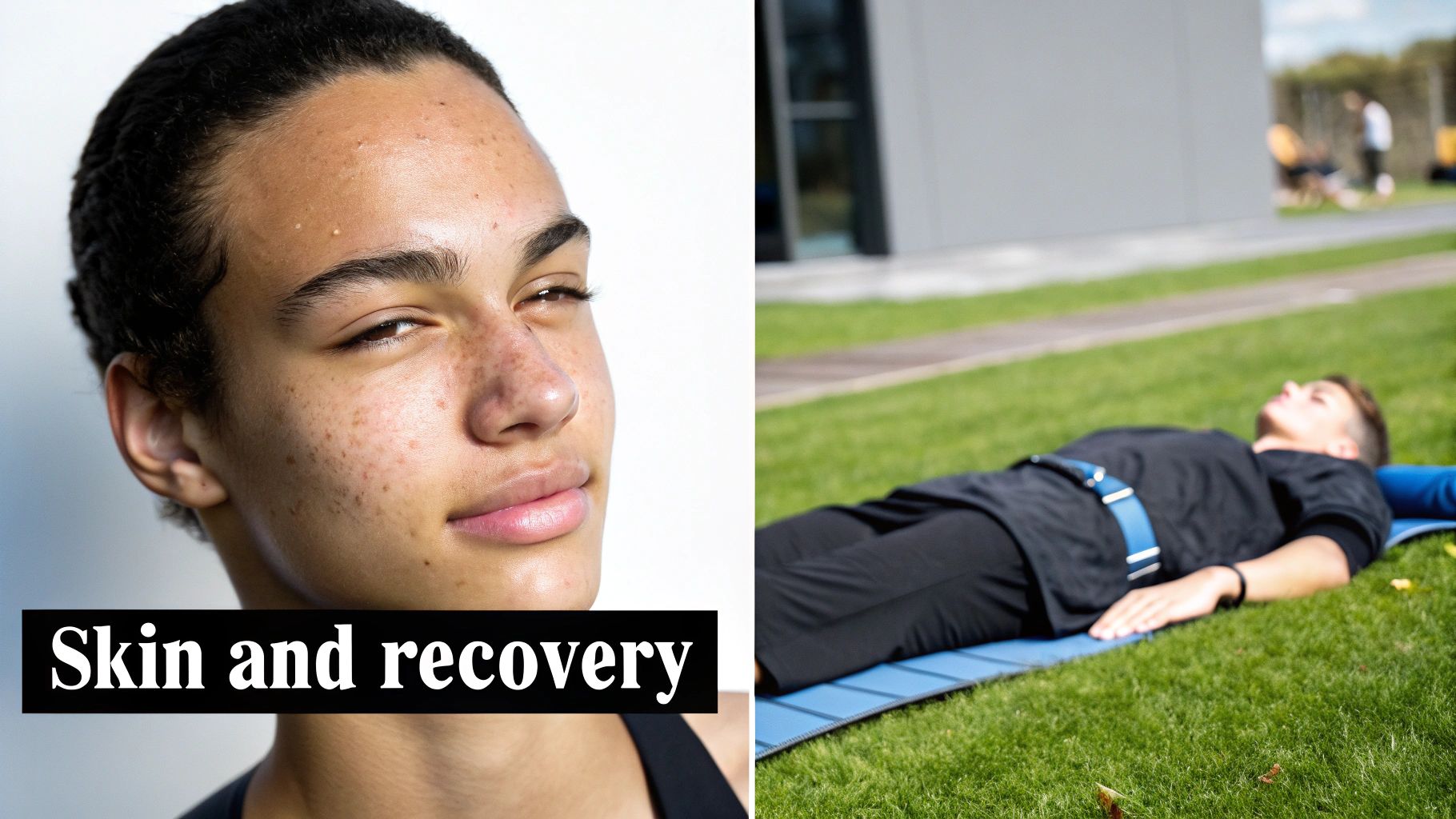
Enhancing Your Skin's Natural Radiance
Think of the red light wavelengths as a gentle wake-up call for your skin. They mostly work on the surface, kickstarting a whole series of rejuvenating processes. It's like flipping the 'on' switch for the tiny factories in your skin that are responsible for keeping it firm, smooth, and youthful.
This burst of cellular energy helps stimulate the production of collagen and elastin—the two critical proteins that form the scaffolding of your skin. With consistent use, this can lead to a noticeable softening of fine lines and a smoother overall texture. Better circulation is another fantastic perk, bringing more oxygen and nutrients to the surface for that healthy, vibrant glow.
If you're curious about other professional options, our guide on the best skin tightening treatments in Canada is a great next read.
Consistently using a red light therapy belt is a non-invasive way to encourage your skin to repair and rebuild itself from the inside out. It’s all about supporting your skin’s foundational health to restore a more youthful appearance.
Supporting Pain Relief and Muscle Recovery
While red light is busy with your skin, the near-infrared light is reaching deeper into your muscles and joints. This is a game-changer for Canadians dealing with everything from seasonal aches and pains to that post-workout soreness we all know too well.
The magic here is all about reducing inflammation. By calming down inflammatory responses right at the cellular level, red light therapy can help ease joint stiffness and take the edge off chronic discomfort. This makes it an incredibly useful tool for managing musculoskeletal issues.
If you lead an active life, a red light therapy belt can become your best friend for recovery. Wrapping it around sore muscles after a workout can help minimize soreness and speed up tissue repair, getting you back to your routine faster. The targeted nature of these devices is a huge plus; applications like red light therapy for legs show just how effective they can be for specific areas needing a little extra TLC.
Here’s a quick breakdown of how it helps you bounce back:
Reduces Inflammation: It helps soothe irritated tissues and joints, which is often the root cause of pain.
Improves Circulation: Better blood flow means more oxygen and nutrients are delivered to damaged tissues, supercharging the healing process.
Supports Muscle Repair: It can help lessen the muscle damage and achiness that come from intense physical activity.
Whether you're an athlete in London, Ontario, looking for that competitive edge or just someone who wants relief from everyday aches, the focused energy from a red light therapy belt offers a simple, practical way to support your body's recovery.
How to Choose the Right Device
Stepping into the world of wellness devices can feel a bit like navigating a maze, with endless options and technical jargon. But choosing the right red light therapy belt doesn't have to be complicated. If you focus on a few key technical details, you can easily cut through the marketing noise and find a device that actually delivers results.
Think of it this way: not all light is the same. The real magic of your belt comes down to the specific 'ingredients' of the light it produces.
Understanding Wavelengths
The single most critical factor is the wavelength of light, which is measured in nanometres (nm). For any real therapeutic benefits, you need very specific wavelengths that have been proven to interact effectively with your body’s cells. Any quality red light therapy belt will use a combination of two key types.
Red Light (~660nm): This wavelength is your go-to for skin health. It penetrates just below the skin's surface, where it can help kick-start collagen production and support cellular repair, giving you a healthier-looking complexion.
Near-Infrared (NIR) Light (~850nm): This is the deeper diver. Its longer wavelength travels further into your tissues, reaching muscles and joints. It’s the powerhouse for calming inflammation and soothing those nagging aches and pains.
A device that blends both gives you the best of both worlds, letting you tackle skin concerns and deeper tissue issues at the same time.
The Importance of Irradiance
Next up is irradiance. This is basically the power or intensity of the light that’s reaching your body, often measured in milliwatts per square centimetre (mW/cm²). You can think of it as the 'dosage' of light energy you're getting.
A belt with super low irradiance might not deliver enough energy to your cells to get the job done, no matter how long you wear it. On the flip side, a device that's excessively powerful might just be overkill. Look for brands that are transparent about their irradiance levels so you know you're getting an effective dose.
Choosing a red light therapy belt is about finding the right recipe of light. You need the correct wavelengths (the ingredients) delivered with enough power, or irradiance (the cooking temperature), to achieve the desired results.
Coverage Area and Safety Certifications
The physical size of the belt matters, too. A larger belt naturally offers better coverage, which is great for treating bigger areas like your lower back or abdomen all at once. A smaller, more flexible design, however, might be better for wrapping snugly around joints like a knee or shoulder. Just think about which parts of your body you plan to target most often.
Finally—and this is non-negotiable—is safety. When you're buying any electronic device in Canada, always look for safety certifications like cUL (Underwriters Laboratories of Canada) or CSA (Canadian Standards Association). These little marks mean the product has been independently tested and meets Canadian safety standards. It’s a simple step that protects you and ensures your investment is a safe one.
Comparing At-Home Belts with Professional Treatments
The explosion of at-home red light therapy belts has put some genuinely powerful wellness tech right into our hands. But it’s important to understand where these convenient gadgets fit in, especially when you stack them up against the professional-grade systems available at clinics like Skinsation Aesthetics in London, Ontario. This isn't about which one is "better" — it’s about what’s right for your specific goals.
The biggest differences really boil down to power, precision, and the types of concerns each can handle. Your at-home belt is a fantastic tool for daily maintenance, helping manage mild to moderate aches, and giving your skin a consistent, low-level energy boost.
Think of it like this: your at-home belt is your daily workout routine. It’s absolutely essential for keeping everything in good shape. But when you want to seriously level up your skincare results, you see a specialist. Professional treatments are that specialist visit for your skin.
Power and Precision in a Clinical Setting
At a professional clinic, the equipment is simply in a different league. Advanced systems deliver a much higher energy density (what we call irradiance), allowing light to penetrate deeper and spark a much stronger response from your cells in way less time. This is where faster, more dramatic results come from.
Professional treatments also offer incredible precision. A trained aesthetician can zero in on specific issues—like stubborn pigmentation or deeper wrinkles—with customized settings that a one-size-fits-all home device just can't match.
While an at-home red light therapy belt is an excellent ally for wellness and maintenance, professional treatments provide the targeted, high-intensity energy needed to address more significant aesthetic concerns effectively. The two can work well to complement each other.
To make it crystal clear, let's break down the key differences side-by-side.
At-Home Belts vs In-Clinic Treatments
Aspect | Red Light Therapy Belt (At-Home) | Professional Treatments (e.g., at Skinsation Aesthetics) |
|---|---|---|
Power (Irradiance) | Lower energy output designed for safe, frequent use without supervision. | High-intensity, medical-grade power for deep penetration and faster results. |
Precision | Broad coverage over a general area; not designed for targeted spot treatment. | Highly targeted application, allowing aestheticians to focus on specific concerns. |
Best For | Daily wellness, muscle soreness, minor pain, and maintaining skin health. | Moderate-to-severe ageing, acne, hyperpigmentation, and significant rejuvenation goals. |
Treatment Time | Longer, more frequent sessions are required to see cumulative benefits (e.g., 15-20 mins daily). | Shorter, more potent sessions with longer intervals between appointments (e.g., 20-30 mins every few weeks). |
Supervision | Designed for independent, unsupervised use at home. | Administered by a trained and certified professional who customizes the treatment. |
Cost | One-time purchase cost for the device. | Priced per session or as a package, reflecting the advanced technology and expertise. |
This table shows how at-home and in-clinic treatments are two very different tools, each with a distinct purpose in your overall wellness and beauty strategy.
When to Choose At-Home vs In-Clinic
So, how do you decide which path to take? An at-home red light therapy belt is your ideal partner for the day-to-day grind. It's perfect for soothing sore muscles after a workout, easing daily aches, and giving your skin that consistent little nudge to maintain its glow and firmness. It puts you in the driver's seat of your daily wellness routine.
However, booking a consultation at a clinic like Skinsation Aesthetics is the clear next step when you’re facing more specific or stubborn concerns. Professional treatments are the heavy hitters for:
Addressing moderate to severe signs of ageing, like noticeable wrinkles or a loss of skin elasticity.
Targeting specific skin conditions such as persistent acne or obvious hyperpigmentation.
Getting faster, more significant rejuvenation results than what at-home devices are capable of.
For example, while a belt is great for overall skin support, a professional service like an IPL Photofacial can offer more intensive rejuvenation for issues like sun damage or broken capillaries. At Skinsation Aesthetics, we provide IPL Photofacials and can help you determine the best course of action for your unique skin goals.
Ultimately, the best strategy can involve using both. An at-home belt can be the perfect way to maintain and even extend the beautiful results you get from your professional treatments, creating a complete, 360-degree approach to your skin health.
Getting The Most From Your Red Light Therapy Routine
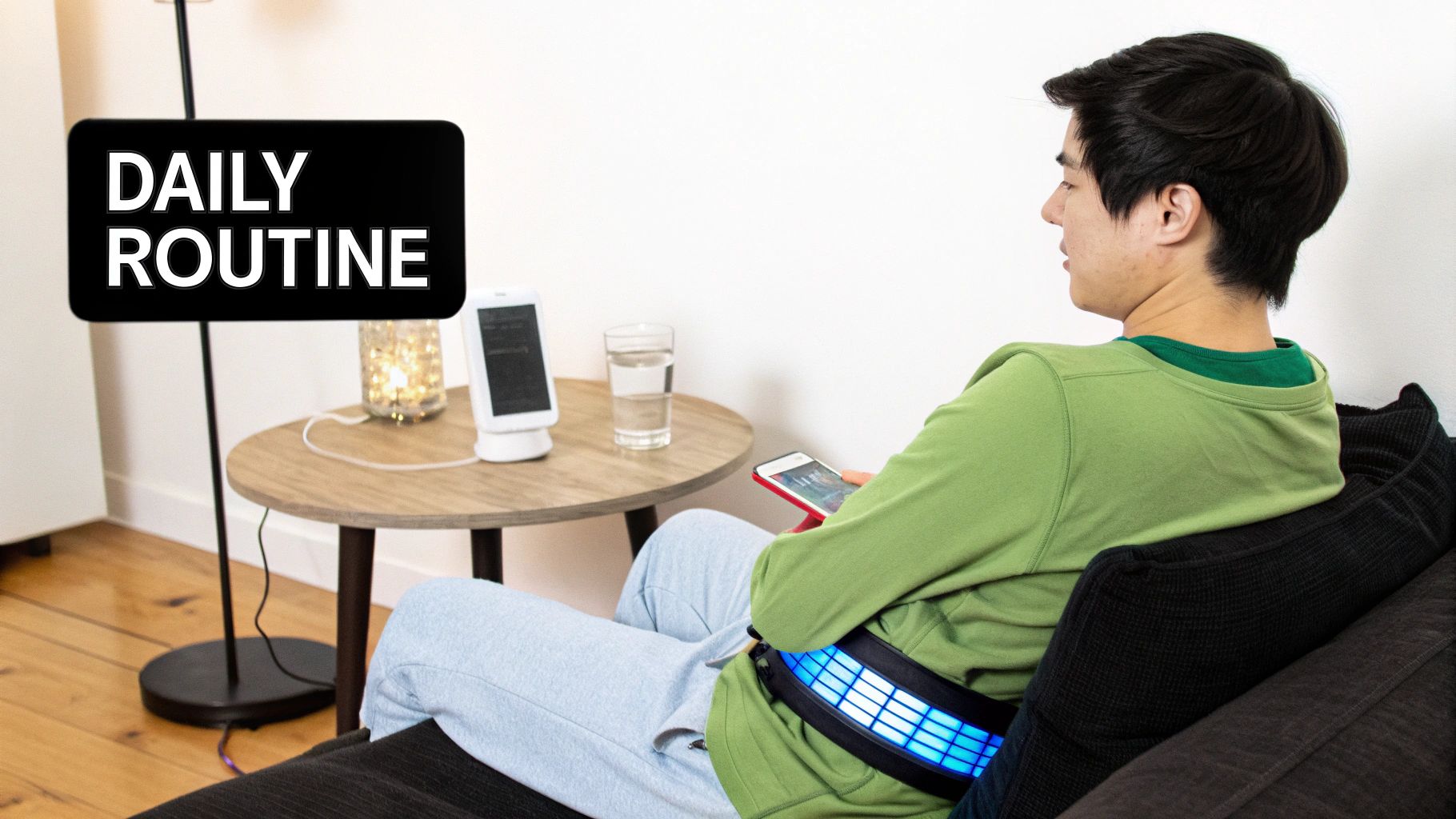
So, you're ready to make a red light therapy belt part of your life. That's fantastic. Weaving it into your daily routine is actually quite simple, but a few pro tips will make sure you’re getting the absolute best results safely and effectively.
Think of it as a dedicated moment of self-care, a quiet pause in your day whether you're here in bustling London, Ontario, or relaxing at home anywhere else in Canada.
First things first: always, always apply the belt to clean, dry skin. Any lotions, oils, or creams on your skin can act as a barrier, literally blocking the light particles from getting where they need to go. This simple prep step is crucial for making sure your skin absorbs as much of that beneficial light as possible. For a deeper dive into product layering, check out our guide on the correct order for your skincare routine.
Session Duration and Frequency
When it comes to light therapy, the golden rule is consistency over intensity. Trying to rush the process with longer sessions won't speed up your results, and we definitely don't recommend it.
A great starting point is to stick with what the manufacturer suggests, which is typically 10 to 20 minutes per treatment area. As for how often, aim for 3 to 5 sessions a week. This regular schedule gives your cells that consistent energy kick they need to get to work on repairing and rejuvenating. The benefits truly are cumulative, building on each other over time.
Just like a healthy diet or exercise, the key to seeing noticeable improvement with your red light therapy belt is making it a regular part of your wellness routine. Consistency unlocks the therapy’s full potential for both skin health and pain management.
Prioritizing Your Safety
While red light therapy has a fantastic safety profile, it's still a powerful tool. Using it responsibly is non-negotiable.
Always start by reading and following the instructions that came with your specific device. More importantly, it’s always a good idea to chat with a healthcare professional before you begin, especially if you have any of these conditions:
Pregnancy: There just isn’t enough research on the effects of red light therapy during pregnancy to know for sure.
Photosensitivity: If you have a condition that makes you sensitive to light, or if you're taking medications that can cause photosensitivity.
Active Cancer: Never apply the device directly over known cancerous lesions.
Pre-existing medical conditions: A quick chat with your doctor ensures this is a safe and smart choice for your specific situation.
By following these straightforward guidelines, you can confidently and safely make your red light therapy belt a valuable part of your journey toward better health and well-being.
Your Top Questions About Red Light Therapy Belts
When you're thinking about adding a new piece of wellness tech like a red light therapy belt to your routine, it's totally normal to have some questions. Let's tackle some of the most common ones we hear from our clients in Canada, so you can feel confident and ready to get started.
How Long Until I Actually See Results?
This is probably the number one question on everyone’s mind, and the honest answer is: it depends on what you're hoping to achieve.
If you’re targeting things like muscle soreness or joint pain, the feedback is usually pretty quick. Many people feel a real, noticeable difference in pain and inflammation within just the first couple of weeks of consistent use.
For skin goals—like smoothing out fine lines or improving your skin's overall texture—you’ll need a bit more patience. We're talking about encouraging your body to produce more collagen, which is a gradual process. You should expect to stick with it for 8 to 12 weeks before seeing those visible changes. Just remember, the results build on each other, so consistency is your best friend.
Can I Use the Belt with My Serums and Lotions?
For the best possible results, you’ll want to use your red light therapy belt on clean, dry skin. Think of it this way: any lotions, serums, or oils on your skin can act like a little shield, reflecting the light away and blocking it from getting to your cells where it needs to work its magic.
The best practice is simple: do your light therapy session first. Once you're done, you can go ahead with your full skincare routine to moisturize and nourish your skin.
How Is This Different from an Infrared Sauna?
This is a great question because while both use a form of infrared energy, they are two completely different treatments with different goals. An infrared sauna is all about heat. It warms up your entire body to get you sweating, which helps with detoxification, boosts circulation, and is fantastic for relaxation. The main tool here is thermal energy, or heat.
A red light therapy belt, on the other hand, isn't trying to heat you up. It uses very specific wavelengths of light that your cells absorb directly to kickstart their energy production. It's a biological process called photobiomodulation, not a heat-based one.
Here’s a simple way to think about it: An infrared sauna is like a deep-heat bath for your whole body, aimed at relaxation and sweating out toxins. A red light therapy belt is more like a targeted charger for your cells, zeroing in on specific issues like pain, inflammation, or skin repair.
Both can be amazing additions to your wellness toolkit, but they aren't interchangeable. A red light belt gives you a much more focused way to tackle particular areas of concern on your body.
Comments