

Perfect Skincare Routine for Sensitive Skin in Canada

When you have sensitive skin, your daily routine isn't just about looking good—it's about feeling comfortable. The right approach hinges on a few core principles: gentle cleansing, soothing hydration, and consistent protection. This is how you calm that persistent irritation and start to rebuild your skin's natural defences.
The key is to focus on fragrance-free products packed with calming ingredients. You have to be ruthless about avoiding harsh chemicals or abrasive scrubs, as those are often the culprits behind redness and discomfort.
Understanding Your Sensitive Skin in a Canadian Climate
Living with sensitive skin in Canada can feel like a constant battle against the elements. It’s more than just the occasional flush or blotch; it's a daily reality that demands a very specific and consistent routine. Our wild Canadian climate—from the biting winter winds to humid summers and the dry, recycled air from our indoor heating—has a huge say in how our skin behaves. These environmental swings can easily weaken the skin's protective barrier, leading to all the classic signs of sensitivity.
If you often feel that tight, "squeaky" feeling after washing your face, get a stinging sensation when you put on a new product, or deal with non-stop redness and itchiness, you're in the sensitive skin club. This reactivity might be in your genes, or it could be triggered by your environment and lifestyle. Figuring out what sets your skin off is the first real step toward getting it under control.
Identifying Your Skin's Triggers
For a lot of us here in Canada, the main offenders are environmental. A sharp drop in temperature can literally suck the moisture out of your skin, and then you step inside to an arid, centrally heated home that dehydrates it even more.
But the list doesn't stop there. Other common triggers include:
Lifestyle factors like stress and not getting enough sleep.
Air pollution, which exposes your skin to irritating free radicals, a particular concern in many Canadian urban centres.
Harsh ingredients lurking in many popular skincare products, like fragrances, sulphates, and certain types of alcohol.
Paying attention to when your skin flares up is everything. For example, if your face feels tight and looks angry after a day outside in January, the cold air is your likely suspect. If it stings moments after trying that new scented body lotion, you can bet the fragrance is to blame.
A gentle, consistent skincare routine for sensitive skin isn't just about damage control—it's about building resilience. When you strengthen your skin’s natural barrier, you make it less reactive over time.
This isn't just a feeling; it's a massive trend backed by data. An incredible 71% of Canadians now report having sensitive skin, reflecting a significant rise in awareness over the past two decades. This has sparked a huge demand for specialized products, with the global sensitive skincare market projected to hit nearly USD 81 billion by 2030.
Here in Canada, where conditions like eczema (affecting up to 17% of Canadians) and rosacea (affecting over 3 million) are common, the need for gentle, effective skincare is even greater. You can dive deeper into this growing market and its impact by checking out recent industry analysis.
Your Gentle Morning Routine to Protect and Soothe

How your day starts can make or break your skin's comfort level for the next 12 hours. A smart morning routine isn't about piling on products; it’s about building a protective shield against the environmental chaos your skin faces daily. For anyone with reactive skin, this means focusing on three things: soothing, strengthening, and shielding.
We're not aiming for some complicated, 10-step process here. The goal is an effective, almost minimalist skincare routine for sensitive skin. It’s about calming your skin the moment you wake up and defending it from everything the Canadian day throws at it, from city pollution to the dry air in your office.
Begin with a Barely-There Cleanse
For sensitive skin, the morning cleanse needs to be incredibly gentle. Think about it: you’re not washing off a full face of makeup or a day’s worth of grime. You’re just refreshing your skin and prepping it for the day ahead. Honestly, over-cleansing is one of the biggest culprits behind a damaged skin barrier.
Your best first option might just be a splash of lukewarm water. That's it. If your skin feels like it needs a little something more, reach for a creamy, soap-free, and pH-balanced cleanser. Steer clear of foaming cleansers, as they’re often packed with sulphates that strip away your skin's natural oils, leaving it tight, vulnerable, and unhappy.
The "less is more" philosophy is your best friend. Your skin does its most important repair work while you sleep. A harsh morning cleanse can undo all that good work, compromising your skin's defences before you've even had your first coffee.
Shield with a Calming Antioxidant Serum
Once you've gently patted your skin dry, it's time to bring in an antioxidant serum. Antioxidants are your personal bodyguards against free radicals—nasty little things from pollution and UV rays that are major triggers for inflammation and sensitivity.
But not all antioxidant serums are suitable for touchy skin. While Vitamin C (L-ascorbic acid) is a powerhouse, its low pH can be way too intense for very sensitive complexions, causing stinging and redness. Instead, look for these gentler heroes:
Niacinamide (Vitamin B3): This is a true superstar for sensitive skin. It’s brilliant for calming redness, supporting the skin barrier, and even helping with excess oil without a hint of irritation.
Gentle Vitamin C Derivatives: Keep an eye out for ingredients like Sodium Ascorbyl Phosphate or Tetrahexyldecyl Ascorbate. These forms are more stable and less acidic, giving you all that antioxidant goodness without the potential sting.
A few drops pressed gently into your face and neck is all it takes. This step is like a protective primer, getting your skin ready to face the world.
The Non-Negotiable Final Step: Mineral Sunscreen
If you do only one thing for your sensitive skin in the morning, let it be this: apply sunscreen. Sun exposure is a top cause of irritation and flare-ups, and it breaks down the very collagen that keeps your skin looking firm. When it comes to sensitive skin, mineral sunscreens are the gold standard.
Mineral (or physical) sunscreens use ingredients like zinc oxide and titanium dioxide. They work by creating a physical shield on top of your skin that literally reflects UV rays away. This is much better for sensitive types than chemical sunscreens, which absorb UV radiation and can sometimes create heat in the skin, leading to stinging.
Look for a formula that is fragrance-free, hypoallergenic, and offers broad-spectrum protection of SPF 30 or higher, as recommended by the Canadian Dermatology Association. Apply it generously as the very last step in your routine, about 15 minutes before you head out the door. This simple act is the single most powerful thing you can do to keep your sensitive skin calm, happy, and healthy.
How to Decode Skincare Product Labels
Trying to figure out skincare ingredients can feel like learning a whole new language, can't it? It’s especially tough when one wrong ingredient means you’re dealing with redness and irritation for days. Honestly, the most powerful thing you can do for your sensitive skin is to become a savvy shopper. It really comes down to knowing which ingredients are your friends and which ones are your definite enemies.
Think of it like stocking your kitchen. You want to fill it with nourishing, calming essentials and keep the junk food out. For sensitive skin, that means looking for ingredients that hydrate, soothe, and repair your skin's natural barrier.
Your Skin's Best Friends
When you're scanning a product label, you want to see these calming champions listed right near the top. The higher they are on the list, the more of it is in the product.
Ceramides: These are the good fats (lipids) already in your skin that are crucial for a healthy barrier. They're like the mortar between the bricks of your skin cells, holding everything together to lock moisture in and keep irritants out.
Hyaluronic Acid: This is a hydration superstar. It pulls moisture from the air right into your skin, giving you that plump, dewy look without clogging your pores. A must-have.
Colloidal Oatmeal: People have been using this finely ground oatmeal for centuries to soothe itchiness, irritation, and inflammation. It's fantastic in cleansers and moisturisers.
Niacinamide: A form of vitamin B3, this is a celebrated multi-tasker. It's known for its ability to calm down redness, reduce inflammation, and strengthen the skin barrier.
Common Culprits to Avoid
Knowing what to look for is only half the battle; knowing what to avoid is just as important. These ingredients are very often the cause of reactions in sensitive skin types.
Fragrance (Parfum): This is a huge trigger. Even products labelled "unscented" can be misleading because they might contain masking fragrances to cover up chemical smells. Always, always look for "fragrance-free."
Drying Alcohols: Not all alcohols are bad for your skin, but you'll want to stay far away from SD alcohol, denatured alcohol, and isopropyl alcohol. These will strip your skin in a heartbeat.
Sulphates: Often found in cleansers that foam up a lot (like Sodium Lauryl Sulfate), these can be way too harsh and mess with your skin's protective barrier.
The real challenge is that these potentially irritating ingredients are everywhere. Health Canada's own data shows that fragrance allergens are one of the most frequently reported concerns in cosmetic incident reports. This just shows how critical it is to get in the habit of reading those labels carefully.
To make it a bit easier, here’s a quick cheat sheet. Think of this as your shopping list when you're looking for new products.
Sensitive Skin Ingredient Cheat Sheet
Ingredient Category | Embrace These (Soothing & Repairing) | Approach with Caution (Potentially Irritating) |
|---|---|---|
Hydrators | Hyaluronic Acid, Glycerin, Squalane | Heavy occlusives that can clog pores |
Soothers | Colloidal Oatmeal, Aloe Vera, Centella Asiatica | Fragrance/Parfum, Essential Oils, Menthol |
Barrier Support | Ceramides, Niacinamide, Fatty Acids | Drying Alcohols (SD, Denatured, Isopropyl) |
Cleansers | Gentle, non-foaming agents, Cream Cleansers | Sulphates (SLS/SLES), Harsh Soaps |
Exfoliants | Lactic Acid, PHAs (used sparingly) | Physical Scrubs (nuts, pits), Glycolic Acid |
Preservatives | Phenoxyethanol, Sodium Benzoate | Formaldehyde-releasing agents, certain Parabens |
This table isn't exhaustive, but it's a great starting point for checking if a product is likely to be a good fit for your sensitive skin.
The Exfoliation Dilemma
Exfoliation can do wonders, but for sensitive skin, it's a very delicate balancing act. Harsh physical scrubs made with jagged bits like crushed nut shells or fruit pits? That's a definite no. They'll just create micro-tears and cause more problems. Instead, gentle chemical exfoliants can be used, but only sparingly.
Key Takeaway: With sensitive skin, the point of exfoliation is gentle renewal, not aggressive scrubbing. Over-exfoliating is one of the fastest ways to damage your skin barrier and trigger a major flare-up.
If you're curious about the difference between the most common chemical exfoliants, our guide on glycolic acid vs. salicylic acid has some great insights to help you make a smart choice for your skin type.
This image really breaks down the general risk and how often you should think about using different types of exfoliants.
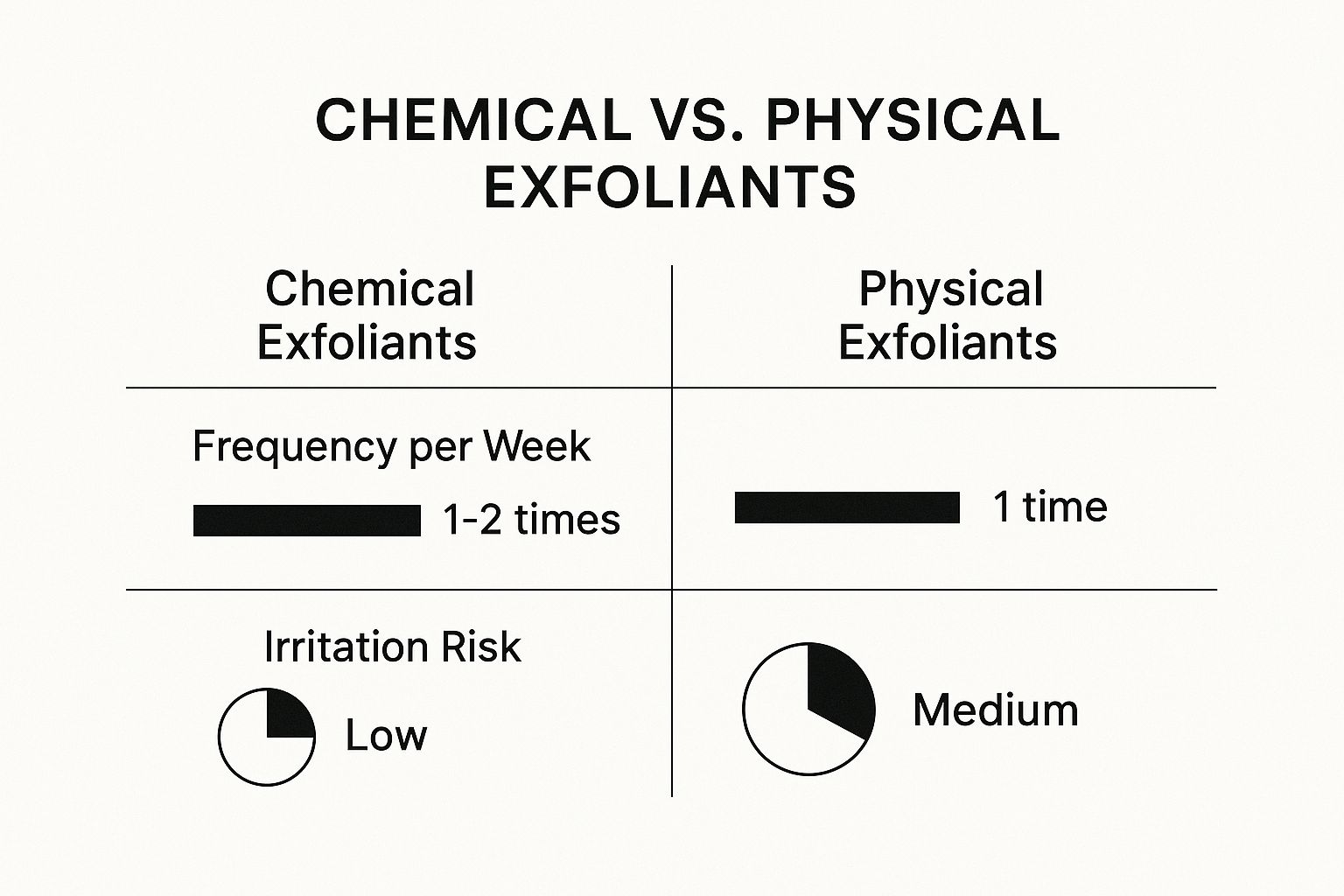
As you can see, chemical exfoliants are generally a better option, but still require caution. Physical exfoliation, on the other hand, carries a much higher risk of causing irritation for sensitive complexions.
Your Calming Evening Routine to Repair and Rejuvenate
As the day winds down, your skin’s real work is just getting started. Nighttime is when your skin finally gets a chance to switch from defence to repair mode. It's a golden opportunity for it to focus on regenerating cells and recovering from the day's stressors, making your evening skincare routine for sensitive skin absolutely critical for a calm, healthy complexion.
The goal here isn't just about washing your face. It's about creating a truly restorative environment where your skin can heal, rehydrate, and rebuild its protective barrier. A thoughtful evening routine soothes away any inflammation that built up during the day and sets you up for a much calmer morning.
The Gentle Power of Double Cleansing
I know, for sensitive skin, the idea of cleansing twice can sound a bit scary. But when you do it correctly, it's actually one of the most gentle and effective ways to clean your skin. It guarantees you remove every last trace of sunscreen, makeup, and daily grime without stripping away your natural oils.
Start with an oil-based or balm cleanser on dry skin. These formulas are brilliant because they literally melt away oil-based impurities (like your SPF and foundation) without messing with your skin's delicate lipid layer. Just massage it in gently, add a splash of water to emulsify, and then rinse.
Next, follow up with a small amount of a creamy, hydrating, and completely soap-free cleanser. This second step whisks away any leftover residue, leaving your skin perfectly clean but still feeling soft and comfortable. This two-part approach is so much kinder than forcing one harsh cleanser to do everything.
Layering Hydration for Overnight Repair
Once your skin is clean and still slightly damp, it's primed and ready to soak up hydration. This is when it's most receptive to absorbing products. I always suggest starting with a hydrating serum—something with ingredients like hyaluronic acid or glycerin to pull that essential moisture deep into the skin.
Your evening moisturizer is the true hero of your routine. This is your chance to lock in all that serum goodness and give your skin the building blocks it needs to repair its barrier while you sleep.
Look for a richer cream packed with barrier-supporting ingredients. These are the workhorses that seal in moisture and fortify your skin's natural defences:
Ceramides: These are lipids that are a natural part of your skin barrier. Topping them up helps keep your skin strong and resilient.
Fatty Acids: Think ingredients like shea butter and jojoba oil. They are full of fatty acids that nourish and protect.
Squalane: A fantastic lightweight, non-comedogenic oil that delivers exceptional moisture without ever feeling heavy or greasy.
Carefully Introducing Actives
If your skin is feeling strong and you’re looking to introduce an active ingredient for things like anti-aging or texture, nighttime is the moment to do it. But you have to proceed with caution. Traditional retinoids can be far too aggressive for many of us with sensitive skin.
A wonderful alternative is Bakuchiol. It's a plant-derived ingredient that gives you similar benefits to retinol—like improving skin texture and tone—but with a much lower risk of causing irritation.
Always, and I mean always, patch-test a new active behind your ear for a few days before putting it all over your face. When you do start, use it just one or two nights a week, maybe even buffered between layers of moisturizer, to see how your skin handles it. Finding the right products is a journey, and our guide on the 7 best products for sensitive skin in Canada can help you make choices you feel good about. By taking it slow, you can support your skin's recovery without accidentally causing a setback.
When Should You Consider Professional Skin Treatments?
A solid, consistent daily skincare routine for sensitive skin is your absolute best defense for keeping your complexion calm and healthy. I always tell my clients it's the foundation of everything. But let's be real—sometimes, even with the most careful at-home regimen, our skin hits a wall. You might be dealing with stubborn redness that just won't fade or a skin barrier that feels constantly under attack.
This is exactly where professional treatments can make a world of difference. Think of them not as a replacement for your daily efforts, but as a powerful boost that takes your results to the next level. When your home products just can't seem to get you over the finish line, a targeted professional service offers a deeper level of soothing and repair that's simply not possible to do on your own. For many of us here in Canada, that extra help is crucial, especially when our skin is reacting to our wild climate shifts.
Calming Treatments for Reactive Skin
Here at Skinsation Aesthetics, we don't believe in aggressive treatments for sensitive skin. Our entire approach is about nurturing and strengthening it. The goal is always to dial down inflammation and build up your skin's natural defenses, leading to a calm that actually lasts.
Two of our most beloved and effective treatments for reactive skin are:
Oxygen Dome Facials: This is an incredible experience where we envelop your skin in a bubble of highly concentrated oxygen and anions. This process is amazing for helping regenerate skin cells, reducing harmful bacteria, and delivering a deep, soothing calm to irritated skin. You'll leave feeling unbelievably refreshed and hydrated.
LED Light Therapy: Specifically, we use red light therapy, which is famous for its anti-inflammatory superpowers. It’s a completely non-invasive treatment that works on a cellular level to visibly calm redness, kickstart collagen production, and speed up your skin's own healing processes.
I always say that professional treatments are the secret weapon for managing sensitivity. They provide a targeted intervention that calms inflammation and strengthens the skin barrier in a way that daily products can't, offering serious relief from chronic redness and reactivity.
How Professional Services Enhance Your Routine
Bringing these treatments into your skincare plan can be a game-changer. An Oxygen Dome Facial, for example, can give your skin such a massive hydration boost that your at-home serums and moisturizers suddenly start working much more effectively.
Meanwhile, a series of red light LED sessions can steadily reduce that baseline redness you see with conditions like rosacea, making your day-to-day management so much easier. If you're specifically struggling with rosacea, you can learn more about how our services can bring relief by reading our guide to a calming rosacea facial.
Ultimately, these services offer a controlled, professional environment to give your skin the restorative push it needs. They help fortify that all-important skin barrier, reduce nagging irritation, and help you find a deeper sense of comfort and balance in your own skin.
Your Sensitive Skincare Questions Answered
When you're dealing with sensitive skin, it feels like every choice comes with a hundred questions. It's totally normal, and honestly, asking the right questions is the first step. Here, we're diving into some of the most common concerns we hear from clients, offering practical answers to help you finally build a skincare routine for sensitive skin that brings you comfort and real results.
How Long Until I See Results from a New Routine?
This is a big one. With sensitive skin, patience isn't just a virtue; it's a necessity. You’ll likely need about 4-6 weeks for your skin to truly get used to a new routine.
The real trick is to introduce only one new product at a time. I always tell my clients to give it at least a full week before even thinking about adding something else. This slow and steady approach is your best tool for figuring out what works and what doesn't. It helps you catch any potential irritants and lets your skin barrier adapt without getting stressed out.
If you start to feel any persistent stinging, itching, or see lasting redness, that’s your skin’s way of saying "no." Don't push through it—just stop using the new product.
Is Exfoliation Ever Okay for Sensitive Skin?
Yes, but you have to be incredibly careful. Let’s get one thing straight: harsh physical scrubs with big, scratchy particles are a definite no-go. They'll just cause more harm than good.
Instead, your best bet is a very gentle chemical exfoliant. Look for ingredients like polyhydroxy acids (PHAs) or a very low-concentration lactic acid. These have larger molecules that don't sink as deep into the skin, which means they're much less likely to cause irritation. Start by using it only once a week, at most. Always do a patch test first, and be sure to follow up immediately with a rich, soothing moisturiser to keep your skin barrier happy and supported.
It's so important to pick products with the right ingredients, especially with the growing conversation around product safety. We're even seeing new laws aimed at stopping younger people from using harsh anti-aging products that can wreck sensitive skin. It just goes to show how critical ingredient safety is for everyone. You can read more about this move to prevent skin barrier disruption in vulnerable populations.
Is "Natural" or "Organic" Always Safer?
This is a huge misconception that can lead to some serious flare-ups. The answer is, not always. So many "natural" ingredients, like essential oils (lavender, peppermint, and citrus are common culprits) and witch hazel, are actually well-known irritants for sensitive skin.
What matters more than where an ingredient comes from is its specific chemical makeup and how it interacts with your skin. Instead of getting caught up in buzzwords like "natural," look for proven, reliable claims like "fragrance-free," "hypoallergenic," and "dermatologist-tested." These labels are a much better guide to finding products that will be gentle on your skin.
At Skinsation Aesthetics Inc., we truly believe that everyone can achieve radiant, comfortable skin with the right know-how and professional support. If you’re tired of the guesswork and ready to calm your skin with a routine that finally works for you, we’re here to help.
Comments