

Stress and Skin Rash: stress and skin rash tips to calm breakouts and clear skin
- Blog Admin

- Dec 30, 2025
- 14 min read
Have you ever noticed an itchy, red rash pop up out of nowhere during a really tough week? That’s no coincidence. The link between what’s going on in your head and what’s showing up on your skin is very real, confirming that a stress and skin rash connection isn't just something you're imagining—it's a genuine physiological response.
How Stress Triggers a Reaction in Your Skin
Think of your body's stress response like a high-tech internal alarm system. When you're up against a threat—whether it's a looming deadline, a tough conversation, or money worries—this system pumps your body full of hormones like cortisol and adrenaline. While super helpful in a real "fight-or-flight" moment, this chemical flood can wreak havoc on your skin when stress becomes a constant companion.
This sudden hormonal surge is the main trigger for inflammation all over your body. Cortisol, often nicknamed the "stress hormone," is the biggest offender here. It throws your skin's natural balance out of whack and basically tells your immune cells to go into overdrive.
It's this exact chain reaction that leads directly to the frustrating skin problems so many Canadians deal with.
The Science Behind the Flare-Up
When your immune system gets revved up by stress, it can start releasing chemicals like histamine. Histamine is the same stuff that causes the classic signs of an allergic reaction, but in this case, the trigger isn't pollen or a new laundry detergent—it's your own emotional state.
This release of histamine and other inflammatory signals can cause a few things to happen:
Blood vessels just under your skin can widen and leak, which leads to that tell-tale redness and swelling.
Nerve endings in your skin get irritated, creating that intense, can't-stop-scratching itch or even a burning feeling.
Your skin's protective barrier starts to break down, leaving it wide open to environmental irritants.
Basically, stress puts your skin on constant high alert, ready to overreact to the smallest thing. This is why a stressful time can make a brand-new rash appear or cause an existing condition like eczema or rosacea to suddenly get much worse. Knowing this is the first step to getting a handle on it, and it really highlights why a healthy skin barrier is so important. To learn more, check out our guide on skin barrier repair for healthy Canadian skin.
Validating the Mind-Skin Connection
For years, many people, including folks right here in London, Ontario, were made to feel that their stress-related skin problems were "all in their head." Now, science is finally catching up and confirming what they knew all along: it’s a widespread physiological reality.
Recent research has drawn a strong, clear line between psychological well-being and skin health. One major 2023 study found that people with effective stress-coping skills had a significantly lower chance of dealing with issues like rashes, redness, and itching. The findings even suggest that nearly one-third of these skin flare-ups could be directly tied to not having the right tools to manage stress. You can explore the full study about the impact of stress on skin health.
This kind of data is so validating for anyone who has experienced it firsthand. That sudden rash that shows up before a big presentation or during a family emergency isn't just in your imagination—it's your body's physical response to internal pressure. Recognizing this connection is empowering because it means you can finally tackle both the symptom (the rash) and the root cause (the stress).
Identifying Common Rashes Caused By Stress
When stress decides to make an appearance on your skin, it rarely shows up in the same way for everyone. Think of this section as your field guide to recognizing the specific types of rashes that stress loves to provoke. Knowing what you’re looking at is the first, most crucial step toward finding relief.
A rash that pops up out of nowhere might just be a stress rash, but it can also make existing skin conditions flare up with a vengeance. The real clue is the timing. If you notice a breakout during a demanding stretch at work or a tough time in your personal life, stress is a very likely culprit.
Stress Hives Or Urticaria
The classic presentation of a stress and skin rash is hives, also known as urticaria. These are itchy, raised welts that can appear suddenly anywhere on your body. They might look like tiny red dots, large splotchy patches, or angry-looking clusters of bumps.
How they feel is just as telling as how they look. Stress hives are notoriously itchy and sometimes bring a burning or tingling sensation along for the ride. This happens because emotional distress signals your immune cells to unleash a flood of histamine—the very same chemical involved in allergic reactions. The result is inflamed, irritated skin that is practically screaming for your attention.
It's an incredibly common reaction. In fact, research shows that about 15 to 25% of Canadians will get hives at some point, and stress is a well-known trigger. Your nervous system basically sends a direct message to your skin's immune cells, telling them to release that histamine and cause those uncomfortable welts.
This diagram shows the straight line from your mental state to your skin's reaction.
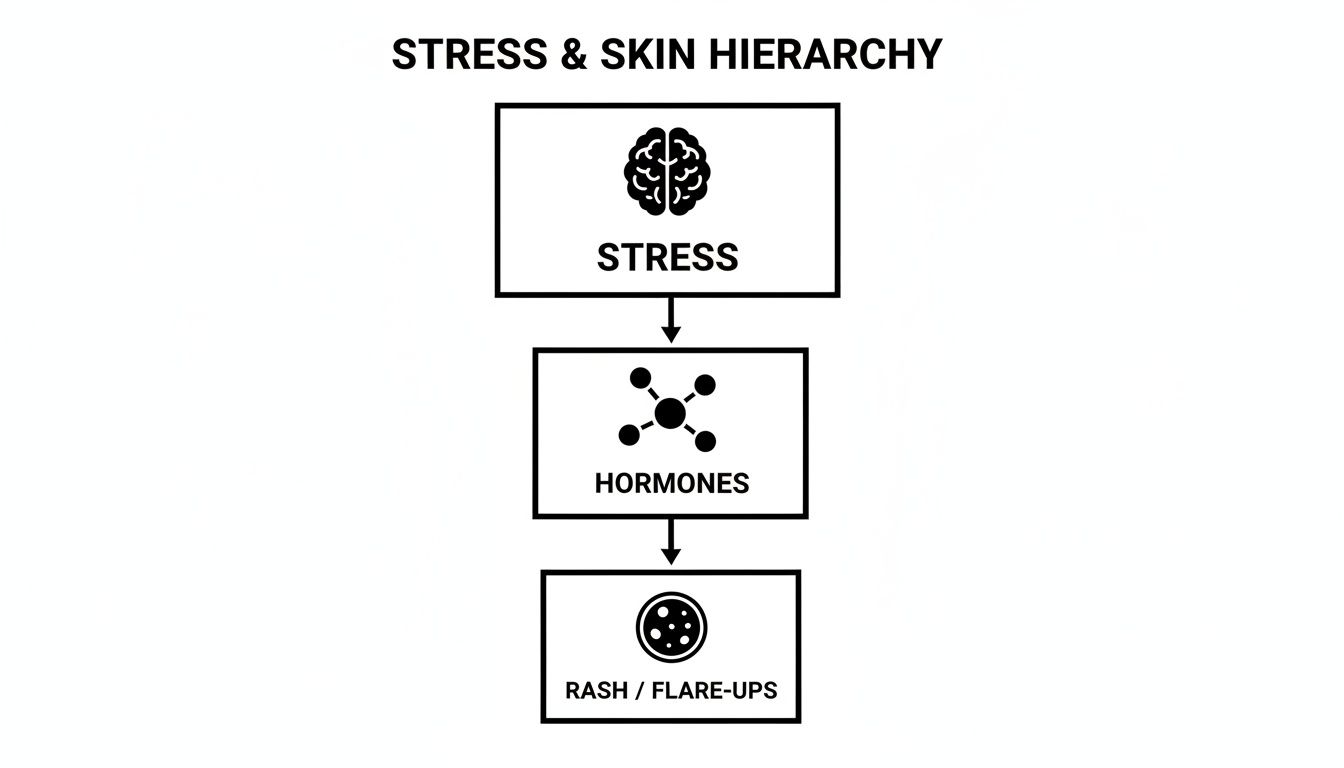
It’s a clear top-down flow: psychological stress kicks off a hormonal response, which directly leads to a physical rash on your skin.
To help you tell these conditions apart, here’s a quick rundown of the most common rashes that stress can trigger or make worse.
A Quick Guide to Common Stress-Related Skin Rashes
Rash Type | What It Looks and Feels Like | Common Sensations | How Stress Affects It |
|---|---|---|---|
Hives | Raised, red, or skin-coloured welts (wheals) that can change shape. | Intense itching, stinging. | Triggers a direct release of histamine from immune cells in the skin, causing the welts to appear suddenly. |
Eczema | Dry, scaly, or thickened patches of skin; may be red or inflamed. | Severe itching, burning. | Weakens the skin’s barrier, making it more vulnerable to irritants and allergens, which leads to a flare-up. |
Rosacea | Persistent facial redness, flushing, visible blood vessels, bumps. | Burning, stinging, tightness. | Causes blood vessels in the face to dilate, increasing redness and inflammation. Can feel like a perpetual blush. |
Acne | Red pimples, whiteheads, blackheads, or deeper cysts. | Often painful or tender. | Boosts the production of oil (sebum) and inflammation, creating the perfect conditions for a breakout. |
Understanding these differences is the first step, because what helps calm a rosacea flare-up might not be the best approach for stress-induced hives.
Eczema And Rosacea Flare-Ups
For many Canadians already managing chronic skin conditions, stress acts like throwing gasoline on a fire. If you have eczema (atopic dermatitis), you know the intense itch and dry, scaly patches all too well. Stress can weaken your skin’s protective barrier even more, leaving it defenceless against irritants and kicking off a miserable flare-up.
Rosacea is another condition that’s notoriously sensitive to emotional triggers. Known for its persistent facial redness, flushing, and sometimes acne-like bumps, it can get significantly worse with stress. A spike in cortisol can make the tiny blood vessels in your face dilate, turning up the volume on redness and inflammation.
It becomes a frustrating cycle: stress worsens your rosacea, and then the visible flare-up causes even more stress. Breaking this loop often requires a two-pronged approach that addresses both your skin and your stress levels.
For those in the London, Ontario area dealing with this, professional treatments can offer serious relief. If you're struggling with that stubborn redness from rosacea, it's worth exploring your options. You can learn more in our guide on finding the best facial for rosacea.
Stress-Related Acne Breakouts
Ever notice a sudden crop of pimples right before a big presentation or important event? That’s stress acne in action. When you're stressed, your body produces more androgens, a type of hormone that can send your oil glands into overdrive.
All that extra oil, or sebum, is the perfect recipe for clogged pores. Combine that with the inflammation that also comes with stress, and you’ve created the ideal environment for acne bacteria to thrive. This often leads to painful, inflamed pimples and cysts, especially around the jawline, chin, and cheeks. Unlike typical teenage acne, these stress-related breakouts can pop up in adults of any age.
Connecting the dots between your mental well-being and your skin’s health is empowering. Once you can see the pattern, you can start finding targeted solutions that work.
The Long-Term Impact of Chronic Stress on Your Skin
A single stress rash can be annoying, but it's usually a short-term problem. What happens when that pressure never lets up, and stress becomes a constant companion? That’s when we go from a temporary nuisance to long-term damage, as chronic stress starts to systematically chip away at your skin's health.
Think of your skin’s protective barrier as the outer wall of a castle, built to keep moisture in and harmful invaders out. Chronic stress is like a relentless siege that constantly weakens that wall. Over time, this makes your skin far more vulnerable to irritants, allergens, and everyday pollutants.
This weakened state is why people under prolonged stress often notice their skin becoming more sensitive and reactive. Products that used to be your go-to might suddenly cause irritation, and conditions like eczema can become much harder to keep under control.
The Breakdown of Your Skin's Defences
When stress is a constant in your life, your body stays stuck in a high-alert state, pumping out the inflammatory hormone cortisol. This hormonal flood has a direct and damaging effect on your skin's structure, kicking off a cascade of problems that build up over time.
This persistent inflammation doesn’t just show up as redness; it actively breaks down the very things that keep your skin firm and hydrated. The result is a complexion that can’t seem to hold onto moisture, leading to constant dryness, flakiness, and that tight, uncomfortable feeling. Your skin’s natural repair processes also grind to a halt, meaning blemishes and marks stick around for much longer.
Chronic psychological stress has profound, measurable effects on skin health. Scientific studies show that stressed individuals experience a significant decrease in their skin's natural antioxidant potential. Furthermore, this prolonged stress directly impairs the skin's barrier function—the critical outer layer that locks in hydration and blocks irritants. A compromised barrier makes you more susceptible to various dermatological issues and accelerated aging. You can read the full research on how stress impacts skin aging to learn more.
This science just confirms what many of us here in London, Ontario, and across Canada already know from experience: long-term stress really takes a toll on your skin.
Speeding Up the Aging Process
Beyond weakening your skin's defences, chronic stress also wages a war on its youthful appearance by draining its natural antioxidant reserves. Antioxidants are your skin’s personal bodyguards, fighting off damage from free radicals—those unstable molecules triggered by things like UV rays and pollution.
When stress uses up these protective resources, your skin is left defenceless. This directly puts the visible signs of aging into overdrive.
Here’s what that looks like in the mirror:
Collagen and Elastin Breakdown: The proteins that give your skin its plumpness and bounce are degraded much faster, leading to the early arrival of fine lines and wrinkles.
Loss of Radiance: Slower cell turnover means dead skin cells hang around on the surface, contributing to a dull, lacklustre complexion.
Uneven Skin Tone: Chronic inflammation can trigger hyperpigmentation, resulting in dark spots and an uneven skin tone.
This shifts the conversation from just managing a temporary stress and skin rash to understanding how vital proactive stress management is. Protecting your skin's long-term health means finding ways to calm both your complexion and your mind.
Effective At-Home Strategies to Calm Your Skin and Mind
Breaking the frustrating cycle of a stress and skin rash means tackling the problem from two angles: soothing your skin's immediate needs and calming the underlying stress. The good news is that you can take back control with practical steps you can start right at home.
When your skin is already red, itchy, and reactive, the last thing it needs is a 10-step routine with harsh, active ingredients. The goal here is to simplify and soothe. Think of it as giving your skin a cozy blanket and a cup of tea, not sending it to boot camp.
This "less is more" mindset helps dial down the irritation and gives your complexion the breathing room it needs to heal. It’s all about being gentle and consistent, especially when a flare-up hits.
Building a Barrier-Supportive Skincare Routine
Your mission, should you choose to accept it, is to calm inflammation and rebuild your skin’s natural defences. During a stress-induced flare, stick to the absolute basics and focus on ingredients known for their calming superpowers.
Here's what that gentle-but-effective routine looks like:
A Mild, Hydrating Cleanser: Ditch the sudsy, foaming cleansers that can strip your skin. Instead, reach for a creamy or milky formula that’s fragrance-free and pH-balanced. This respects your skin’s delicate acid mantle.
Calming and Hydrating Serums: This is where ingredients like niacinamide, hyaluronic acid, and ceramides shine. Niacinamide is a champ at reducing redness, while hyaluronic acid and ceramides are like a big drink of water for your skin, replenishing moisture and strengthening that all-important barrier.
A Soothing Moisturizer: This step is completely non-negotiable. A good moisturizer seals in all that hydrating goodness and acts as a shield against external irritants. Look for products with colloidal oatmeal, aloe vera, or centella asiatica (cica)—all celebrated for their comforting properties.
Consistent Sun Protection: Stress can leave your skin extra vulnerable to UV damage. Applying a broad-spectrum SPF 30 or higher every single day is a must, even on those cloudy London, Ontario, mornings. If your skin is feeling extra sensitive, a mineral-based sunscreen with zinc oxide or titanium dioxide is your best bet.
By focusing on these simple steps, you create the supportive environment your skin needs to recover from the inside out.
Powerful Techniques to Manage Your Stress
Just as you calm your skin from the outside, you have to calm your nervous system from the inside. Simple, consistent stress-management practices can make a huge difference in lowering your cortisol levels, effectively breaking the chain reaction that leads to a stress and skin rash.
These techniques don't need to take up your whole day, but their cumulative effect is profound. They work by switching on your body's "rest-and-digest" mode, which is the direct opposite of the "fight-or-flight" state that stress throws you into.
A key principle in calming both the mind and skin is interrupting the stress cycle before it spirals. Small, daily practices that regulate your nervous system can have a profound impact on reducing the inflammatory signals that reach your skin.
For a structured, evidence-based program, you might want to explore Mindfulness-Based Stress Reduction (MBSR), which offers proven practices to build mental resilience.
Simple Steps for Immediate Stress Relief
You don’t need a complicated plan to start feeling better right now. Try weaving one or two of these incredibly simple exercises into your daily life.
Box Breathing: This is a surprisingly powerful technique for instantly calming your nerves. Just inhale slowly for four counts, hold for four counts, exhale slowly for four counts, and hold again for four. Repeat this cycle for a few minutes whenever you feel that wave of overwhelm creeping in.
Mindful Moments: Forget trying to meditate for an hour. Just take five minutes to tune into your senses. What do you see, hear, smell, and feel in this exact moment? This simple act grounds you in the present, pulling you away from anxious thoughts about yesterday or tomorrow.
Improve Sleep Hygiene: Sleep is prime time for skin repair. Aim for 7-9 hours a night. Create a wind-down routine by putting screens away an hour before bed, skipping that afternoon caffeine fix, and making sure your bedroom is a dark, cool, and quiet sanctuary.
These at-home strategies empower you to take an active role in your skin’s health, offering both immediate relief and long-term resilience against stress.
Advanced Treatments for Stubborn Stress-Related Skin Issues
It can be incredibly frustrating when you’ve tried every gentle cleanser and calming cream on the market, but that stubborn redness, itching, or breakout just won't go away. When a stress and skin rash refuses to fade, it's easy to feel defeated.
While good at-home care is the foundation of healthy skin, sometimes persistent inflammation needs a more powerful, targeted approach to finally break the cycle. This is where professional clinical treatments come in, offering a direct path to relief that you simply can't achieve on your own. For those of us in London, Ontario, struggling with the visible effects of stress on our skin, exploring these advanced solutions can be a true game-changer.
Introducing Aerolase Laser Therapy
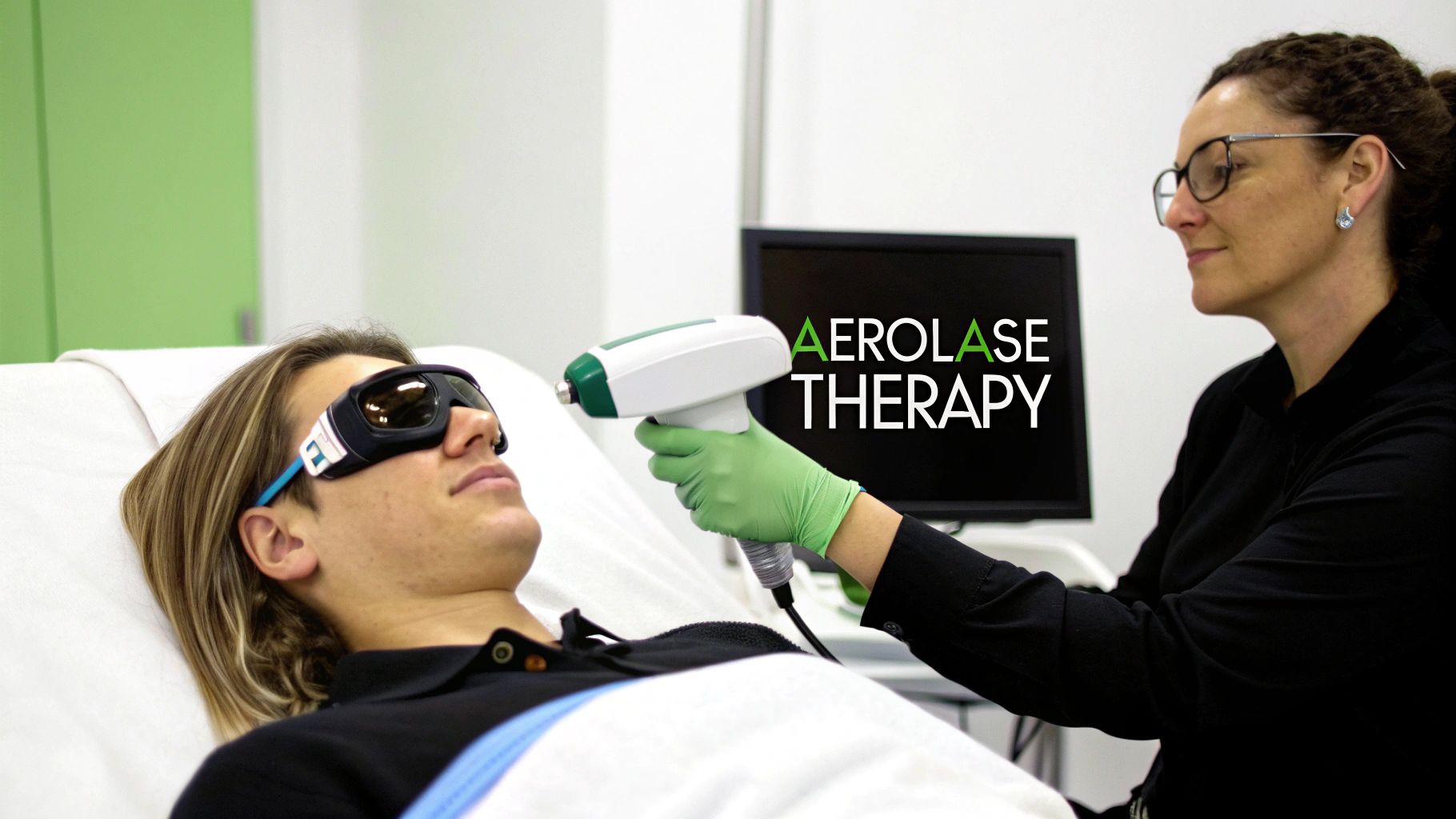
At Skinsation Aesthetics, we focus on advanced therapies that deliver real, visible improvements without discomfort or downtime. One of the cornerstones of our practice is the Aerolase laser, a truly modern technology that safely and effectively targets the redness and inflammation common in stress-triggered skin conditions like rosacea and acne.
Unlike older laser technologies that could be harsh or even painful, Aerolase uses a unique 650-microsecond pulse. Think of it as a super-fast, gentle flash of light that gets into the skin so quickly it doesn't have time to overheat the surrounding tissue. This makes the treatment exceptionally comfortable—most clients just feel a mild warming sensation—and remarkably safe for all skin types and tones. That’s a huge plus for the diverse community here in Canada.
How Aerolase Calms Stressed Skin
The real genius of Aerolase is its precision. It hones in on the exact factors that cause redness and breakouts when you're going through a stress flare-up.
Here’s a quick look at how it works to restore calm to your skin:
Reduces Redness and Inflammation: The laser energy is absorbed by the hemoglobin in those tiny, dilated blood vessels responsible for the persistent redness in conditions like rosacea. This gently collapses the vessels, dramatically reducing that flushed look.
Targets Acne Bacteria: The laser also goes after the p. acnes bacteria living deep within your pores, helping to clear up active breakouts while preventing new ones from popping up. This is a massive help for anyone dealing with stress-induced acne.
Stimulates Collagen Production: As an amazing added benefit, the gentle heat also kicks your skin’s natural collagen production into gear. This helps strengthen your skin from within, improving its texture and making it more resilient against future stressors.
The bottom line? Aerolase delivers powerful results without sacrificing comfort or safety. By targeting inflammation right at the source, it provides lasting relief from the visible signs of stress, restoring not just your skin's health, but your confidence, too.
Best of all, the treatment requires zero downtime. You can walk out of our London, Ontario clinic and get right back to your day—no lingering redness, no recovery period. It’s a modern, effective solution for busy people who need real results without the hassle.
To learn more about how this treatment could help with your specific concerns, you can explore our detailed information on Aerolase laser therapy at Skinsation Aesthetics.
Your Questions About Stress Rashes Answered
When you're dealing with a skin flare-up, it’s only natural to have a lot of questions. We get it. Trying to connect the dots between your mental state and what’s happening on your skin can be confusing. To give you a bit more clarity and confidence, we’ve put together some straightforward answers to the most common questions we hear about stress rashes.
How Long Does a Stress Rash Typically Last?
This one really depends. A simple case of stress hives might show up, say its piece, and then fade away within a few hours—especially if the stressful moment passes.
But if that stress has poked a sleeping bear, like an underlying condition such as eczema or rosacea, the flare-up could stick around for days or even weeks. This is particularly true if the stress isn't going away. The best way to shorten its visit is to combine gentle, consistent skincare with some real-deal stress management. If any rash is still hanging around after a week without getting better, it’s time to get it looked at by a professional.
Can Stress Cause a Rash on My Face Specifically?
You bet it can. The face is actually one of the most common places for a stress rash to appear, and this is especially true for conditions like rosacea and acne. Think about it: the skin on your face is packed with tiny blood vessels and nerve endings that are super responsive to your body's internal stress signals.
When you're going through a tough time, you might notice you're flushing more, seeing persistent redness, breaking out, or getting itchy patches. These often pop up right across the forehead, cheeks, and around the nose and mouth.
While stress can trigger a rash just about anywhere, the face is often the first to wave the red flag. Its sensitivity makes it a pretty accurate barometer for your emotional state, which is why taking care of your facial skin and managing stress have to go hand-in-hand.
Are There Specific Foods to Avoid During a Stress Rash?
While stress might be pulling the strings, what you eat can definitely add fuel to the fire. When your skin is already inflamed and angry, it’s a smart move to steer clear of foods known to make inflammation worse.
During a flare-up, you might want to temporarily cut back on:
Highly processed foods
Anything high in refined sugar
Alcohol
And if you’re dealing with a rosacea flare specifically, you’ll also want to watch out for spicy foods and super hot drinks, as they can dial up facial flushing and redness. Paying a little extra attention to your diet can help you pinpoint personal triggers that might be making your stress rash more intense.
Is the Aerolase Treatment Painful?
We hear this question a lot, and the answer is a relief for most people! Aerolase is known for being one of the most comfortable and gentle laser treatments out there. Its unique technology gets the job done by delivering energy in an incredibly fast pulse, which targets redness and inflammation without overheating the skin around it.
Most of our clients here at our London, Ontario clinic describe the feeling as a mild, pleasant warming sensation on the skin. It’s considered a pain-free treatment with no downtime, which makes it an incredibly convenient and effective way to help calm stressed-out skin.
Ready to bring some calm back to your skin? At Skinsation Aesthetics, we specialize in advanced, gentle treatments that deliver real, visible results. Explore our services and book your consultation today to start your journey toward a clearer, more resilient complexion.
Comments