

Hormonal Breakout Treatment Options for Lasting Clear Skin

Treating hormonal breakouts effectively isn't about just one magic product. It's a combination of smart skincare, a few lifestyle tweaks, and sometimes, calling in the professionals. The goal is to get to the root of the problem—those hormonal shifts that crank up oil production—using powerful ingredients like retinoids or exploring clinical options like Aerolase laser therapy, which calms inflammation and oiliness without any downtime.
Why Hormonal Breakouts Happen and What They Look Like
If you've ever noticed that your breakouts seem to pop up with frustrating regularity each month, you're not just imagining it. Hormonal breakouts are a very real, distinct type of acne driven by what's happening inside your body. Getting to know them is the first real step toward beating them for good.
Think of your hormones like a finely tuned orchestra. When every instrument is playing in harmony, your skin is clear and happy. But when certain hormones—especially androgens like testosterone—start playing a little too loud, they throw everything off balance. This is a super common experience for Canadian women; studies show that adult acne is on the rise, affecting up to 50% of women in their 20s and 25% of those in their 40s.
The Science Behind the Bumps
So, how exactly does this hormonal rollercoaster lead to pimples? It's pretty straightforward. Androgens have a direct line to your skin’s oil glands (sebaceous glands). When androgen levels spike—which can happen because of your monthly cycle, stress, or conditions like PCOS—they basically tell these glands to go into overdrive and produce way more oil (sebum).
All that extra oil creates the perfect storm for acne. It starts mixing with dead skin cells, which clogs up your pores and creates a five-star resort for bacteria. The result isn't just a simple little whitehead; it's often a much deeper, more inflamed blemish that’s painful and stubborn.
This whole process is why hormonal breakouts just feel different. They are usually:
Deep and Cystic: Forget surface-level spots. These are those painful, under-the-skin bumps that feel like they're setting up camp for weeks.
Inflamed and Tender: They’re often red, swollen, and pretty sore to the touch because of all the inflammation happening deep down.
Resistant to Standard Treatments: Those over-the-counter spot treatments that might have worked for teenage acne? They often don't stand a chance against these hormonally-driven blemishes.
Recognizing the Telltale Signs
One of the biggest giveaways for hormonal breakouts is where they show up. While other types of acne might pop up anywhere, hormonal acne tends to have its favourite spots.
Hormonal breakouts almost always cluster around the lower third of the face. This "hormonal pattern" means the jawline, chin, and lower cheeks are the primary targets. If your breakouts are consistently crashing the party in these areas, hormones are almost certainly the culprit.
This distinct pattern happens because the oil glands in this part of your face are extra sensitive to androgen signals. Even a slight hormonal shift can be enough to trigger a noticeable flare-up along your jaw and chin.
If you want to dig a little deeper into how your skin and internal health are connected, check out our guide to acne and hormone imbalances. Learning to spot these signs is key, as it helps you move away from generic fixes and toward a treatment plan that actually works.
Pinpointing Your Personal Breakout Triggers
It often feels like breakouts pop up out of nowhere, but they’re actually telling you a story about what’s happening inside your body. Think of yourself as a skin detective—the first step is figuring out the specific triggers messing with your hormonal harmony. Once you can spot these patterns, you’re that much closer to finding a hormonal breakout treatment that actually works for you.
For many Canadian women, a few key culprits are behind most hormonal fluctuations. While these internal shifts can feel unpredictable, they almost always leave clues, helping you connect the dots between your hormones and your skin.
Common Hormonal Breakout Culprits
Certain life stages and health conditions are well-known for throwing hormones out of whack. Each one creates a unique internal storm that can ramp up oil production and trigger inflammation.
Here are some of the most common triggers we see at our London, Ontario clinic:
The Menstrual Cycle: This is easily the most frequent trigger. Right before your period, your estrogen levels drop while androgens (like testosterone) climb. This hormonal shift kicks your oil glands into high gear, leading to that all-too-familiar monthly flare-up, usually along the jawline.
Stress: When you’re chronically stressed, your body pumps out cortisol, the "stress hormone." High cortisol levels can indirectly cause a spike in androgens, which—you guessed it—means more oil and a greater chance of clogged pores.
Polycystic Ovary Syndrome (PCOS): This common hormonal condition is marked by higher-than-normal levels of androgens. For many women, persistent and stubborn acne, especially the deep, cystic kind on the lower face, is one of the very first signs of PCOS.
Perimenopause and Menopause: As estrogen levels naturally decline during this transition, the scales tip in favour of androgens, giving them more influence over your skin. This change can trigger adult-onset acne for women who've had clear skin for years, often starting in their 40s and 50s.
This graphic breaks down exactly how those hormonal shifts translate into a breakout.
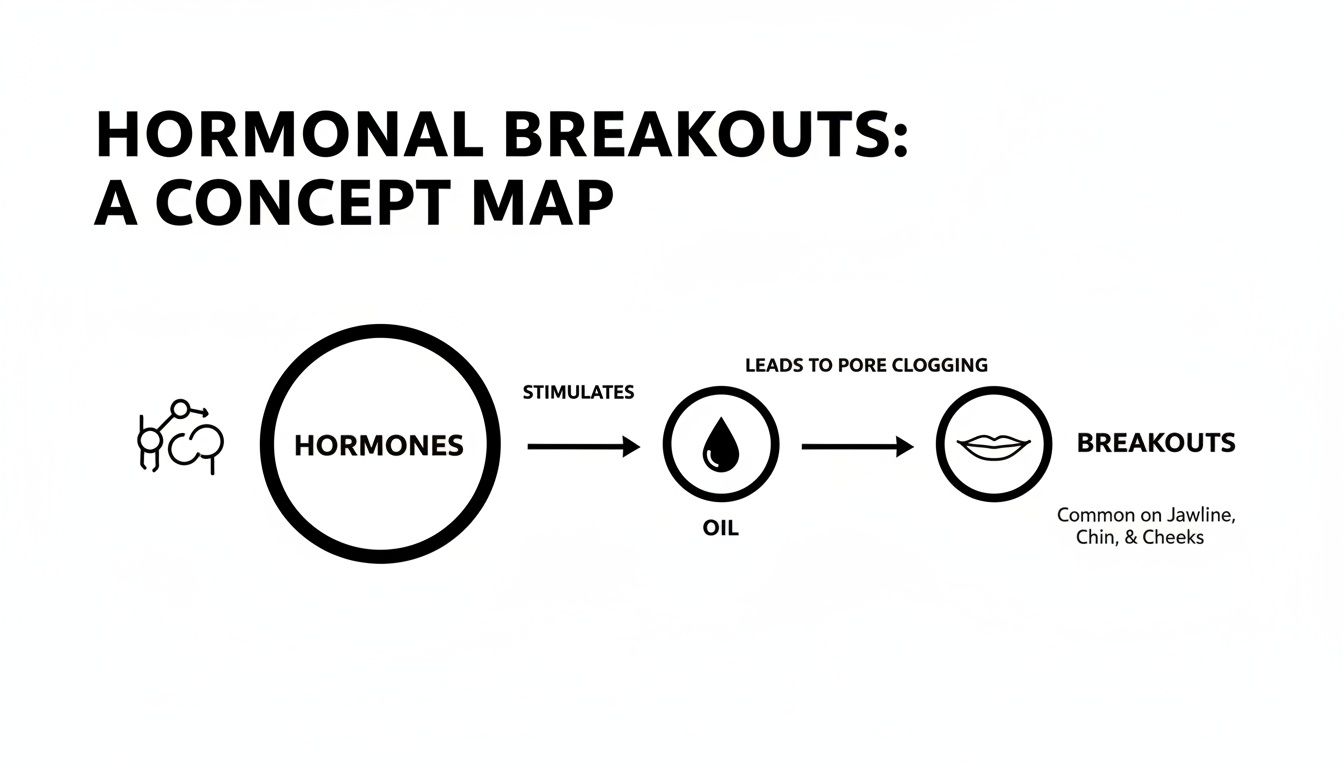
It’s a clear chain reaction: a hormonal change signals your glands to produce more oil, which then leads to the clogged pores and inflammation we see as breakouts.
How to Track Your Breakout Patterns
To really nail down what’s triggering your skin, a little bit of tracking can be incredibly powerful. It doesn’t have to be complicated! Just taking a moment to note when and where your breakouts show up can reveal so much over time.
You can start a simple log in a notebook or even the notes app on your phone. Every day, just jot down:
Date and Day of Menstrual Cycle: Know where you are in your cycle (e.g., Day 1, Day 14, Day 25).
New Breakouts: Describe what you see—where is it, is it a small bump or a deep, painful cyst?
Stress Levels: Give yourself a quick rating from 1-10.
Dietary Notes: Did you eat anything out of the ordinary? Pay special attention to dairy or high-sugar foods.
After just a couple of months, you’ll probably start to see a pattern. Maybe you’ll notice that those deep, sore cysts only show up on your chin in the week leading up to your period. Bingo! That’s a clear sign of a cyclical hormonal trigger.
Distinguishing Hormonal Acne from Other Types
Knowing exactly what you're dealing with is the key to treating it effectively. Hormonal acne has very specific characteristics that set it apart from other common skin issues. Being able to spot these differences will help you have a much more productive conversation with a professional at a clinic like Skinsation Aesthetics in London, Ontario.
This table is a quick guide to help you identify what might be happening with your skin.
Hormonal Acne vs Other Common Acne Types
Characteristic | Hormonal Acne | Bacterial Acne | Fungal Acne (Malassezia Folliculitis) |
|---|---|---|---|
Typical Location | Jawline, chin, lower cheeks ("U-zone") | T-zone (forehead, nose), chest, back | Forehead, chest, back, shoulders |
Appearance | Deep, cystic, painful, inflamed bumps | Pustules (pus-filled), blackheads, whiteheads | Small, uniform, itchy red bumps; often in clusters |
Primary Cause | Internal hormone fluctuations (androgens) | Overgrowth of C. acnes bacteria in clogged pores | Overgrowth of yeast (Malassezia) in hair follicles |
Key Triggers | Menstrual cycle, stress, PCOS, menopause | Poor cleansing, sweat, heavy products | Humidity, sweat, tight clothing, compromised immune system |
By understanding these distinctions, you can stop guessing and start targeting the true cause of your breakouts with a clear, informed approach.
Building An Effective At-Home Skincare Routine
You don't always have to rush to the clinic to get a handle on hormonal breakouts. In fact, a consistent and gentle at-home skincare routine is your first and most powerful tool for building clearer, healthier skin. The goal isn’t to wage war on your face with harsh products; it's to support your skin with ingredients that soothe inflammation and keep cell turnover on track.
It's tempting to reach for aggressive scrubs and drying toners, but that often backfires. Hormonal acne is an inside job, so attacking it too forcefully from the outside can just lead to more irritation, redness, and a damaged skin barrier. Instead, let's focus on a simple, effective routine built around a few proven ingredients.
Key Ingredients For Your Hormonal Breakout Toolkit
The skincare aisle can feel overwhelming, but a handful of active ingredients are true game-changers for a hormonal breakout treatment plan. These hard-hitters help unclog pores, calm inflammation, and promote healthier skin function—all without causing extra stress.
Here are the top ingredients to look for:
Salicylic Acid: This beta-hydroxy acid (BHA) is non-negotiable. Because it’s oil-soluble, it can get deep into your pores to break down the gunk—that lovely mix of oil and dead skin—that causes clogs in the first place. It’s also a great anti-inflammatory, helping to take down the redness and swelling of those painful spots.
Retinoids (like Retinol): Think of retinoids, which are a form of Vitamin A, as the managers of your skin's cell turnover process. By making sure your skin sheds old cells and generates new ones more efficiently, they prevent pores from ever getting clogged. As a bonus, they also help boost collagen, which can improve the look of post-acne marks.
Benzoyl Peroxide: A classic for a reason! Benzoyl peroxide works by targeting and killing the C. acnes bacteria that make breakouts red and angry. You can use it as a spot treatment or find a wash with a low concentration (2.5% to 5%) to avoid making your skin feel tight and dry.
Pro Tip: When you're adding powerful ingredients like retinoids or acids into your routine, start slow. Use them just two or three times a week at first, then slowly work your way up as your skin gets used to them. This helps you avoid irritation and keeps your skin barrier happy and strong.
Building a routine is as much about creating good habits as it is about the products themselves. For more tips, you can learn how to maintain healthy skin with our practical guide.
The Four Pillars Of A Daily Routine
You don't need a complicated 10-step regimen. When it comes to managing hormonal skin, consistency will always beat complexity. Just focus on these four essential pillars, and you'll have a solid foundation for clearer skin.
A Step-by-Step Morning and Evening Plan:
Gentle Cleansing (Morning & Night): Wash your face morning and night with a mild, pH-balanced cleanser. In the morning, you're washing away overnight oil and sweat. At night, you're clearing away makeup, sunscreen, and the day's pollution. Your skin should never feel tight or "squeaky clean" afterwards.
Targeted Treatment (Morning or Night): This is when your active ingredients get to shine. Try applying a salicylic acid or benzoyl peroxide product in the morning to keep bacteria and inflammation in check all day. Save your retinoid for the evening, as sunlight can make it less effective and increase skin sensitivity.
Hydration (Morning & Night): Yes, even oily and acne-prone skin needs moisture! When your skin gets dehydrated, it can actually overcompensate by producing more oil. Look for a lightweight, non-comedogenic (meaning it won't clog your pores) moisturiser to keep your skin barrier balanced and healthy.
Sun Protection (Morning): This step is absolutely non-negotiable, especially when using acids or retinoids. The sun can make inflammation worse and leads to post-inflammatory hyperpigmentation—those stubborn dark spots that linger long after a pimple is gone. Use a broad-spectrum SPF 30 or higher every single day, no exceptions.
By sticking to this simple but powerful framework, you give your skin the consistent care it needs to regulate itself and better withstand those frustrating hormonal triggers.
Knowing When to Take the Next Step: Seeking Professional Treatment
A solid at-home skincare routine is your first line of defence in the battle against hormonal breakouts, but sometimes, it just isn’t enough to get the job done. If you’re dealing with stubborn, deep acne that just won’t quit, it's not because you've failed—it’s a clear sign that your skin is asking for a different kind of support. Knowing when to call in the professionals is a huge step toward finally getting the clear skin you deserve.
So, when is it time to look beyond your bathroom cabinet and book a consultation? A good rule of thumb is if you've been sticking to a consistent routine with active ingredients for a few months and you're just not seeing the improvement you'd hoped for. That's your cue.
Red Flags That Mean You Need an Expert
It can be hard to know when to make the leap, but a few specific symptoms are a dead giveaway. Don't wait for things to get worse, especially if you're noticing any of these issues:
Persistent Cystic Acne: We’re not talking about your average whitehead here. These are the deep, painful lumps that camp out under your skin for weeks and rarely come to a head. This type of acne carries a high risk of scarring and almost always needs a professional game plan.
You're Starting to Scar: If you’re noticing that your breakouts are leaving behind dark marks (post-inflammatory hyperpigmentation) or little pitted scars, it's time to act fast. A pro can help get the active acne under control to prevent any permanent damage to your skin.
It’s Affecting Your Mental Health: The link between our skin and our self-confidence is very real. If your acne is causing you a lot of stress, making you anxious, or causing you to pull back from social events, that alone is a perfectly valid reason to get professional help. In Canada, studies have repeatedly shown the connection between acne and a reduced quality of life, which really highlights how important effective treatment is.
Who To See For Hormonal Breakouts
Figuring out who to turn to can feel a bit confusing. In Canada, you have a few fantastic options, and each one plays a different role in getting you to clear skin.
Your family doctor is often the best person to talk to first. They can take a look at your skin, make sure there aren't any other underlying health issues, and prescribe common first-line treatments. If your case is more complicated, they can also refer you to a dermatologist.
Here’s a quick breakdown of who can help:
Family Doctor or General Practitioner (GP): They can prescribe things like topical retinoids, antibiotics, and certain oral medications that are proven to be effective for hormonal acne.
Dermatologist: As a skin specialist, a dermatologist has access to a wider range of prescription treatments and advanced tools to diagnose and treat severe or stubborn acne.
Medical Aesthetician: This is where we come in! Professionals like the team here at Skinsation Aesthetics in London, Ontario, specialize in clinical treatments that work hand-in-hand with medical care. We offer services that can speed up your results, help manage side effects from prescriptions, and boost your overall skin health.
Common Prescription Options in Canada
When you chat with a doctor, they might suggest a prescription-strength treatment. These options work from the inside out to tackle the hormonal triggers behind your acne.
Two of the most common prescriptions for women in Canada are:
Oral Contraceptives (Birth Control Pills): Certain types of combination birth control pills are officially approved by Health Canada to treat acne. They work by regulating your hormone levels—specifically by lowering circulating androgens—which helps dial down your skin’s oil production.
Spironolactone: This medication is a powerhouse androgen-blocker. It basically stops testosterone from telling your oil glands to go into overdrive. While it's prescribed "off-label" for acne in Canada, it has an incredible track record for helping women with persistent hormonal breakouts.
Making the decision to get professional help is an empowering move. It means you’re ready to stop looking for quick fixes and are committed to finding a real, long-term solution for your skin.
Advanced Clinical Solutions for Hormonal Breakouts
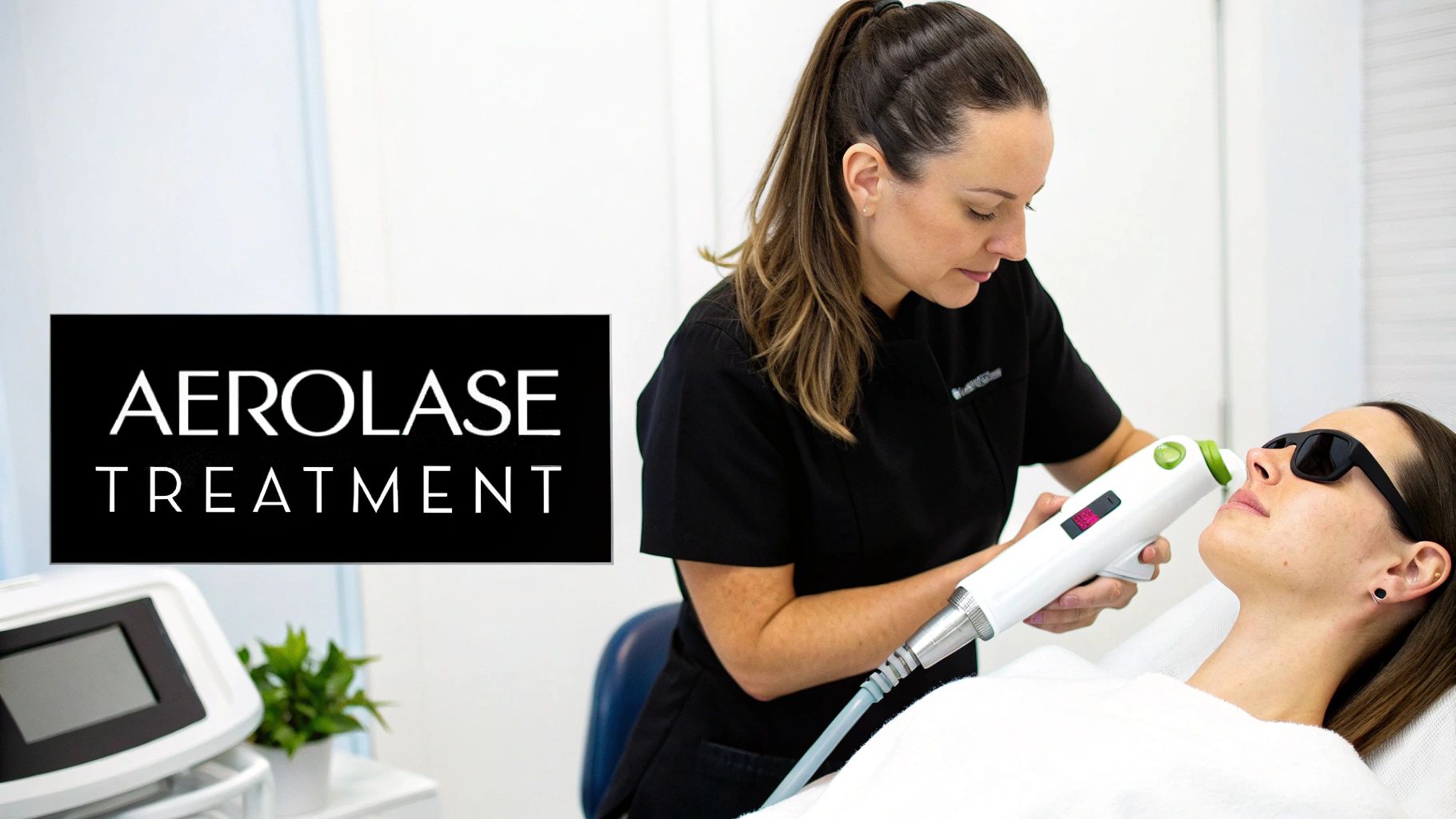
So, you've tried the creams, the prescriptions, and cleaned up your at-home routine, but the clear, calm skin you’re working so hard for still feels out of reach. When that happens, it’s time to look at advanced clinical solutions. For those of us battling persistent, deep, and inflamed hormonal breakouts, professional treatments can offer a massive leap forward, targeting the root causes of acne in a way topical products just can't.
Here at Skinsation Aesthetics in London, Ontario, we focus on sophisticated technologies that deliver powerful results without putting your busy life on hold. These treatments aren't just about clearing existing blemishes; they’re designed to fundamentally change how your skin behaves. By getting to the core issues of excess oil, inflammation, and bacteria, we can finally break the hormonal acne cycle and get you on the path to long-term clarity.
The Power of Aerolase: A Breakthrough Hormonal Breakout Treatment
One of the most effective tools in our arsenal is the Aerolase laser. This isn't just another facial laser; its unique technology makes it a true game-changer for stubborn hormonal acne, especially for clients who feel like they've tried everything else. What makes Aerolase so special is its 650-microsecond laser technology, which lets it deliver potent energy deep into the skin with incredible precision and comfort.
Think of it like this: some lasers can feel like a blunt instrument, delivering a lot of heat that can be uncomfortable and cause side effects. Aerolase, on the other hand, is a highly precise tool. Its ultra-fast pulse of light zips through the skin so quickly that the surface doesn't have time to overheat, making the whole experience remarkably gentle.
This targeted energy zeroes in on the three main culprits of hormonal acne:
Overactive Sebaceous Glands: The laser’s energy is absorbed by the water and hemoglobin around your oil glands, which gently heats them up. This calms them down and reduces sebum production. Less oil means fewer clogged pores.
Inflammation: It targets the tiny blood vessels that cause all that redness and swelling in acne lesions, immediately calming down that angry, inflamed look.
Bacteria: The powerful light energy destroys the C. acnes bacteria hiding in your pores, helping to clear up active breakouts and stop new ones from forming.
Because this process is so gentle yet effective, Aerolase is safe for all skin tones—a crucial detail that sets it apart from many other laser treatments available in Canada. Best of all, there’s virtually no downtime, so you can walk out of your session and get right back to your day.
Why Aerolase Excels for Hormonal Acne
Hormonal acne is notoriously deep and cystic, which makes it nearly impossible for topical creams to penetrate where they need to. Aerolase completely bypasses this problem by sending energy directly to the source of the issue in the dermis. It’s the ideal hormonal breakout treatment because it tackles the internal drivers without resorting to systemic medication.
In a bustling city like London, Ontario, where professionals and students are juggling packed schedules, hormonal acne has become a major concern, particularly for women over 20. At Skinsation Aesthetics London, we've seen first-hand how effective Aerolase laser technology is at targeting androgen-driven inflammation without the systemic side effects of medication. Its 650-microsecond pulse gets deep into the skin, gently reducing lesions and stimulating collagen—all while being safe for every skin tone. With no downtime, you can head right back to your routine glowing.
One of the key benefits our clients absolutely love is that Aerolase does double duty. While it’s actively treating your breakouts, it’s also stimulating collagen production. This means it doesn't just clear your skin—it also helps improve texture and reduce the appearance of old acne scars over time.
To get a full picture of how this amazing technology can help you, learn more about our Aerolase treatments at Skinsation Aesthetics.
Complementary Treatments for Enhanced Results
While Aerolase is fantastic on its own, we often see the best results when we create a personalized plan that includes other professional services. Combining treatments lets us attack hormonal breakouts from multiple angles, leading to faster, more comprehensive results.
One of the most effective partners for Aerolase is a chemical peel. Think of it as a professional-grade exfoliation that gives your skin a total reset. At Skinsation Aesthetics, we offer a range of peels tailored to your specific skin needs.
How Chemical Peels Boost Your Treatment:
Unclog Pores: Peels use acids like salicylic or glycolic acid to dissolve the gunk—dead skin cells and oil—that clogs pores. This clears the way for other treatments to penetrate more effectively.
Reduce Hyperpigmentation: They are brilliant at fading the dark marks (post-inflammatory hyperpigmentation) that breakouts often leave behind, helping you achieve a more even skin tone.
Improve Skin Texture: By encouraging cell turnover, peels help smooth the skin’s surface, softening any roughness and the look of shallow scarring.
When we use a chemical peel in tandem with Aerolase, we can clear up surface congestion, which allows the laser to work even more effectively on the deeper sources of oil and inflammation. This multi-faceted approach helps ensure your skin not only gets clear, but stays healthy, radiant, and clear for the long run. And for those looking to support their skin from the inside out, exploring hormone balance supplements for women can be a great way to complement these external treatments and achieve systemic equilibrium.
Your Path to Clearer Skin Starts Here
Trying to figure out hormonal breakouts on your own can feel like an uphill battle, but I promise you, the journey to clear, confident skin is absolutely within your reach. We’ve gone through everything from the internal triggers that cause all that inflammation to the powerful at-home routines and professional treatments that make a real, lasting difference. The main thing to remember is that hormonal acne isn’t just manageable—it’s beatable when you have a consistent, targeted strategy.
And you don't have to walk this path alone. For those of you in London and Southwestern Ontario, Skinsation Aesthetics has a specialized approach to treating hormonal breakouts. We combine our deep understanding of skin science with leading technology to deliver results that go way beyond just surface-level fixes.
Remember, achieving clear skin is about creating balance, not waging war on your face. A gentle, strategic approach will always yield better, more sustainable results than aggressive, irritating products.
Our go-to treatment, Aerolase, really stands out as a comfortable and incredibly effective solution. It safely gets to the root causes of hormonal acne—excess oil, inflammation, and bacteria—without any downtime, making it a perfect fit for even the busiest lifestyle.
As you get started, this practical guide on how to treat hormonal acne can offer even more great insights. When you’re ready to take that next step toward a solution designed just for you, we invite you to book a consultation with our expert team. Let’s create your personalized path to the radiant skin you absolutely deserve.
We Get These Questions A Lot
When you're trying to get a handle on hormonal breakouts, a lot of questions can pop up. From wondering how long it'll take to see a change to what a treatment actually feels like, getting clear answers is the first step to feeling confident about your skin journey. We've heard it all at our London, Ontario clinic, so we've put together some answers to the most common questions our clients ask.
Our goal is to give you the straightforward information you need to make smart decisions for your skin. Let’s get into it.
How Long Until I Actually See Results?
This is probably the number one question we get, and the honest answer is: it depends on your treatment plan. Patience is definitely part of the process.
At-Home Care: If you’re consistent with over-the-counter products like salicylic acid or a good retinoid, you'll likely start to notice a real difference in your skin's texture and how often you break out in about 8-12 weeks.
Prescription Medications: When you're using oral medications like spironolactone or specific birth control pills, you're playing a longer game. It can take 3-6 months to see significant changes as your body's hormones begin to balance out.
Clinical Treatments: This is where you can speed things up. With a treatment like Aerolase, many of our clients see a visible drop in redness and inflammation after just one or two sessions. For the best, clearest results, we usually recommend a series of 4-6 treatments.
Is The Aerolase Treatment Painful?
One of the best things about Aerolase is just how comfortable it is. It’s not like other lasers that can leave your skin feeling hot or zapped. Aerolase uses a special 650-microsecond pulse that sends energy deep into the skin to do its job, but it doesn't overheat the surface.
Most people just describe it as a gentle warming sensation on the skin. You don't need any numbing cream, and—this is a big one—there is absolutely no downtime. You can walk out of our London clinic and get right back to your day.
Can I Combine Clinical and Prescription Treatments?
Absolutely! In fact, we often find that a combined approach is the most powerful way to finally get rid of stubborn hormonal breakouts. Tackling the problem from a few different angles at once usually leads to better, more lasting results.
Think of it this way: Aerolase works directly on the deep-down inflammation and oil production in your skin, while a prescription medication you take works from the inside out to regulate the hormonal triggers. They complement each other perfectly.
Of course, this is something that has to be managed by a professional. When you come into Skinsation Aesthetics, we’ll do a complete review of your current skincare routine and any prescriptions you're on. This lets us build a safe and personalized treatment plan that fits seamlessly with what you're already doing, ensuring you get the absolute best outcome for your skin.
Ready to stop guessing and start seeing real, lasting results? The expert team at Skinsation Aesthetics is here to create a plan just for you, so you can finally get the clear, healthy skin you deserve.
Comments