

How to Maintain Healthy Skin A Practical Guide

When it comes to healthy skin, it really boils down to three core daily habits you can't skip: cleansing, moisturizing, and protecting. Once you get these fundamentals down, you’re building a strong skin barrier that can handle environmental stress, fight off premature aging, and create the perfect canvas for any other treatments you want to try. A simple, consistent routine is truly the secret.
Your Essential Skincare Foundation
Getting (and keeping) healthy skin isn’t about lining your bathroom counter with dozens of fancy products. It’s all about building a solid, dependable foundation through sheer consistency. Just think of it like any other aspect of your health—small, daily actions add up over time to give you real, lasting results. This is the simplest, most direct answer to how you can maintain healthy skin for the long haul.
This core philosophy is especially vital for us here in Canada, where our skin is constantly battling a climate of extremes. From the humid summers in London, Ontario, to the dry, biting cold of a prairie winter, our skin is always under attack. A consistent routine focused on these essentials protects your skin’s delicate microbiome—that's the ecosystem of tiny organisms that acts as its first line of defence.
The Three Pillars of Skin Health
A straightforward morning and evening routine is all you really need to get started. This isn't about making things complicated; it's about forming habits that nourish and protect your skin's barrier, day in and day out.
Cleanse: Gently washing away dirt, oil, and impurities without stripping your skin of its natural oils is job number one. Using a cleanser that's too harsh can mess with your skin's pH balance and weaken its protective barrier, which often leads to irritation and dryness.
Moisturize: Hydration is everything. A quality moisturizer helps replenish water loss and, just as importantly, locks that moisture in. This keeps your skin feeling plump, looking smooth, and staying resilient. Trust me, this step is crucial all year round, not just during our harsh Canadian winters.
Protect: Applying sunscreen every single day is the most effective thing you can do to prevent premature aging and lower your risk of skin cancer. UV damage happens even on cloudy days and in the dead of winter, making sunscreen an absolute non-negotiable in your morning routine.
This simple visual helps break down the core steps you need to maintain healthy skin every day.
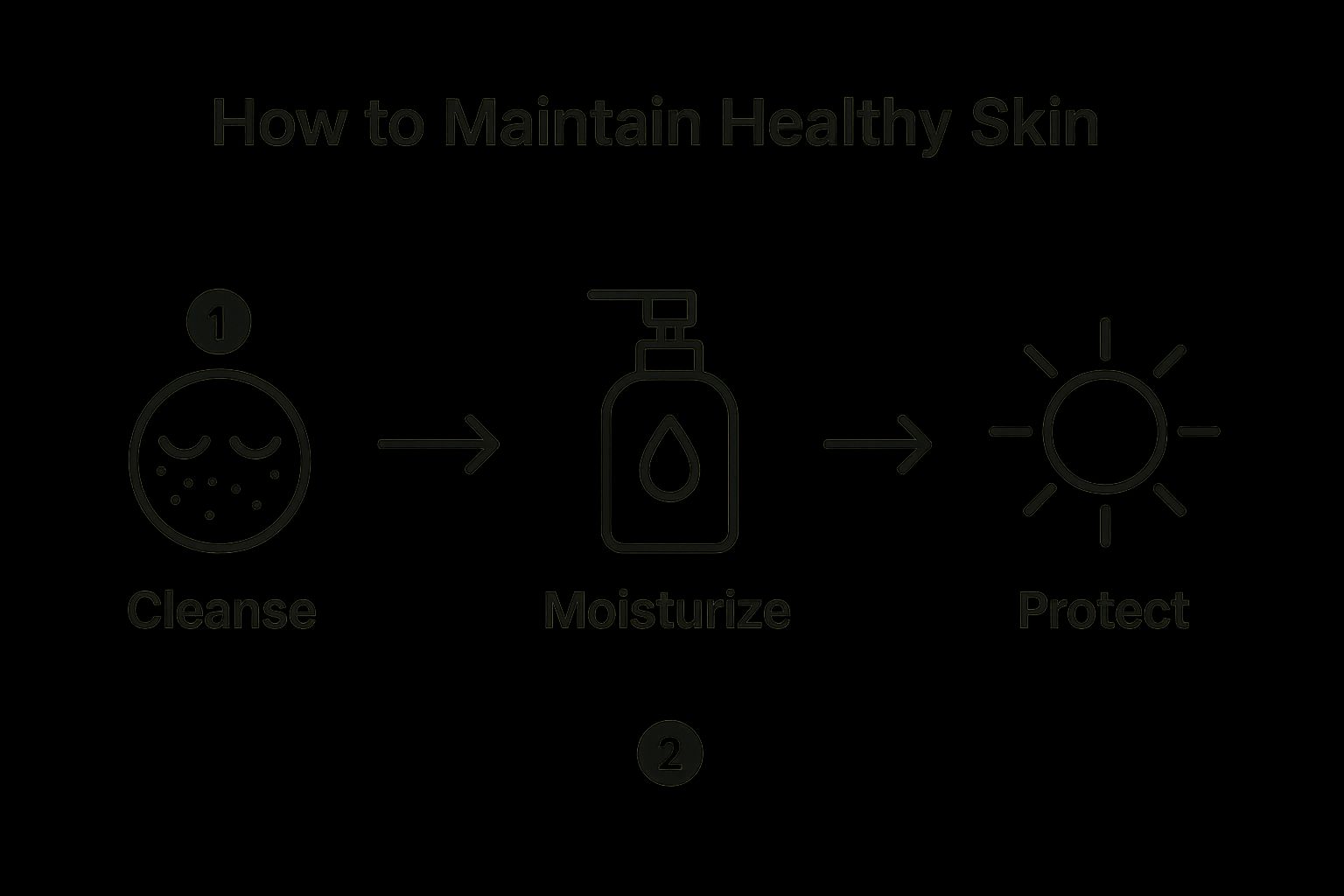
As you can see, a great skincare regimen is built on these three simple, repeatable actions.
Building Your Core Routine
Starting a routine shouldn't feel like a chore. The real goal is to create a habit that feels easy and sustainable. More often than not, a basic framework is what works best.
To give you a clearer picture, here’s a quick table outlining the absolute essentials for your morning and evening skincare.
Core Morning and Evening Skincare Routine
Time of Day | Essential Step | Core Purpose |
|---|---|---|
Morning (AM) | Cleanse | To remove sweat and oil built up overnight and prep skin for the day. |
Morning (AM) | Moisturize | To hydrate and protect the skin barrier against daily stressors. |
Morning (AM) | Protect (SPF) | To shield skin from UV damage, which is present year-round. |
Evening (PM) | Cleanse | To wash away makeup, sunscreen, dirt, and pollutants from the day. |
Evening (PM) | Moisturize | To replenish moisture and support the skin's natural repair process overnight. |
This table covers the bare minimum for keeping your skin balanced and healthy.
For a more in-depth look at how to layer these steps and any other products you might use, you can check out our complete [Canadian's guide to skincare routine order](https://www.skinsation.me/post/skincare-routine-order-a-canadian-s-guide-to-healthy-skin). It really dives into the specifics of getting the order right.
The best skincare routine is the one you’ll actually do. Being consistent with the basics will always beat using complex, expensive products every now and then. This foundational care is what creates the perfect canvas if you ever decide to add more advanced treatments down the road.
By mastering these fundamentals, you’re not just temporarily treating your skin; you're actively building its health from the ground up. This ensures it stays balanced, strong, and radiant through every single Canadian season.
Mastering the Art of Sun Protection

If you only pick up one single habit from everything we talk about, please make it this one. Protecting your skin from the sun every single day is, hands down, the best thing you can do to keep it looking healthy and youthful for years to come. This goes way beyond just slapping on some lotion to avoid a sunburn at the beach; it’s a daily promise you make to your skin's future.
So many of us in Canada fall into the trap of thinking sunscreen is just for sunny days at the cottage. But the reality is, UV damage is a real, year-round threat. It doesn't matter if you're in downtown London, Ontario, or out skiing in the Rockies—sun protection is a must if you're serious about your skin's health.
Why Sunscreen Is a Daily Essential
Let's get into the why. The sun sends out two main types of UV rays that mess with our skin: UVA and UVB. An easy way to remember them is UVB for "burning" and UVA for "aging." UVB rays are what cause that immediate, painful sunburn.
UVA rays are the sneaky ones. They go deeper into the skin, where they start breaking down the collagen and elastin that keep everything firm and smooth. This is a direct cause of fine lines, wrinkles, and sagging.
And here’s the kicker: UVA rays are out in full force during all daylight hours, all year long, and they can cut right through clouds and glass. That means you’re getting exposure while driving, sitting by a window at your desk, or just walking to the store on a grey November afternoon. All that little, incidental exposure really adds up over time and is a huge reason for premature aging.
Even in a Canadian winter, you're not off the hook. Fresh snow can reflect up to 80% of the sun's UV rays, which basically doubles your exposure. This makes daily sunscreen just as critical in January as it is in July.
Decoding SPF and Sunscreen Types
Walking down the sunscreen aisle can feel like a pop quiz you didn't study for, but it's really not that complicated once you know what to look for.
SPF (Sun Protection Factor): This number mostly tells you how well it protects against UVB (burning) rays. An SPF 30 blocks about 97% of UVB, while an SPF 50 blocks about 98%. For everyday use, Health Canada recommends a minimum of SPF 30.
Broad-Spectrum Protection: This is non-negotiable. If you see "broad-spectrum" on the label, it means the sunscreen protects you from both UVA (aging) and UVB (burning) rays. You need both.
Mineral vs. Chemical Formulas: These are the two main types, and they work differently. Mineral sunscreens (with zinc oxide or titanium dioxide) create a physical barrier on your skin. Chemical sunscreens absorb UV light and turn it into heat that's then released from your skin.
Honestly, one isn't "better" than the other; it really comes down to what you like. Mineral options are fantastic for sensitive or acne-prone skin, while chemical formulas often feel lighter and disappear into the skin more easily.
Pro Tip: The best sunscreen is the one you’ll actually use every day. Don't be afraid to try a few different kinds—lotions, gels, sticks—to find a texture you love. When it feels good, it's easy to make it a seamless part of your morning.
Correct Application for Real Protection
Even the priciest sunscreen is useless if you don't apply it the right way. And I can tell you from experience, most people don't use nearly enough, which drastically lowers the protection they're getting.
For your face and neck, a good rule of thumb is the "two-finger" method—squeeze a line of sunscreen onto your index and middle fingers. That’s about how much you need. For your body, aim for about a shot glass worth of lotion to cover all exposed skin.
And don't forget to reapply! You need to reapply every two hours, and even more often if you’ve been swimming or sweating a lot.
This daily commitment is your best defence against a lot more than just wrinkles. Consistent sun protection is crucial for preventing skin cancer. In Canada, nonmelanoma skin cancers like basal cell and squamous cell carcinoma are incredibly common and are directly linked to UV damage built up over a lifetime. This just highlights how important diligent, year-round sun safety is. If you'd like to learn more, you can discover more insights on the global impact of nonmelanoma skin cancers at CaliforniaSkinInstitute.com.
Personalizing Your Routine With Active Ingredients

Once you’ve nailed the fundamentals—cleansing, moisturizing, and sun protection—you can start targeting your specific skin goals. This is where active ingredients, the real powerhouses of skincare, make their entrance. These are the workhorse components in your serums and treatments that create visible change, tackling everything from dullness and fine lines to stubborn breakouts.
Moving beyond a basic routine isn’t about piling on every popular ingredient you see online. It's about being strategic and listening to what your skin actually needs. The idea is to handpick ingredients that will deliver real, noticeable results without causing irritation or undoing all your hard work.
Choosing Actives for Your Skin Goals
First things first, you need to identify what you want to work on. Are you noticing a lack of glow, the first hints of crow's feet, or some lingering discolouration from old breakouts? Pinpointing your main concerns is what will lead you to the right active ingredients.
Let's take a real-world example. Imagine a professional in her 30s living in London, Ontario. She's worried about how city pollution and long days are affecting her skin, and she's starting to see a few fine lines. For her, a Vitamin C serum in the morning is a brilliant move. It's a powerful antioxidant that helps protect her skin from daily environmental stress while brightening her overall complexion over time.
Then, in her evening routine, she could bring in a gentle retinoid. Retinoids are legendary for their ability to accelerate cell turnover. This helps smooth out skin texture, soften the look of fine lines, and keep pores clear. It's a fantastic one-two punch for keeping skin healthy and radiant.
Key Active Ingredients to Know
The world of active ingredients can feel like a lot to take in, but a few key players are popular for very good reasons. Getting to know what they do is the secret to building a routine that helps your skin look and feel its absolute best.
Hyaluronic Acid (HA): Your body already makes this, but adding it topically gives your skin a huge drink of water. It's a humectant, which means it pulls moisture into the skin, leaving it looking plump and dewy. It’s super gentle and plays nicely with nearly every other ingredient.
Exfoliating Acids (AHAs & BHAs): These chemical exfoliants work by dissolving the "glue" that holds dead skin cells together. Alpha-hydroxy acids (AHAs), like glycolic and lactic acid, are great for tackling surface issues like dullness and uneven texture. Beta-hydroxy acid (BHA)—which is mostly salicylic acid—is oil-soluble, so it can get deep into your pores to clear out gunk, making it a hero for acne-prone skin.
Niacinamide (Vitamin B3): This one is a true multitasker. It helps manage oil production, makes pores look smaller, calms redness, and strengthens your skin barrier. It's an incredibly versatile ingredient that slots easily into almost any routine.
When you're bringing in any new active, the golden rule is to start low and go slow. Always begin with a lower concentration and only use it two or three times a week. This gives your skin a chance to get used to it and seriously lowers your risk of irritation.
How to Safely Introduce Actives
The real key to adding active ingredients successfully is patience. Your skin needs time to adjust, and throwing too much at it too soon is a fast track to redness, dryness, and a compromised skin barrier.
Here's a simple, safe way to add a new active serum to your routine:
Always Patch Test First: Before you slather a new product all over your face, test it on a small, hidden patch of skin (like behind your ear) for a couple of days to make sure you don't have a bad reaction.
Introduce One Product at a Time: Never start two new actives at the same time. If you get irritated, you won’t know which product is the problem. Give your skin at least two to three weeks with one new active before you even think about adding another.
Know Your Pairings: Some ingredients just don't get along. For instance, you generally don't want to use strong exfoliants like AHAs or BHAs in the exact same routine as a retinoid, especially when you're new to them. This can lead to over-exfoliation and major sensitivity. A simple way to manage this is to use certain actives in the morning (like Vitamin C) and others at night (like retinoids).
By carefully personalizing your routine with the right active ingredients, you can effectively work on your specific concerns and take your skin's health to the next level. This smart, strategic approach is how you get the glowing results you're after without damaging the healthy foundation you've built.
Amplifying Results With Professional Treatments
While a solid daily routine is the foundation for healthy skin, there are times when you need to bring in the experts. Professional treatments can deliver incredible results that you simply can't get from at-home products alone. Think of it as a strategic boost—a way to fast-track your progress and tackle stubborn concerns with real power.
Here at Skinsation Aesthetics in London, Ontario, we see professional care as the next step in your skincare journey. It’s where science and specialized skill meet to take your results to a whole new level, helping you break through plateaus and reach your biggest skin goals.
Beyond The Bathroom Counter
Your at-home skincare is absolutely essential for daily upkeep, but professional treatments work on a much deeper, more impactful level. They use advanced technology and potent formulas that need the steady hand of a trained aesthetician to be used safely and effectively. This is how we can finally address those persistent issues that just don't seem to budge with serums and creams.
For instance, concerns like deep-set texture, significant sun damage, or lingering acne scarring often need a more powerful game plan. Professional treatments are specifically designed to trigger your skin's own repair mechanisms, creating visible change from the inside out.
Targeted Treatments For Real Change
Let’s talk about a couple of highly effective services we offer at Skinsation Aesthetics that really show what professional care can do. These are designed to target common skin concerns with focused, proven methods.
Microneedling For Firmer, Smoother Skin
Microneedling is a fantastic treatment for improving skin texture, minimizing the look of scars, and boosting your skin's overall firmness. It works through a process known as collagen induction therapy. Using a specialized device, we create tiny, controlled micro-channels in the skin.
It might sound a bit intense, but it’s a brilliant way to kickstart your skin's natural healing process. Your body responds by rushing collagen and elastin—the very proteins that give skin its youthful firmness and bounce—to the area. The result over time is smoother, plumper, and more refined skin.
Microneedling is an ideal choice for someone looking to address:
Fine lines and wrinkles
Acne scars or surgical scars
Enlarged pores
Uneven skin texture
Microneedling taps into your body’s own restorative power. It’s not about adding something foreign; it’s about reminding your skin how to heal and rebuild itself more efficiently.
Chemical Peels For Clarity And Radiance
If you’re struggling with issues on the skin’s surface, like stubborn pigmentation, sun spots, or breakouts that just won't quit, a Chemical Peel can be a total game-changer. This treatment involves applying a specialized acid solution to the skin, which works to gently dissolve the dull, outermost layers of dead skin cells.
This exfoliation process uncovers the fresher, healthier, and more evenly toned skin hiding underneath. At Skinsation Aesthetics, every peel is carefully chosen based on your specific skin type and concerns, guaranteeing a safe and effective result. They're perfect for anyone who feels like their complexion needs a total reset. If you want to explore more ways to refresh your look, you can learn about the [top skin rejuvenation treatments in Canada for 2025](https://www.skinsation.me/post/top-skin-rejuvenation-treatments-in-canada-for-2025) in our detailed guide.
Bringing professional treatments into your long-term skincare plan is a smart move. It's the best way to amplify and speed up the results from your daily efforts, ensuring your skin stays healthy, resilient, and glowing for years to come.
The Connection Between Lifestyle and Radiant Skin
Truly healthy skin is a reflection of your overall well-being. While cleansers, serums, and professional treatments are fantastic, what you do every day—how you eat, sleep, and manage stress—has a massive impact on your complexion. This is how you build that incredible glow from the inside out.
Think of it this way: your lifestyle choices and your skincare routine are two sides of the same coin. When they work together, you create the perfect environment for your skin to thrive, making it more resilient, clear, and luminous. It's a holistic approach that recognizes your skin is an organ connected to every other system in your body.
Nourishing Your Skin From Within
What you eat directly fuels your skin's ability to repair itself and fight off damage. I like to think of certain foods as internal skincare. The good news is that for us here in Canada, many powerful, skin-loving foods are easy to find and add to our diets.
A diet packed with antioxidants is your skin's best friend for battling inflammation—a root cause of so many issues, from acne to premature aging.
Antioxidant-Rich Foods: Look for Canadian-accessible options like wild blueberries, dark leafy greens (kale and spinach are my go-to's), and colourful vegetables. These powerhouses help protect your skin cells from free radical damage caused by things like pollution and UV exposure.
Healthy Fats: Foods high in omega-3 fatty acids are non-negotiable for keeping your skin supple and hydrated. Think salmon, mackerel, and walnuts. They help strengthen your skin's natural lipid barrier, which is key for locking in moisture and keeping irritants out.
The Critical Role of Hydration
Staying hydrated is so much more than just quenching your thirst; it's absolutely fundamental to your skin's health. When your body is dehydrated, your skin is one of the first places it shows. You'll notice it looking dull, feeling tight, and fine lines will suddenly seem more obvious.
Drinking enough water helps your body flush out toxins and supports optimal cell function. This internal hydration keeps your skin looking plump and elastic. My advice? Aim for consistent sips all day rather than chugging a huge bottle all at once.
Your skin is often the last organ to receive the water you drink. This means consistent, daily hydration is crucial for it to get the moisture it needs to stay plump, clear, and healthy.
How Stress and Sleep Affect Your Complexion
The link between your mind and your skin is undeniable. When you’re stressed out, your body pumps out more cortisol. This hormone can trigger inflammation and send your oil glands into overdrive—which is exactly why you might notice more breakouts during a tough week. Those same hormonal shifts can also make conditions like eczema and rosacea flare up. If you struggle with breakouts tied to these fluctuations, our guide on [understanding and treating hormonal acne](https://www.skinsation.me/post/what-is-hormonal-acne-causes-treatments-for-clear-skin) offers some really valuable insights.
Just as important is getting enough quality sleep. While you're resting, your skin is busy with its own repair cycle. It's rebuilding collagen, healing damage from the day, and boosting blood flow to the surface. Skimping on sleep totally short-circuits this essential process, leaving you with a dull, tired-looking complexion and those dreaded puffy eyes. Aiming for 7-9 hours of quality sleep a night is honestly one of the best things you can do for your skin.
Lifestyle choices go beyond just diet and sleep; they also include proactive health measures. With skin cancer rates on the rise in Canada, preventative strategies are more important than ever. For example, melanoma incidence rates in Canada have increased significantly over the last few decades, particularly among older adults. The crucial part is that when it's caught early, melanoma is almost 100% curable. This really highlights why proactive skin health—daily sunscreen, protective clothing, and regular skin checks—is so vital for reducing risk. You can [learn more about these critical skin cancer trends on SkinHappyMD.com](https://skinhappymd.com/blogs/skinhappy-cares-blog/skin-cancer-is-surging-in-2025).
Your Top Skincare Questions, Answered
Navigating the world of skincare can feel like there's always something new to learn. As you work towards your best skin ever, questions are bound to come up. We hear them all the time! Here are some of the most common ones we get, with clear, expert-backed answers to guide you with confidence.
How Often Should I Get a Professional Treatment?
This really comes down to your personal skin goals and the specific service you're looking at. For general maintenance and keeping that healthy glow, a professional facial every four to six weeks is a fantastic rhythm to get into. This schedule works in harmony with your skin's natural cell renewal cycle, which is roughly 28 days.
But when we're talking about treatments to correct a specific concern, the timing shifts.
For Microneedling: To really make a difference on issues like acne scarring or fine lines, we usually suggest a series of three to six sessions here at Skinsation Aesthetics. We space these about four weeks apart, giving your skin the perfect amount of time to heal and kickstart new collagen production between appointments.
For Chemical Peels: The frequency totally depends on the peel's strength and what your skin needs. A lighter, more superficial peel might be great once a month, whereas a deeper peel is a less frequent treatment, maybe only a couple of times a year.
Your best bet is always to start with a personalized consultation. It lets a professional really see your skin, hear your goals, and map out a treatment plan that makes sense for you and your lifestyle.
Do I Really Need Sunscreen During a Canadian Winter?
Yes, one hundred percent. This is probably the biggest and most critical skincare myth we have to bust for Canadians. While the sun’s UVB rays (the ones that give you a sunburn) are weaker in the winter, the UVA rays are a different story. These are the rays responsible for premature aging and DNA damage, and they are surprisingly strong all year long.
UVA rays slice right through clouds and glass, so you're getting hit with them on grey, overcast days and even while you're just driving your car. What makes it even more intense is the snow. Snow acts like a giant mirror, reflecting up to 80% of UV radiation right back at your face. This means you're basically getting a double dose of exposure when you're outside.
This is exactly why a broad-spectrum sunscreen with an SPF of 30 or higher is non-negotiable, 365 days a year. It is the single most important thing you can do to protect your skin's health for the long haul.
What Is the Right Age to Start Using Anti-Aging Products?
Honestly, it’s much more useful to think about "prevention" than "anti-aging." The absolute best preventative product is sunscreen, and that's a habit that should start as early in life as possible.
When it comes to adding in those "active" ingredients often labelled as anti-aging, there’s no magic birthday.
The right time to start is based on what your skin is telling you, not the year you were born. Put prevention first, and then layer in targeted treatments as specific concerns pop up.
A great time to start thinking about products with antioxidants like Vitamin C or a gentle retinoid is often in your mid-to-late 20s. This is when your body's natural production of collagen and elastin starts to tap the brakes. Introducing these ingredients can help support your skin's underlying structure and hold off those first signs of aging. But don't ever think it's too late—giving your skin what it needs is always a good idea.
Can My Diet Actually Cause Acne Breakouts?
For many people, the link between diet and skin is very real. While what you eat isn't the only cause of acne, a growing body of research shows that certain foods can definitely trigger or worsen breakouts if you're already prone to them. The usual suspects are high-glycemic foods and, for some people, dairy.
High-glycemic foods—think sugar, white bread, and other refined carbs—make your blood sugar spike. This can set off a hormonal chain reaction that ramps up inflammation and oil production, which are two of the main drivers behind acne. In a similar way, some studies have found a connection between drinking milk and acne flare-ups.
On the flip side, eating a diet packed with anti-inflammatory foods can do wonders for your skin. Loading your plate with colourful vegetables, fruits, and foods rich in omega-3 fatty acids (like salmon and walnuts) can help calm inflammation from the inside out, supporting clearer, healthier skin.
At Skinsation Aesthetics, our mission is to give you the knowledge and treatments you need to feel amazing in your skin. If you’re ready to take the next step on your skincare journey, we’d love to help. Book your appointment online today and let's create your personalized path to radiant, healthy skin.
Comments