

Hyperpigmentation Treatment for Dark Skin A Definitive Guide

When you're dealing with hyperpigmentation on darker skin, you need a smart, specialized game plan. It’s not about just blasting the pigment away. The best treatments, like Aerolase laser therapy and DP4 Microneedling, are designed to zero in on that excess pigment without kicking off more inflammation—a major risk with generic, one-size-fits-all procedures. A successful strategy always marries professional, in-clinic treatments with a solid, supportive at-home skincare routine.
Why Hyperpigmentation Needs a Special Approach for Dark Skin

If you have melanin-rich skin, you’ve probably noticed that dark spots from old breakouts, sun exposure, or hormonal changes seem to stick around forever. It's not just in your head. Hyperpigmentation in darker skin tones (classified as Fitzpatrick types IV, V, and VI) simply behaves differently. This is because the cells that produce melanin, called melanocytes, are far more reactive.
Think of these melanocytes as an over-eager security system. When they sense a threat—like inflammation from acne, UV rays, or even a tiny scratch—they go into overdrive, pumping out extra melanin to protect the skin. This defensive reaction is what leaves behind those stubborn dark spots and patches that linger long after the initial problem is gone. An aggressive approach often backfires because it fails to account for this heightened sensitivity, sometimes even making the discolouration worse.
Understanding the Common Types of Hyperpigmentation
Knowing exactly what kind of discolouration you’re dealing with is the first step toward getting the right help. There are many variations, but a few types are especially common in darker skin. For a deeper dive, this guide to understanding hyperpigmentation is a great resource.
To help you identify what you might be seeing, we've put together a quick summary of the usual suspects.
Common Types of Hyperpigmentation in Dark Skin
Type of Hyperpigmentation | Primary Cause | Common Appearance |
|---|---|---|
Post-Inflammatory (PIH) | Inflammation from acne, bug bites, scratches, or harsh products. | Flat, dark brown, or purplish spots where the skin was injured. |
Melasma | Hormonal shifts (pregnancy, birth control) and sun exposure. | Symmetrical, blotchy brown or grey-brown patches on the face. |
Sunspots (Solar Lentigines) | Long-term, cumulative sun exposure over the years. | Dark, distinct spots on areas frequently exposed to the sun. |
Each of these types responds best to a slightly different treatment strategy, which is why a proper consultation is so important.
"In darker skin tones, the primary concern is not just removing the pigment but doing so without causing new inflammation. The wrong treatment can easily trigger a cycle of post-inflammatory hyperpigmentation, making the initial problem worse."
The Need for Specialized Care
Because those melanocytes in darker skin are so quick to react, aggressive treatments can easily backfire, leading to even more significant and stubborn discolouration. This is why a careful, tailored strategy isn't just a nice-to-have; it's essential. Getting specialized care from a clinic like Skinsation Aesthetics, one that truly understands the nuances of melanin-rich skin, is critical for achieving clear, even-toned results without the setbacks.
Here in London, Ontario, our approach puts safety and effectiveness first. We use advanced technologies that are proven to work gently yet powerfully. Of course, knowing the root causes is just as important, and you can learn more in our detailed guide on what causes dark spots on the face in Canada. By choosing the right hyperpigmentation treatment for dark skin from the very start, you can avoid frustrating complications and finally achieve the radiant complexion you deserve.
Of all the things my clients with melanin-rich skin tell me, their journey with hyperpigmentation is often the most frustrating. It can feel like a high-stakes guessing game where the wrong move doesn't just mean you're back at square one—it can actually make things much, much worse. This is all down to the unique and highly reactive way darker skin responds to inflammation.
Aggressive treatments, like harsh chemical peels or lasers set to the wrong parameters, might seem like a fast track to clear skin. For darker skin tones, however, they're often a one-way ticket to more trouble. This kind of trauma sounds the alarm for your melanocytes (the little cells that make pigment), causing them to go into overdrive as a defence mechanism. The result is a rebound effect called post-inflammatory hyperpigmentation (PIH), which can leave you with spots that are darker and more stubborn than what you started with.
Why a "One-Size-Fits-All" Approach Fails Dark Skin
I like to think of melanocytes in darker skin as an incredibly sensitive smoke detector. In lighter skin, you might need a lot of smoke to set it off. But in melanin-rich skin, even a tiny bit of irritation from a harsh product or an incorrect procedure can trigger the alarm, flooding the area with excess pigment.
This is exactly why treatments that work beautifully for Fitzpatrick skin types I-III can be a disaster for types IV-VI. A laser calibrated for fair skin can easily lead to burns, blisters, or lasting discolouration on darker skin. In the same way, a deep chemical peel that doesn't respect the sensitivity of your melanocytes is a direct invitation for more hyperpigmentation to show up.
The golden rule for treating hyperpigmentation in dark skin is simple: work with its natural tendencies, not against them. The goal is to calm inflammation and gently persuade the pigment to correct itself, steering clear of anything that could provoke that defensive, pigment-producing response.
The Problem with Generic Products and Untrained Providers
This risk isn't just limited to professional procedures. So many over-the-counter products promise the world, but they often contain ingredients at concentrations that are just too irritating for reactive skin. They might promise rapid fading, but what they can actually do is fuel the inflammatory cycle that leads right back to more PIH.
Navigating this takes a real understanding of skin science and the technology we use. This is why getting professional guidance isn't just a good idea—it's essential. Choosing the right provider is everything. An experienced aesthetician knows how to choose and calibrate treatments that specifically target the excess melanin without disturbing the healthy skin around it.
For example, here at Skinsation Aesthetics in London, Ontario, we make it our priority to use technologies proven to be safe and effective for every single skin tone. Treatments like the Aerolase laser and DP4 Microneedling are designed to give you targeted results with minimal inflammation, respecting the delicate balance of melanin-rich skin. Without this expertise, you risk getting stuck in a frustrating loop of treating one spot only to create another. A carefully guided hyperpigmentation treatment plan ensures you finally break that cycle, for good.
Building Your At-Home Regimen with Safe Topical Ingredients

While our in-clinic procedures deliver incredible results, the real foundation for tackling hyperpigmentation in darker skin is what you do every single day at home. A consistent, strategic home care routine is your secret weapon. It works around the clock to support professional treatments, stop new spots from forming, and lock in that clear, even complexion you’ve worked so hard for.
Think of it this way: your clinical treatments are the main event, but your at-home care is the daily training that gets your skin ready. Using the right professional-grade ingredients keeps your skin in peak condition, making procedures like our Aerolase laser or DP4 Microneedling services that much more effective.
Slowing Down Melanin Production with Tyrosinase Inhibitors
To get a handle on hyperpigmentation, we have to go straight to the source. That’s where tyrosinase inhibitors come in. Tyrosinase is the key enzyme that kicks off melanin production, and these ingredients essentially tell it to slow down, preventing the overproduction of pigment before it even starts.
For melanin-rich skin, the trick is to choose inhibitors that are powerful but also gentle. The last thing we want is irritation, which can just trigger more hyperpigmentation.
Here are some of the most reliable and safest options we trust:
Azelaic Acid: This is a standout ingredient. It’s uniquely brilliant because it only targets the overactive melanocytes causing the discolouration, leaving your natural skin tone alone. It’s also a great anti-inflammatory, making it perfect for post-acne marks.
Kojic Acid: Derived from fungi, kojic acid is a well-researched inhibitor that helps to brighten the overall complexion and fade existing dark spots.
Tranexamic Acid: This one is a powerhouse for stubborn pigmentation like melasma. It works by calming the skin and interrupting the specific pathways that lead to those persistent dark patches.
If you’re looking for more ways to structure your routine, the ultimate guide to Korean skincare for hyperpigmentation has some fantastic, insightful strategies.
Boosting Cell Turnover for a Brighter Complexion
Besides putting the brakes on new pigment, we also need to clear out the existing discolouration. We do this by gently speeding up your skin's natural renewal process, known as cell turnover. As fresh, healthy skin cells rise to the surface, the older, pigmented cells are shed, revealing a brighter, more even-toned complexion underneath.
A huge mistake we see is people reaching for harsh physical scrubs or overly aggressive acids. This can easily irritate darker skin tones and actually make hyperpigmentation worse. The goal is to encourage exfoliation, not force it.
Gentle but effective is the name of the game. We recommend incorporating one of these into your routine:
Retinoids: These vitamin A derivatives are the gold standard for accelerating cell turnover, with decades of clinical proof behind them. A professionally recommended retinoid can make a massive difference in your skin's texture and tone.
Mandelic Acid: This is an alpha-hydroxy acid (AHA) with a larger molecule size, which means it penetrates the skin more slowly and gently. This makes it far less likely to cause irritation, providing the perfect level of exfoliation for sensitive, melanin-rich skin.
The Non-Negotiable Pillar of Your Routine: Sunscreen
Ask any skincare professional, and they’ll tell you the same thing: no treatment on earth will work if you aren't protecting your skin from the sun. UV radiation is the number one trigger for melanin production. A single day of unprotected sun exposure can undo months of progress.
For darker skin, this step is absolutely non-negotiable.
A broad-spectrum sunscreen of at least SPF 30 must be applied every single day—rain or shine. It’s your first line of defence, preventing new spots from ever forming and stopping existing ones from getting any darker. In Canada, where UV levels can be surprisingly high even on cloudy days, this is a cornerstone of any effective skincare plan.
At Skinsation Aesthetics, we make this a cornerstone of the luxury boutique experience we provide here in London, Ontario. To find the perfect sunscreen for your routine, you can explore our advice on achieving optimal sun protection with SPF 30 cream. Building your at-home regimen around these key pillars creates the perfect environment for your skin to heal, brighten, and truly thrive.
Advanced In-Clinic Treatments Safe for Dark Skin
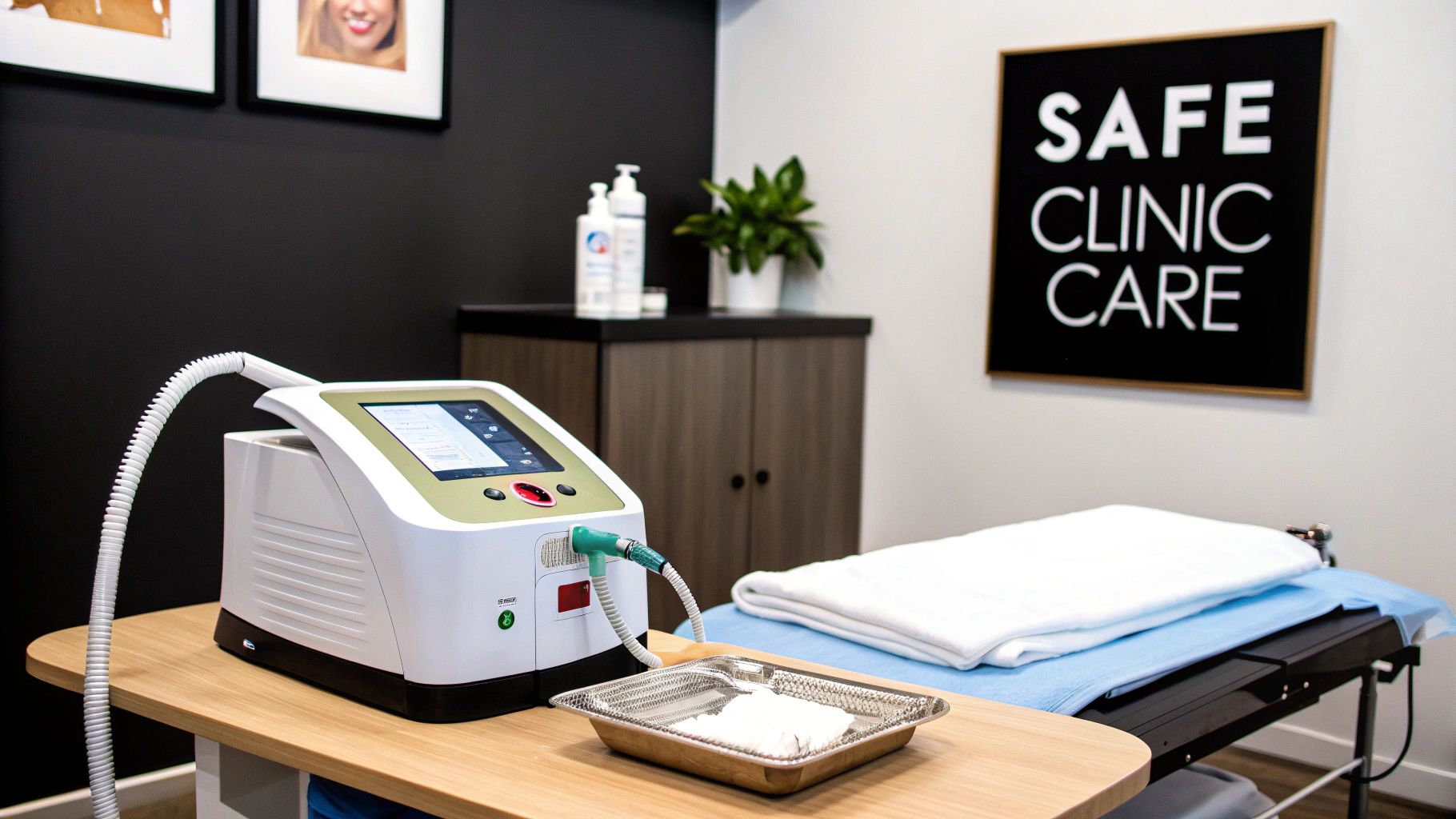
Sometimes, even the most diligent at-home skincare routine needs a helping hand to tackle deep or stubborn pigmentation. This is where advanced clinical procedures come in, offering a powerful path to clarity. At Skinsation Aesthetics, we’ve carefully selected state-of-the-art options specifically for their exceptional safety and effectiveness on melanin-rich skin. It's not about using aggressive force; it's about using intelligent technology to get incredible results without provoking more inflammation.
For anyone in London, Ontario, searching for a reliable hyperpigmentation treatment for dark skin, our clinic provides a curated menu of procedures. We move beyond one-size-fits-all solutions to deliver personalised care that targets pigment with precision, helping restore your skin's natural, even tone.
Medical-Grade Chemical Peels
The words "chemical peel" can sound a bit scary, especially for darker skin tones that are prone to post-inflammatory hyperpigmentation. But let me assure you, today's medical-grade peels are a world away from the harsh formulas of the past. Instead of causing trauma, they use gentle yet effective acids to carefully lift away pigmented cells and encourage fresh, new skin to come to the surface.
We specifically choose acids with a proven safety record for Fitzpatrick types IV-VI:
Mandelic Acid: Because of its larger molecular structure, mandelic acid sinks into the skin more slowly and evenly. This controlled action provides great surface exfoliation to fade dark spots without the usual risk of irritation.
Lactic Acid: Another gentle AHA, lactic acid not only helps to break up pigment but also hydrates the skin. This supports a healthy barrier, which is absolutely crucial during any series of treatments.
These peels work by speeding up cell turnover, helping your skin shed the discoloured surface layers to reveal the brighter, healthier skin waiting just beneath.
Aerolase Neo Elite: The Gold Standard Laser
For many people with darker skin, laser therapy has been a source of anxiety due to the real risk of burns or worsening pigmentation. The Aerolase Neo Elite laser completely changes that narrative. This device is a major leap forward, providing a truly safe and effective hyperpigmentation treatment for all skin tones.
Its groundbreaking 650-microsecond technology is the secret. The laser delivers energy in extremely short pulses—so fast that it zaps the unwanted melanin without giving heat a chance to build up and spread to the surrounding tissue.
Think of it like quickly touching a hot pan. If you touch it for a fraction of a second, you pull away without getting burned. Aerolase works on a similar principle, delivering its therapeutic energy so rapidly that the skin's natural cooling time prevents thermal damage. This makes it one of the safest and most comfortable laser options out there, effectively breaking down pigment without triggering an inflammatory response.
DP4 Microneedling: A Heat-Free Alternative
For those who are concerned about using any level of heat on their skin, DP4 Microneedling offers a brilliant, heat-free mechanical solution. This advanced device creates controlled, microscopic channels in the skin, which achieves two critical goals for treating hyperpigmentation.
First, the process physically helps to break up the clusters of melanin that form dark spots. Second, it kicks the skin’s natural healing cascade into high gear, stimulating the production of fresh, healthy collagen and elastin. As the skin repairs itself, the old, pigmented cells are gradually replaced with new, evenly-toned tissue. Because it doesn't rely on heat, DP4 Microneedling is an exceptionally safe and effective way to address post-inflammatory hyperpigmentation (PIH) and improve overall skin texture.
Comparing Advanced Treatments at Skinsation Aesthetics
To help you understand how these powerful treatments fit into a comprehensive plan, we've broken down their key features. Each modality has a unique strength, and often, the best results come from a strategic combination tailored just for you.
Treatment | Best For | How It Works | Safety Profile for Dark Skin |
|---|---|---|---|
Medical-Grade Peels | Superficial pigmentation, uneven tone, improving skin texture. | Uses gentle acids (Mandelic, Lactic) to exfoliate the top layer of skin, lifting away discoloured cells and speeding up cell turnover. | Excellent. Slow-penetrating acids minimise the risk of irritation and post-inflammatory hyperpigmentation. |
Aerolase Neo Elite | Stubborn or deep pigmentation (PIH, sun spots), melasma, active acne. | A unique 650-microsecond laser pulse selectively targets and destroys pigment without allowing heat to damage surrounding skin. | The Gold Standard. Considered one of the safest lasers for all skin tones, as its speed prevents the thermal damage that causes PIH. |
DP4 Microneedling | Post-inflammatory hyperpigmentation (PIH), textural issues like acne scarring. | Creates micro-channels to mechanically break up pigment and stimulate the skin's natural healing response, replacing old cells with new ones. | Excellent. A heat-free method that relies on mechanical renewal, making it a very safe option for reactive, melanin-rich skin. |
By offering these specialised treatments, we provide our clients in London, Ontario, with a reliable and results-driven path to clearer, healthier skin. Our approach is built on understanding and respecting the unique biology of your skin.
"The cornerstone of treating darker skin is precision. Whether it's with the rapid pulse of an Aerolase laser or the controlled depth of DP4 Microneedling, the goal is always to target the problem without creating another one. It's about respecting the skin's biology."
What to Expect: Your Treatment Journey from Start to Finish
Deciding to professionally treat hyperpigmentation is a big step, and knowing what the process looks like from beginning to end is key to feeling confident. At Skinsation Aesthetics, we’ve mapped out a clear, supportive, and safe path for our clients. Think of it as a partnership, built on our expertise and your unique skin needs.
The entire process is designed to move at your skin’s pace, ensuring we never push it beyond its limits. Treating hyperpigmentation is a marathon, not a sprint, and our careful approach is designed for lasting success.
Your Initial Consultation and Skin Analysis
Your path to clearer skin starts with a thorough consultation at our London, Ontario clinic. This isn't just a quick chat; it's a deep dive into your skin's history, what's bothering you, and what you hope to achieve. We’ll perform a complete skin analysis to correctly identify the type and depth of your hyperpigmentation.
This first meeting is also where we do a critical patch test. This is a non-negotiable safety step for our clients with melanin-rich skin. We test a small, hidden area of your skin with the proposed technology, like a laser, to see how it reacts. Research shows that doing test spots before full laser treatments can significantly reduce potential complications in darker skin tones. You can read more about the research behind this safety protocol, which is a cornerstone of our care.
Pre-Treatment Prep
Once we’ve locked in the perfect treatment plan for you, the next step is getting your skin ready. Think of it like priming a canvas before painting—a well-prepped surface guarantees a better result. This pre-treatment conditioning is all about minimising inflammation and setting you up for success.
We’ll usually recommend a specific at-home routine for a few weeks leading up to your first session. This typically includes:
Tyrosinase Inhibitors: Using products with ingredients like azelaic or tranexamic acid to help calm down your pigment-producing cells.
Gentle Exfoliants: Adding mild exfoliants to make sure the skin's surface is smooth and ready for treatment.
Strict Sun Protection: Applying a broad-spectrum SPF 30+ every single day, without fail, to prevent any new sun-induced spots.
This prep work gets your skin into an ideal state, which leads to a safer and more effective procedure in the clinic.
The In-Clinic Experience
On the day of your appointment, your comfort and safety are our top priorities. We’ll cleanse your skin and talk you through every part of the procedure so you know exactly what’s happening. Whether you’re having an Aerolase laser treatment or DP4 Microneedling, we make sure the experience is as comfortable as possible.
Clients often say the Aerolase laser feels like warm pulses of air on the skin; it’s so gentle that no numbing cream is needed. DP4 Microneedling might feel like a light vibration or a mild prickling sensation, which we also manage for your comfort. The treatment itself is fairly quick, and you'll be on your way with clear instructions for aftercare.
"A successful treatment outcome is a direct result of a well-executed plan. The journey—from the initial analysis and patch test to the final post-care instructions—is designed to respect the unique biology of melanin-rich skin."
Aftercare and Healing
What you do after leaving the clinic is just as important as the treatment itself. Your skin is in a healing phase, and the right aftercare makes sure it recovers beautifully while locking in your results.
Your post-treatment plan will be simple but absolutely essential:
Gentle Cleansing: Use a mild, non-stripping cleanser to keep the area clean without causing irritation.
Hydration and Repair: Apply soothing, barrier-repairing serums and moisturisers to help the healing process along.
Sunscreen, Sunscreen, Sunscreen: This is the most crucial step. Your skin is extra vulnerable to UV rays after treatment, so being diligent with sun protection is a must to protect your investment and stop new spots from appearing.
By following this journey together, we can tackle hyperpigmentation safely and effectively, putting you on the path to the radiant, even-toned skin you deserve.
Your Partner for Healthy Skin in London, Ontario
Trying to navigate the world of hyperpigmentation treatments, especially for darker skin, can be an incredibly frustrating experience. If you’re tired of the guesswork—of trying products and procedures that don't work or, even worse, make things worse—it’s time to stop guessing. It's time for a professional partnership focused on real, lasting results.
Here at Skinsation Aesthetics, we’re dedicated to providing personalized, evidence-based care for the diverse skin tones we see every day in London, Ontario. We get the unique biology of melanin-rich skin, and its health and safety are our absolute top priorities. It's exactly why we invest in advanced, safety-first technologies that can deliver powerful outcomes without ever compromising your skin's integrity.
Your Path to Clearer Skin
Our hands-on expertise with sophisticated devices like the Aerolase Neo Elite and DP4 Microneedling means we can go after those stubborn dark spots and uneven tone with minimal risk of post-inflammatory hyperpigmentation. We just don't believe in a one-size-fits-all approach. Instead, we create a custom plan that truly addresses your specific concerns and skin goals.
The simple infographic below breaks down our straightforward, client-focused process from start to finish.
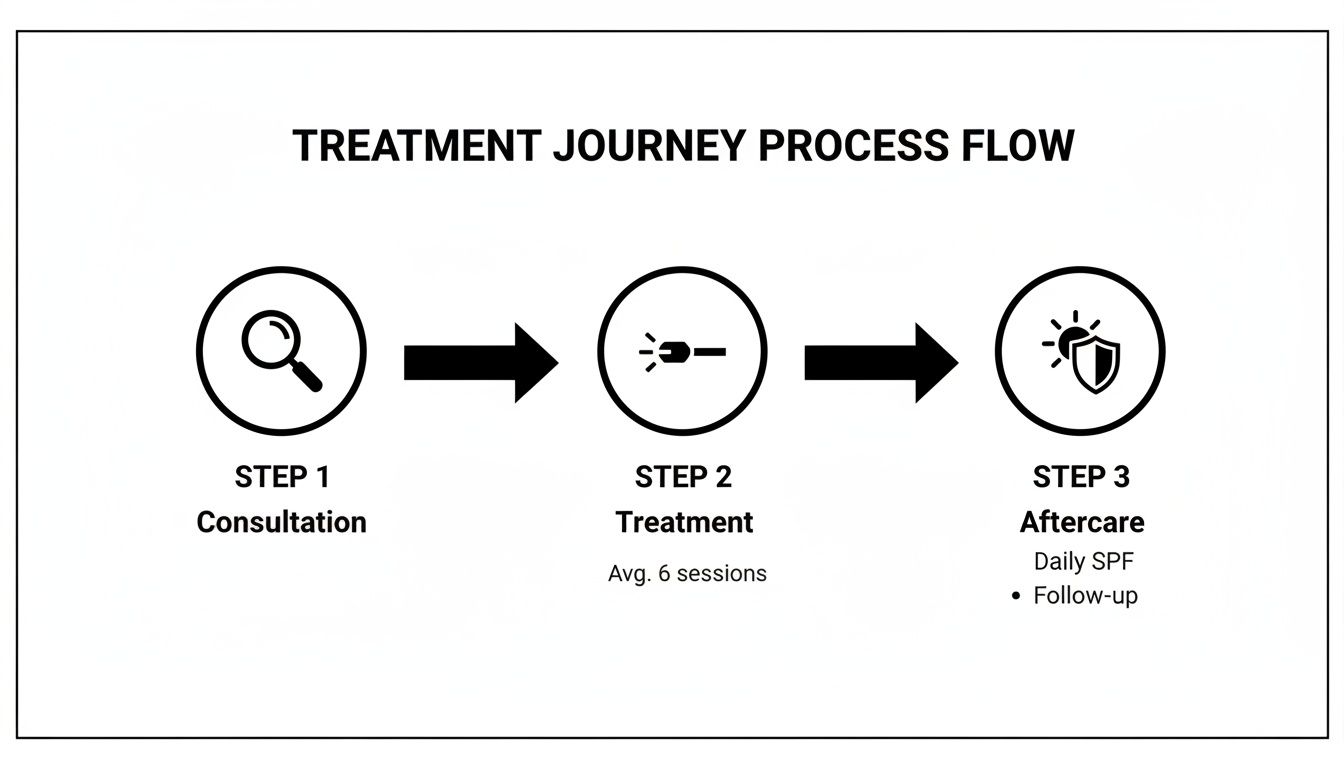
As you can see, success isn't about a single magic treatment. It's built on a structured journey that begins with a detailed consultation and is supported by diligent aftercare.
Your journey to radiant skin is a partnership. We provide the expertise and advanced tools, while you bring the commitment to the process. Together, we can achieve the healthy, even-toned complexion you deserve.
If you’re ready to restore your skin's health and get your confidence back, we invite you to take that first step. Book a professional consultation with our expert team today. Let’s create a plan that works for you.
Frequently Asked Questions
It's completely normal to have a lot of questions when you're thinking about advanced skincare. That's especially true when you're looking for hyperpigmentation treatments that are safe and actually work for darker skin. We hear these queries all the time at our London, Ontario clinic, so we've put together some clear, expert answers to help you feel confident on your skin health journey.
How Many Sessions Will I Need to See Results?
This really comes down to what we're treating—how deep the pigment is and what type it is. For the most part, though, clients start seeing a real, noticeable improvement after just 2-3 sessions with treatments like the Aerolase laser.
To get that optimal, lasting clearance on more stubborn spots, we usually map out a full series of 4-6 sessions. We'll space these about four to six weeks apart. Sticking to a professional at-home skincare routine is also crucial to protect your investment and keep those results looking amazing.
Are Laser Treatments Truly Safe for Dark Skin?
Yes, they absolutely can be—but only if you're using the right technology with a properly trained technician. It's a valid concern because older lasers carry some serious risks for melanin-rich skin. Thankfully, technology has come a long way.
Advanced systems like the Aerolase Neo Elite were specifically built with safety for all skin tones in mind. Its unique 650-microsecond pulse is the key; it delivers energy so fast that it zaps the pigment without giving the surrounding skin time to overheat. This dramatically cuts down the risk of post-inflammatory hyperpigmentation. Of course, at Skinsation Aesthetics, we make a consultation and patch test mandatory to ensure every treatment is perfectly safe for your skin.
Can My Hyperpigmentation Return After Treatment?
Because hyperpigmentation is often kicked off by things like sun exposure, hormonal shifts, or inflammation, it can be a persistent condition. While our treatments are fantastic at clearing up the discolouration you have now, preventing it from coming back is all about long-term maintenance.
Think of it this way: the single most important thing you can do to stop hyperpigmentation from returning is to be religious about your sunscreen. A broad-spectrum SPF 50+, applied every single day, is non-negotiable. Combine that with a solid homecare routine and the occasional maintenance treatment, and you've got a great strategy for keeping your skin consistently clear.
What Is Better Than Hydroquinone for Dark Skin?
In Canada, hydroquinone is available only by prescription, and the dermatology world has largely moved on due to concerns about side effects like ochronosis (a stubborn bluish-black discolouration). The good news is, we now have incredible alternatives that are much safer for long-term use.
At Skinsation Aesthetics, we get fantastic results with ingredients like azelaic acid, tranexamic acid, kojic acid, and retinoids. These powerhouses work by getting melanin production under control and encouraging healthy skin cell turnover, all with a much lower risk profile. They are hands-down our preferred choice for treating hyperpigmentation in dark skin.
Are you ready to finally get a clear, radiant complexion with a plan made just for you? The expert team at Skinsation Aesthetics Inc. is here to guide you with safe, effective solutions tailored to your unique skin.
Comments