

Cupping for Therapy: A Guide to Pain Relief

At its heart, cupping therapy is a wonderfully non-invasive treatment that relies on suction to encourage healing, melt away muscle tension, and get your circulation moving. By creating a gentle vacuum against the skin, this ancient practice lifts the underlying tissue to kickstart your body's own natural recovery systems. It’s a technique that has found a real home in modern Canadian wellness routines for good reason.
A Modern Approach to Ancient Healing
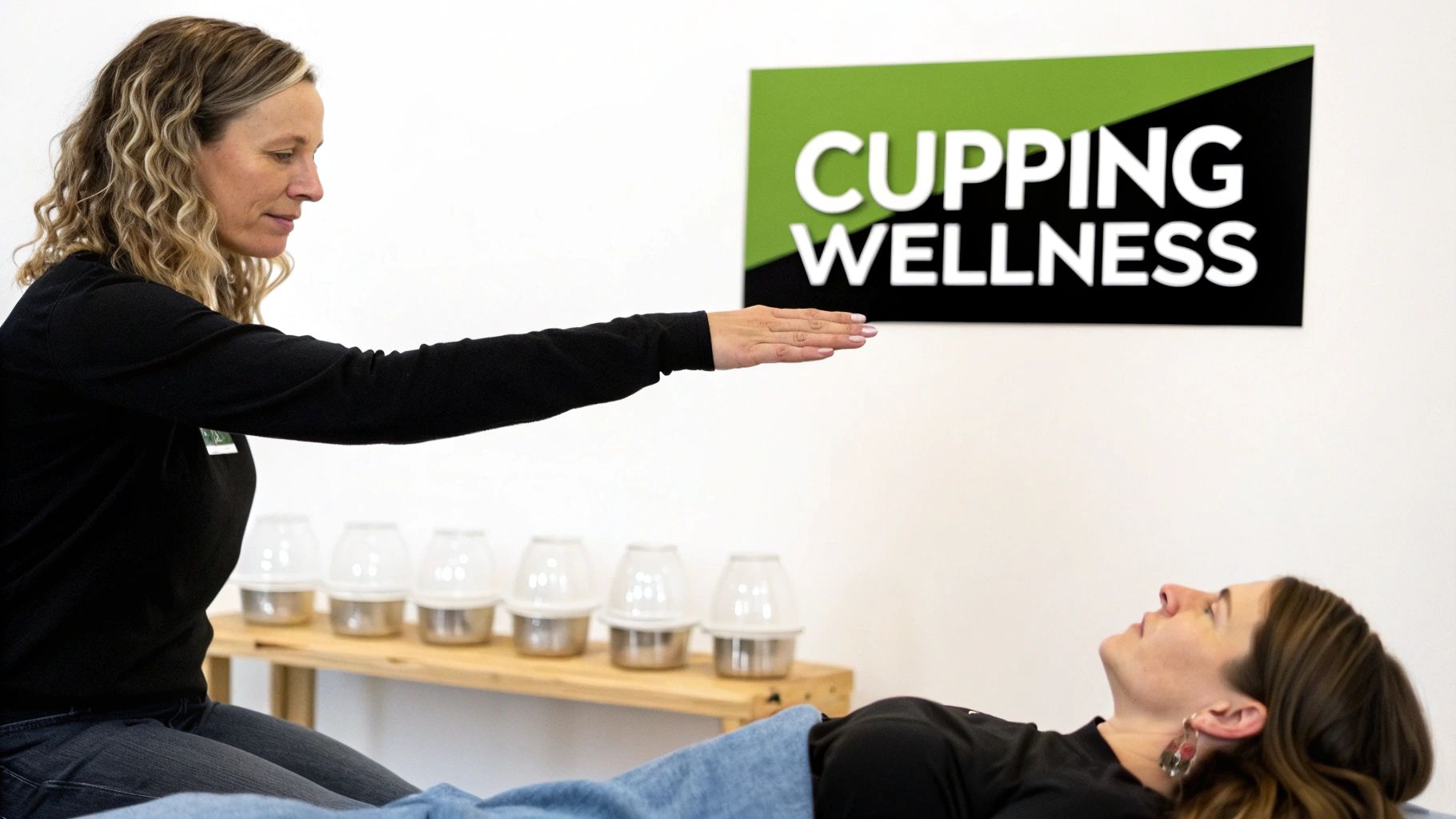
While cupping might feel like the latest trend popping up on social media, its roots run deep through Egyptian, Chinese, and Middle Eastern history. The fact that it's still around after centuries speaks volumes about its effectiveness. Today, it’s become a trusted therapy right here in places like London, Ontario, where people are looking for complementary ways to manage pain and boost their overall health.
The easiest way to think of cupping? It’s like a massage in reverse. A traditional massage uses downward pressure to work out knots and tension. In contrast, cupping uses negative pressure to gently pull the skin, muscle, and fascia upward. This simple-sounding action accomplishes several key goals for anyone looking for lasting relief.
The Core Principles of Cupping
The main idea behind cupping is to restore balance and flow within the body. When the cups lift the tissue, they create space for fresh, oxygenated blood to rush into the area, which is exactly what your body needs to heal. This process is known to help with a few key things:
Boost Circulation: The suction acts like a magnet for blood flow, drawing it to specific areas to nourish tissues and speed up cellular repair.
Release Muscle Tension: By stretching the connective tissue and muscle fibres from the outside in, cupping can soothe the kind of tightness and stiffness that leads to chronic pain.
Aid Detoxification: Better circulation naturally gets your lymphatic system moving, which is critical for flushing out metabolic waste and toxins. If you're curious about how this works, you can learn more about the role of lymphatic drainage in skin health.
At Skinsation Aesthetics, we see cupping as so much more than a fix for sore muscles. It’s a way to support your body’s systemic wellness, which has a positive ripple effect on everything from pain relief to glowing, healthier-looking skin.
This powerful therapeutic technique is being woven into holistic health plans all across Canada. For a great overview of how it fits into modern wellness, there are some wonderful insights on Cupping Massage Therapy.
Once you understand these foundational principles, it’s easy to see how this time-honoured practice works. It’s a simple yet incredibly effective way to address discomfort and empower your body’s innate ability to heal itself from the inside out. This guide will help demystify the entire process for you, from its ancient origins to its modern-day applications.
How Cupping Actually Works to Relieve Pain
To get how placing a few cups on your skin can possibly touch that deep, nagging pain, it helps to imagine your muscles as a busy highway system. When everything is flowing smoothly, you feel fantastic. But when tension or an old injury creates a "traffic jam," blood flow slows to a crawl, and waste products get stuck. That’s what leads to that all-too-familiar stiffness, soreness, and pain.
Cupping therapy steps in like an expert traffic controller. By creating suction on the skin, it generates negative pressure—the total opposite of what happens in a typical massage. Instead of pushing down on your muscles, the cups gently lift the skin, fascia, and top muscle layers upwards.
This lifting action is key. It immediately creates more space right under the skin. Think of it like gently pulling apart a compressed sponge, allowing it to finally soak up fresh water. In your body, this new space invites a rush of fresh, oxygen-rich blood to flood into that congested, painful area.
The Science of Suction and Circulation
This fresh wave of blood is the cornerstone of how cupping works its magic. It kick-starts several powerful healing processes in your body, all working together to knock down pain and get you moving comfortably again.
The suction doesn't just pull blood into one spot; it also gently expands the tiny blood vessels, or capillaries, under the skin. This expansion makes it easier for blood to circulate, delivering vital nutrients and oxygen while, just as importantly, flushing out the metabolic junk and toxins that are feeding the inflammation and pain.
The core idea behind cupping is simple but so effective: it ramps up localized circulation to trigger your body’s own natural healing response. By drawing stagnant fluids out and bringing nutrient-rich blood in, it helps resolve pain right at the source.
This is exactly why people often call cupping a "reverse massage." While a deep tissue massage is all about pressing out knots, cupping lifts and separates those tissue layers. This helps to release stubborn adhesions and tight fascia that keep muscles locked in a state of tension.
Addressing Inflammation and Releasing Tension
Chronic pain and persistent inflammation almost always go hand-in-hand. The suction from cupping creates a controlled, therapeutic inflammation in a very specific area. I know, that might sound counterintuitive—why would we want more inflammation? But this process is actually a signal that tells your body to send in its healing cavalry: white blood cells, platelets, and other natural repair agents to clean up the area and fix damaged tissue.
Decompresses Tissue: The gentle lifting motion takes the pressure off nerves and blood vessels that might be getting squeezed by tight muscles.
Stretches Fascia: It helps loosen up that connective tissue (fascia) that wraps around your muscles, which can get rigid and cause discomfort all over.
Promotes Cellular Repair: Better blood flow delivers the building blocks your cells need to repair themselves more efficiently.
This multi-pronged approach is particularly helpful for things like chronic back pain. Low back pain (LBP) is a huge health issue across Canada, with nearly two-thirds of Canadians experiencing it at some point in their lives. Cupping is becoming a go-to in clinics for its immediate relieving effects. In clinical studies, cupping's impact is often measured on pain scales, where a reduction of over 30% is considered a significant and meaningful improvement for patients.
While cupping is a fantastic tool for getting blood moving to painful areas, it works best as part of a bigger picture. For anyone interested, there are plenty of natural ways to boost blood flow for better health that perfectly complement your therapy sessions. This holistic view—combining targeted treatments with healthy lifestyle habits—is what truly delivers powerful, long-term results. When you understand the mechanics, you can see cupping isn't magic; it's just a really clever way to help your body heal itself.
Exploring Different Cupping Methods
When you first hear about cupping therapy, a single image probably comes to mind. But the world of cupping is actually incredibly diverse, with a whole toolkit of methods designed for everything from general wellness to highly targeted pain relief.
Getting to know these different approaches helps you and your therapist pick the perfect technique for what your body needs.
The Main Types Of Cupping Explained
The most common starting point, and what many people are familiar with, is dry cupping. This is the classic technique where cups create suction on the skin and are left in one spot for several minutes. It's a fantastic introduction to cupping and works wonders for easing muscle tension, boosting circulation, and just helping you relax.
From that foundation, therapists can get more specific to achieve different results. At Skinsation Aesthetics, we specialize in several forms of this effective therapy. Each technique feels a little different and brings its own unique benefits to the table.
Here's a quick look at the main methods to help you understand your options.
Cupping Type | Method Description | Best For |
|---|---|---|
Dry Cupping | Suction cups are placed on the skin and left stationary. | General muscle tension, relaxation, and improving circulation. |
Moving Cupping | Oil is applied to the skin, allowing suctioned cups to glide over larger areas. | Widespread muscle tightness, fascial restrictions, and a deep-tissue effect. |
Flash Cupping | Cups are quickly applied and removed in succession over an area. | Stimulating blood flow to sluggish tissues without leaving dark marks. |
This table gives you a snapshot, but let's dive a little deeper into how they work.
A Deeper Look Into Cupping Techniques
Moving cupping feels a lot like a deep, inverse massage. Your therapist will apply oil to your skin first, which lets them slide the suctioned cups along your back or legs. It's an amazing feeling and is especially good for releasing those stubborn knots and fascial restrictions that cover a large area.
Then there's flash cupping. Sometimes called empty cupping, this is a much faster-paced method. The cups are placed and removed very quickly, one after the other. This rapid suction-and-release action is great for waking up sluggish tissues and getting blood moving without leaving the more significant marks you see with stationary cupping.
You might also hear about wet cupping, or Hijama. This is a more intensive practice where, after a brief period of dry cupping, the cup is removed, tiny superficial scratches are made on the skin, and the cup is put back on to draw out a small amount of stagnant blood. While Skinsation Aesthetics doesn't offer this particular service, it's a key part of cupping's history and is practiced widely around the world.
Studies back up just how powerful these methods can be. One major review of various clinical trials found that wet cupping was used in about 57.78% of the interventions studied. The same research also showed that when cupping was combined with other treatments, the results were almost twice as effective as using those other treatments alone. It really speaks to how well cupping works as part of a complete wellness plan.
This simple diagram shows how the therapy works to turn pain signals into a feeling of relief.
As you can see, the targeted suction gets right to the source of the discomfort, encouraging a natural healing response from your body.
Even the cups themselves can change the experience. Traditional glass cups, often used with a flame to create suction, offer a classic feel. Modern silicone cups are soft and flexible, making it easy to adjust the pressure. Each material just adds another layer to the therapy.
No matter the technique or the type of cup, the goal is always the same: use negative pressure to lift and decompress tissue, kickstart blood flow, and activate your body’s own incredible healing abilities. The method we choose is just about finding the best way to do that for you.
Here at Skinsation Aesthetics in London, Ontario, we focus on safe and effective methods like dry and moving cupping. Whether you're dealing with a tight back from sitting at a desk all day or need some help recovering after a tough workout, our treatments are designed around your comfort and goals.
You can learn more about our approach by checking out our back cupping service. Knowing your options means you can walk into your session feeling confident and ready to feel the benefits.
Your First Cupping Session From Start to Finish
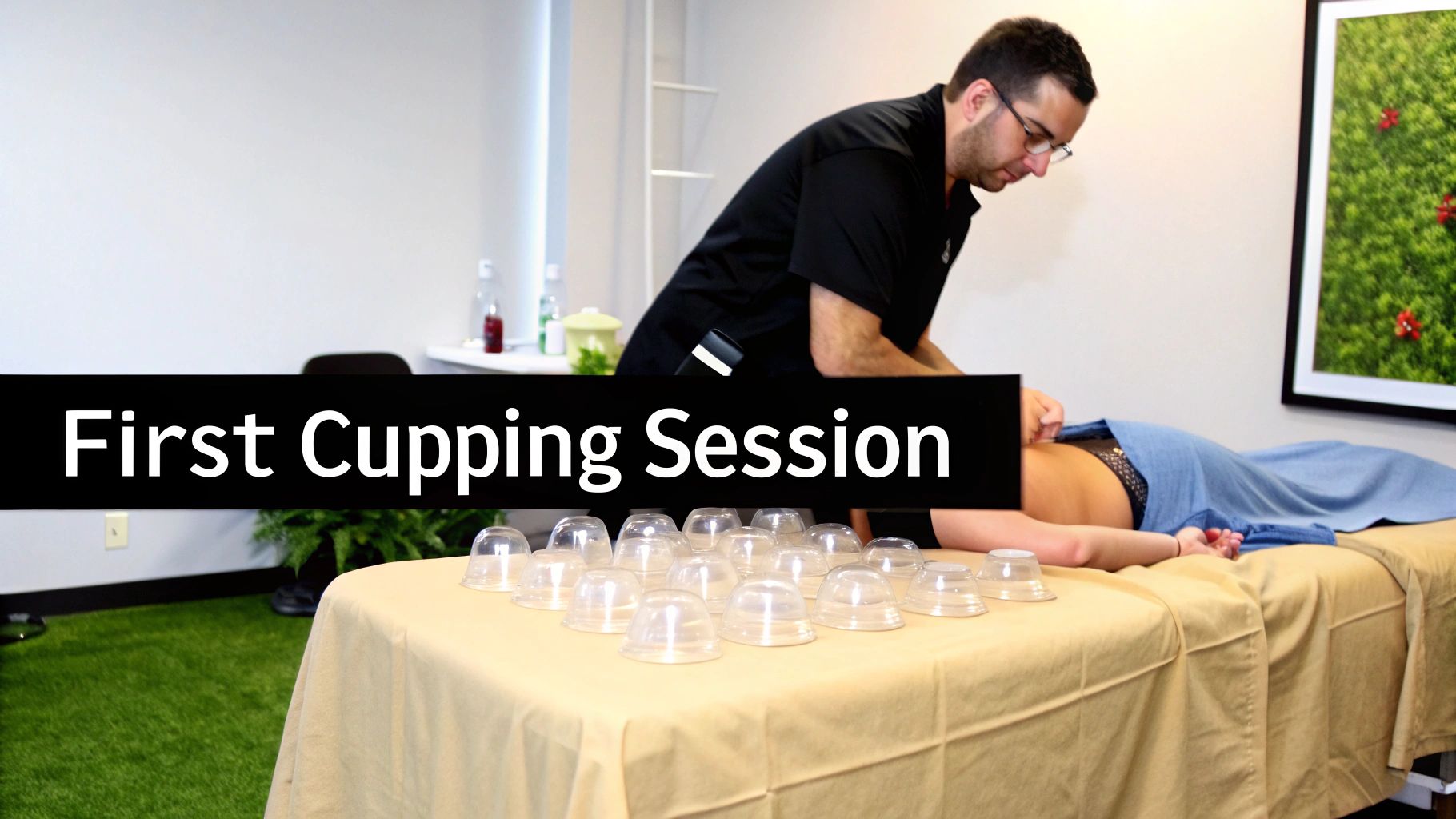
Walking into your first cupping session can bring a mix of curiosity and maybe a few butterflies. That’s completely normal! Knowing what to expect can turn those nerves into genuine excitement for the relief to come.
Here at Skinsation Aesthetics in London, Ontario, we make your comfort and understanding our top priorities. We want you to have a positive, relaxing experience from the second you walk through our door.
The whole process is a soothing journey we take together. And it doesn't start with the cups—it starts with a conversation.
The Initial Consultation
Before any treatment begins, you'll sit down with your therapist for a quick chat. This is your time to share exactly what brought you in. Are you dealing with stubborn shoulder tension from long hours at your desk? Or maybe you're an athlete looking to speed up muscle recovery after a tough workout?
This conversation is absolutely crucial for a few reasons:
It sets your goals: Your therapist needs to understand what you want to achieve so they can tailor the session specifically for you.
It reviews your health history: We'll discuss any health conditions or concerns to make sure the treatment is safe and right for your body.
It builds trust: This is your chance to ask any last-minute questions and feel completely comfortable with the person guiding your treatment.
Once we’re on the same page, the hands-on part of the session begins. We’ll have you get comfortable on a treatment table—usually face down if we’re working on your back—and make sure you’re warm and properly draped.
The Cupping Process Itself
Your therapist will start by applying a light oil or lotion to the treatment area. This is an important step because it allows the cups to get a good seal and, if we're doing moving cupping, helps them glide smoothly over your skin.
Next, the cups go on. Your therapist will create a vacuum inside each cup just before placing it on your skin. The sensation is pretty unique; most people describe it as a gentle but firm pulling feeling. Think of it as the opposite of a massage—instead of downward pressure, you’ll feel a lifting sensation as your skin and muscle are drawn up into the cup.
The feeling of suction is often deeply relaxing. As the cups sit, that initial pulling sensation usually fades into a feeling of warmth and release as blood rushes to the area and the muscle tissue starts to decompress.
The cups are typically left in place for 5 to 15 minutes, depending on your specific needs and how your body responds. During this time, your therapist will check in with you to ensure the pressure feels comfortable and effective.
What's the Deal With Those Famous Marks?
After the cups are gently removed, you'll probably see the iconic circular marks. It's so important to understand that these are not bruises. Bruises are caused by impact trauma that breaks capillaries.
The marks from cupping, on the other hand, are the result of stagnant blood and fluids being pulled to the surface. Their colour actually gives us clues about the level of stagnation in that area.
We've found that clients with more significant pain or stagnation tend to get darker marks. This is a good sign that blood flow has increased and the tissue is responding. These marks are a normal part of the process and usually fade away within a week or two as your body clears everything out. If you're curious about how professionals interpret these marks, you can explore some insights on cupping outcomes.
Once your session is done, many people report feeling an immediate sense of lightness, a better range of motion, and a feeling of deep relaxation. You'll leave not just feeling relieved, but also more in tune with your body’s own healing process.
Pairing Cupping with Your Aesthetic Treatments
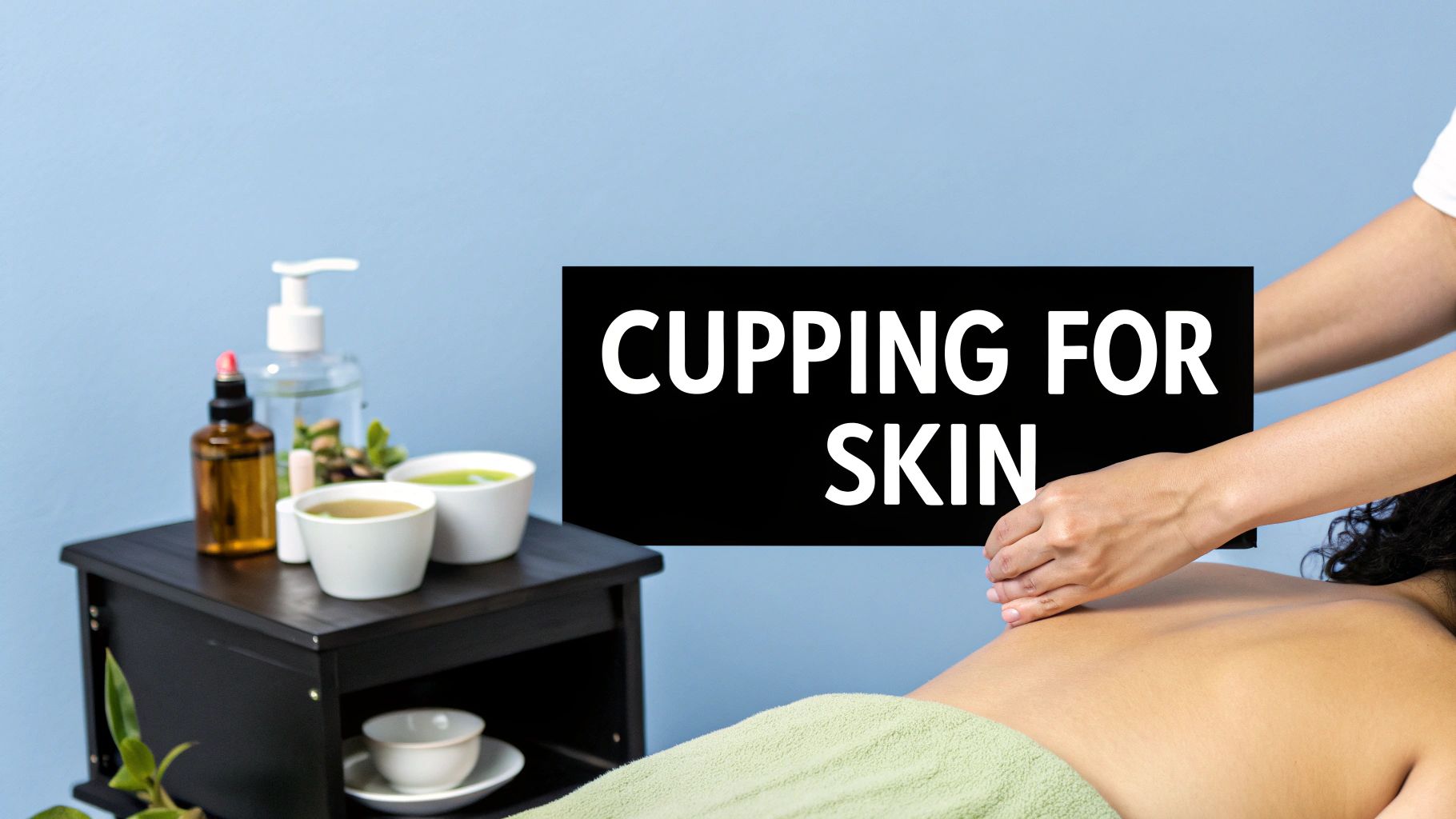
While many people in London, Ontario, come to us for cupping for therapy to soothe sore muscles, its benefits fit beautifully into the world of aesthetics. Think of it as a powerful ally in your journey toward radiant, healthy skin. By improving your body's overall wellness, cupping helps create the perfect internal environment for your skin to truly thrive.
The connection is actually quite simple. Cupping gives your circulation a major boost and supports your lymphatic system’s natural detox process. When your body is efficiently clearing out waste and delivering fresh, oxygen-rich blood to your cells, your skin is one of the first places you'll see the amazing results. This internal support can amplify the effects of your favourite skin treatments, helping you get that coveted glow from the inside out.
However, the key is all about smart timing and placement. We need to be strategic when adding cupping into your aesthetic routine to make sure every treatment works in harmony.
The Do's and Don'ts of Combining Treatments
The most important rule is to never perform cupping directly on skin that has recently undergone an intensive aesthetic treatment. Your skin needs time to heal and regenerate after procedures like laser, microneedling, or chemical peels. Applying suction to these sensitive areas can easily disrupt that delicate healing process and cause irritation.
At Skinsation Aesthetics, we see cupping as a complementary wellness service that supports your aesthetic goals. By treating other areas of the body—like the back or shoulders—we enhance overall circulation and detoxification without ever compromising the results of your facial treatments.
This approach allows you to get all the systemic benefits of cupping without any risk to your delicate facial skin. For example, a back cupping session a week or two before a big facial can help prepare your body by reducing inflammation and boosting your circulatory health.
Timing Your Treatments for Optimal Results
So, how do you schedule cupping around advanced services like the Aerolase laser? It all comes down to giving each treatment its own space. Here are a few clear guidelines to follow:
Before Your Aesthetic Treatment: We recommend a cupping session on your back, shoulders, or legs at least one week prior to a facial laser, microneedling, or peel. This gives your body plenty of time to process the treatment and settle, ensuring you arrive at your facial appointment feeling calm and well.
After Your Aesthetic Treatment: You’ll want to wait until your skin is fully healed before having cupping done anywhere on your body. For a treatment like Aerolase, this might just be a few days. For microneedling or deeper peels, you should wait at least two to three weeks. Always chat with your aesthetician to get a precise timeline based on your specific treatment.
This careful timing ensures each service can deliver its maximum benefit without interference. It’s a holistic view of self-care where one treatment supports the other, leading to better, more lasting results for both your body and your skin. And while back cupping is an excellent addition, we also offer specialized techniques for the face. You can explore the unique benefits of our gentle approach in our guide to facial cupping treatments.
Common Questions We Get About Cupping Therapy
Even after learning how cupping works, it's totally normal to have a few more questions before you try it for the first time. We want you to feel completely informed and comfortable—that’s the first step toward a great session.
Here are some straightforward answers to the questions we hear most often here at our London, Ontario, clinic. Our goal is to clear up any lingering doubts so you can walk into your appointment feeling confident and ready to relax.
Is Cupping Therapy Painful?
Most people don't find cupping painful at all; in fact, many describe it as deeply relaxing. The main sensation you'll notice is a distinct pulling or tightening feeling right when the suction is applied to your skin.
That feeling usually eases up pretty quickly as your muscles start to relax under the gentle lift of the cup. Your therapist is always in control and can adjust the suction level to make sure you're comfortable the entire time. Any minor discomfort is temporary and fades fast.
How Long Do The Cupping Marks Last?
Those famous circular marks are a completely normal and expected part of the process. It's important to remember they aren't bruises from an injury—they're a sign of increased blood flow to the area, which is exactly what we want.
They usually fade within a few days to a week, though sometimes they can hang around for up to two weeks. How long they last depends on a few things, like your personal circulation and how much tension or stagnation was in that spot. Drinking plenty of water after your session is a great tip to help them fade faster.
Who Is A Good Candidate For Cupping?
All sorts of people across Canada can benefit from cupping therapy. It's become especially popular with a few key groups:
Athletes: Many rely on it to speed up muscle recovery and stay at peak performance.
Office Workers: It’s fantastic for relieving that chronic neck, shoulder, and back tension from sitting at a desk all day.
Anyone Needing Relief: It's a go-to for people looking to manage chronic pain, dial down stress, and just improve their overall wellness.
To make sure cupping is the right choice for you, it’s always best to have a chat with a qualified practitioner. This gives you a chance to discuss your specific health situation and goals in a professional setting.
For anyone in London, Ontario, and the surrounding areas, a consultation with a therapist at a clinic like Skinsation Aesthetics can provide personalized advice and a clear treatment plan.
How Often Should I Get Cupping Done?
There’s no one-size-fits-all answer here—the ideal frequency really depends on your wellness goals and what you're trying to address. Your treatment plan should be as unique as you are.
For acute pain or a recent injury, your therapist might suggest coming in weekly at first to help manage inflammation and kickstart the healing process. For general maintenance, stress relief, or overall wellness, once every few weeks or even monthly might be all you need to feel your best. A professional will work with you to map out a schedule that gets you the best possible results.
At Skinsation Aesthetics Inc., we believe in a holistic approach to wellness, where feeling good on the inside helps you glow on the outside. If you're ready to explore the benefits of cupping therapy for pain relief and overall health, we invite you to book a consultation with our experienced team. Discover how this ancient practice can support your modern wellness journey by visiting us at https://www.skinsation.me.
Comments